12 DIY Fixes Every Homeowner Should Know Before Calling a Contractor
Stop wasting money on easy home repairs! Learn 12 simple DIY fixes—from running toilets to jammed disposals—that can save you hundreds of dollars per service call. Grab your toolbox and take your weekend back.

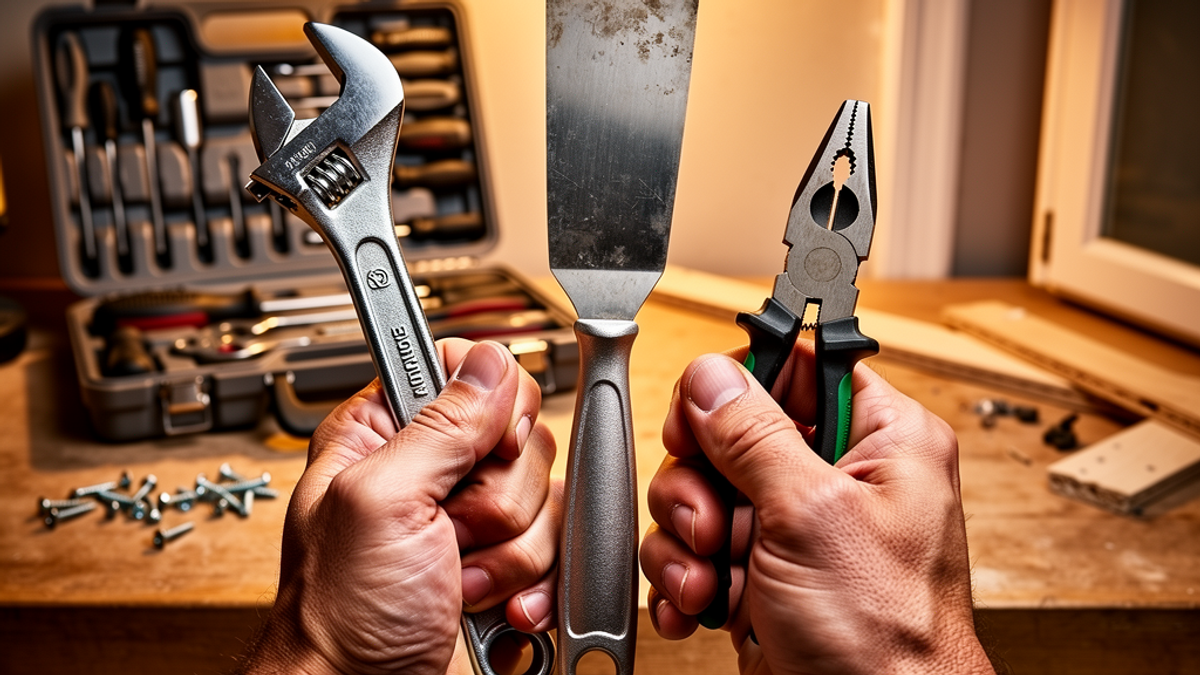
Listen, buying a house is the American dream, right? Until you realize that "homeowner" is just a fancy word for "person who fixes things that break on weekends." When you were renting, a running toilet meant a quick text to the landlord. Now? It means seeing dollar signs flash before your eyes.
Before you hop on Zelle or Venmo to pay a local handyman $200 just to pull into your driveway, take a breath. The "contractor tax"—that minimum fee they charge just to show up—is painfully real. But you don't need to be a master carpenter to handle the basics.
Here are 12 DIY fixes you can absolutely handle yourself, saving you anywhere from $150 to $500 a pop. That’s more money for DoorDash, your next Costco run, or whatever else you actually want to spend your hard-earned cash on. Grab a cup of coffee, roll up your sleeves, and let's get to work.
1. Fixing a Running Toilet (Savings: $150-$200)
There is nothing quite as annoying as the phantom flush or the endless hiss of a running toilet. Not only is it driving you crazy, but it's also quietly jacking up your water bill every single month. A plumber will easily charge you a minimum of $150 just to walk through your front door to diagnose this.
The Fix: Ninety percent of the time, the culprit is a warped, deteriorating, or dirty flapper valve—that rubber piece at the bottom of the toilet tank. Simply turn off the water supply valve on the wall behind the toilet, flush to drain the tank, and unhook the old flapper. Take it to Home Depot, buy an exact match for about $10, and snap the new one into place. Adjust the chain so it has just a little bit of slack, turn the water back on, and you're done.
2. Unjamming the Garbage Disposal (Savings: $150)
You flip the switch after doing the dishes, and instead of a satisfying grind, you hear a menacing hum. Do not call a plumber yet, and definitely do not stick your hand down the drain!
The Fix: Your garbage disposal actually has a built-in unjamming mechanism. Look under your sink at the very bottom of the disposal unit. You'll see a small hexagonal hole right in the center. Insert a 1/4-inch Allen wrench (often taped to the unit when installed, or you can grab one from your toolbox) and crank it back and forth to manually free the jammed blades. Once it moves freely, press the little red "Reset" button located on the bottom of the unit. Run some cold water, flip the switch, and you just saved yourself a $150 service call.
3. Unclogging a Slow Sink or Tub Drain (Savings: $150-$250)
When you're standing in two inches of murky water while taking a shower, your first instinct might be to call a rooter service. Hold the phone.
The Fix: Skip the harsh, toxic liquid drain cleaners that eat away at your pipes. Instead, head to Walmart or Target and buy a $5 plastic hair snake (often called a Zip-It tool). It’s a long piece of flexible plastic with reverse barbs. Shove it down the drain, pull it back up, and prepare to be absolutely disgusted by the monster hairball you pull out. If that doesn't work on a bathroom sink, put a bucket underneath the P-trap (the U-shaped pipe under the sink), unscrew the plastic nuts by hand, and dump out the clog.
4. Patching Drywall (Savings: $150-$300)
Whether it's a constellation of old thumbtack holes from a poster or a classic doorknob punch through the wall, drywall damage looks terrible. But hiring a drywall guy for a tiny patch job is a massive waste of money.
The Fix: For small nail holes, a $5 tub of lightweight spackle and a putty knife is all you need. Swipe it on, scrape it flat, let it dry, and lightly sand it. For a doorknob hole, buy an adhesive mesh drywall patch. Stick it over the hole, spread joint compound over it, feathering the edges out wide so it blends into the wall. Once dry, sand it smooth, add a second thin coat if needed, and paint over it. The whole fix costs under $20.
5. Resetting a Tripped Breaker or GFCI Outlet (Savings: $150)
Imagine this: It's a chilly winter morning, the house is struggling to hit 70 degrees Fahrenheit, so you plug in a space heater. Meanwhile, someone else turns on a hairdryer, and click—half the house goes dark.
The Fix: Before you panic and call an electrician, check your breaker panel. Look for the switch that is resting in the middle position (not fully ON, not fully OFF). Push it firmly to the OFF position, then snap it back to ON. If the power goes out in just a bathroom or kitchen, look for an outlet with two little buttons on it (a GFCI outlet). Press the "Reset" button. You'd be amazed how many electricians make $150 just for pushing a button.
6. Stopping a Leaky Faucet (Savings: $200)
Drip. Drip. Drip. It’s the soundtrack of money going down the drain. Faucets leak when the internal mechanisms wear out from constant friction and mineral buildup.
The Fix: Modern faucets don't use old-school rubber washers; they use self-contained cartridges. Turn off the hot and cold water valves under the sink. Remove the handle (usually by popping off a decorative cap and unscrewing an Allen set screw). Pull out the old cartridge. Take it to the hardware store to find the exact replacement. Slide the new one in, tighten everything back up, and turn the water on.
7. Re-Caulking a Bathtub or Shower (Savings: $200-$400)
When the caulk around your bathtub turns black and starts peeling, it’s not just ugly—it’s a water damage disaster waiting to happen. Water seeping behind your tiles can cause thousands of dollars in rot.
The Fix: Buy a cheap plastic caulk removal tool and scrape away all the old, nasty caulk. Wipe the area down with rubbing alcohol to ensure it's completely clean and dry. Apply a steady bead of 100% silicone bathroom caulk (make sure it says mold-resistant). Wet your finger and run it along the bead to smooth it out into a perfect seal. Let it cure for 24 hours before showering.
8. Replacing Your HVAC Filter (Savings: $100-$150 + Furnace Life)
This is the most neglected chore in American households. A clogged HVAC filter chokes your system, causing it to run longer, freeze up, or burn out the blower motor entirely.
The Fix: Driving 10 miles out of your way to buy a single filter is annoying. Do yourself a favor and buy a bulk pack at Costco. Check your current filter for the dimensions (e.g., 16x20x1). Slide the old one out, look at the arrows on the new filter indicating airflow direction (the arrows should point toward the furnace), and slide it in. Do this every 60 to 90 days. It prevents a $150 emergency HVAC service call and extends the life of a $5,000 system.
9. Silencing Squeaky Door Hinges (Savings: $100)
If your bedroom door sounds like a haunted house every time you open it, you don't need a handyman to fix it. Most handymen have a minimum charge of around $100 just to show up.
The Fix: While WD-40 is great for cleaning, it's actually not the best long-term lubricant. Pick up a tube of white lithium grease or a bottle of 3-IN-ONE oil. Use a hammer and a nail to tap the hinge pin up and out (just do one hinge at a time so the door doesn't fall). Wipe the pin clean, coat it in the lubricant, and tap it back into place. Open and close the door a few times to work the grease in. Silence is golden.
10. Reviving a Stuck Sliding Glass Door (Savings: $150-$250)
Wrestling with a sliding patio door that requires your entire body weight to open is exhausting.
The Fix: First, clean the tracks. Vacuum out the pet hair, dead bugs, and dirt, then wipe the track down with warm soapy water. If it still drags, you need to adjust the rollers. Look at the bottom edge of the sliding door—you’ll see small holes covered by plastic plugs. Pop the plugs out and insert a Phillips head screwdriver. Turn the screw clockwise to raise the door and lift it off the track slightly. Adjust both sides until the door glides with one finger.
11. Cleaning Refrigerator Coils (Savings: $200-$500)
Is your fridge running constantly, feeling warm on the outside, or failing to keep your milk cold? The compressor is likely suffocating.
The Fix: Pull the refrigerator out from the wall a few feet and unplug it. Locate the condenser coils—they are either on the back of the fridge or tucked underneath behind a front kickplate. Use a vacuum with a brush attachment to carefully suck up the thick blanket of dust bunnies and pet hair covering the coils. This five-minute job restores the appliance's efficiency and prevents a catastrophic compressor failure that costs $500 to fix.
12. Replacing a Basic Light Switch or Outlet (Savings: $150-$250)
Electrical work sounds terrifying, but swapping a standard, single-pole light switch or a basic wall outlet is a safe, straightforward DIY task if you follow the golden rule of electricity.
The Fix: TURN OFF THE BREAKER. Do not skip this step. Test the switch or outlet with a $15 non-contact voltage tester to verify the power is absolutely dead. Unscrew the faceplate and pull the old switch or outlet out of the wall. Take a picture of the wiring with your phone so you remember where things go. Disconnect the wires and attach them to the new switch: black wire to the brass screw, white wire to the silver screw, and bare copper wire to the green grounding screw. Wrap the terminals in electrical tape, screw it back into the wall, and flip the breaker back on.
The Takeaway
Owning a home doesn't have to drain your bank account every time something squeaks, leaks, or stops working. By keeping a basic toolkit on hand and learning these 12 simple fixes, you're not just saving money—you're building confidence. Next time something breaks, don't reach for your phone to call a contractor. Reach for your toolbox.

SunMaster USA
Editorial Team
The SunMaster USA team finds, tests, and shares the smartest lifehacks, money moves, and home improvement tips that make everyday life easier for American families.