15 Subscriptions You're Probably Paying for and Forgot About
Financial anxiety disrupts your mental harmony. The average American wastes $240 a year on forgotten subscriptions. Here’s how to audit your bank statements, cancel the digital clutter, and put that cash back in your pocket.

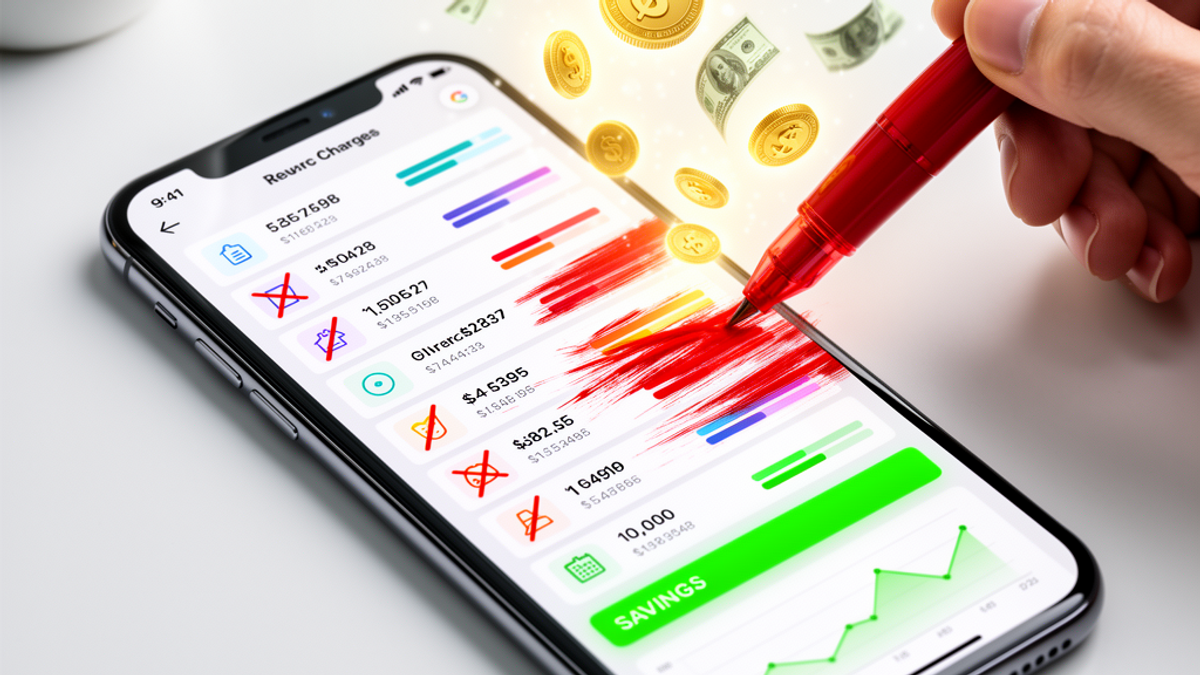
At Onyx Sound Lab, we talk a lot about frequencies, sound wellness, and tuning out the noise to find your center. But let's be real for a second: it is incredibly hard to achieve mental harmony when there is a low-level hum of financial anxiety playing in the background of your life.
One of the biggest silent stressors? The modern subscription economy.
We live in a "set it and forget it" world. You sign up for a free trial to watch one specific show, download an app to edit a single PDF, or get a gym membership on January 1st. Fast forward six months, and your bank account is suffering from a death by a thousand cuts. In fact, the average American wastes about $240 a year on subscriptions they completely forgot about.
Financial decluttering is a form of wellness. When you clean up your bank statement, you free up cash and mental bandwidth. Grab a cup of coffee, pull up your banking app, and let's go hunting. Here are 15 subscriptions you are probably paying for right now and have completely forgotten about.
The 15 Sneaky Subscriptions Draining Your Wallet
1. The Streaming Service Graveyard
Remember when cutting the cable cord was supposed to save us money? Now, we're paying for Netflix, Hulu, Max, Disney+, Peacock, and Paramount+. You probably signed up for one of these just to watch a specific series (we all have that one Yellowstone or Succession subscription). Once the finale aired, you forgot to cancel. At $15 to $20 a pop, keeping two unused streaming services active is costing you nearly $400 a year.
2. Premium Delivery Apps
DoorDash DashPass, Uber One, Grubhub+. They usually run about $9.99 a month, and the pitch is intoxicating: "Save on delivery fees!" But let's look at the reality. Not only are you paying 120 bucks a year for the privilege of using the app, but having it makes you more likely to order a $25 cold burrito instead of cooking. If you aren't ordering delivery at least three times a month, cancel it.
3. The "Free Trial" App Store Traps
This is the silent killer of budgets. You needed a scanner app, an astrology chart reader, or a fancy photo filter. You agreed to the 3-day free trial, completely forgot, and now Apple or Google is quietly pinging your card for $39.99 a year. Go into your phone's settings right now, click your Apple ID or Google Play profile, and look at your active subscriptions. You will almost certainly find a ghost app in there.
4. The Aspirational Gym Membership
It sounded great in January. You were going to drive the 4 miles to that big-box gym three times a week. Now, it's summer, it's 90 degrees Fahrenheit outside, and your $40/month membership key tag is just a decorative accessory on your keychain. If you haven't swiped into LA Fitness or Planet Fitness in 60 days, cancel it. You can always sign up again when you're actually ready to go.
5. Upgraded Cloud Storage
Apple iCloud, Google One, Dropbox. It starts at 99 cents a month, which feels like nothing. Then you hit your limit because you refuse to delete duplicate photos of your dog or blurry concert videos, and suddenly you're paying $2.99 or $9.99 a month. Take an afternoon to back up your files to a physical hard drive and downgrade your plan. That's an easy $36 to $120 a year back in your pocket.
6. Big Box Retailer Memberships
Walmart+, Target Circle 360, Costco Executive upgrades. Retailers have figured out that if you pay an upfront fee (often around $98 to $119 a year), you will blindly shop with them to "get your money's worth." If you actually use the free shipping and gas discounts, great. But if you're paying for Walmart+ and still doing your Saturday morning Target run, you're just throwing money away.
7. Redundant Music and Audio
At Onyx Sound Lab, we obviously love high-quality audio. But do you really need Spotify Premium, Apple Music, AND a SiriusXM subscription in your car? SiriusXM is notorious for auto-renewing at a massive markup after the promo period ends. Pick the one audio platform that brings you the most joy and utility, and ruthlessly cut the others.
8. Subscription Boxes
HelloFresh, BarkBox, FabFitFun. Subscription boxes are incredibly fun to open, but they often lead to clutter. If your freezer is full of unmade meal kits, or you have a drawer overflowing with sample-sized moisturizers, it's time to hit pause. These usually cost between $40 and $100 a month. Pausing them for just three months saves you up to $300.
9. Gaming Services
Xbox Game Pass, PlayStation Plus, Nintendo Switch Online. At $10 to $17 a month, these are fantastic deals—if you're actively gaming. But if you've been too busy with work and haven't touched your console in months, that subscription is just sitting idle.
10. Dating App Premiums
Tinder Gold, Bumble Premium, Hinge+. The search for love is expensive, often costing $30 to $40 a month for the premium tiers. If you've taken a break from swiping to focus on yourself (highly recommended for your mental wellness!), make sure you actually canceled the premium subscription, not just deleted the app off your home screen.
11. Productivity and Software Tools
Canva Pro, Evernote, Microsoft 365, or that random SEO tool you bought for a side hustle you abandoned two years ago. We often keep these because we like the idea of being productive. Be honest with yourself about what software you actually use to get things done.
12. News and Magazine Paywalls
You hit a paywall on the New York Times, Washington Post, or your local city paper. You signed up for the $1-for-6-months promo to read one specific article. Six months passed, and now you're being billed $15 to $20 a month. Check your statements for publishing companies.
13. Identity Theft and Credit Monitoring
Services like LifeLock charge $10 to $30 a month to monitor your credit. While security is crucial, many Americans don't realize their existing credit cards (like Discover, Capital One, or Chase) offer free dark web monitoring and credit score checks. Plus, you can freeze your credit with the three major bureaus for absolutely free.
14. The Unlimited Car Wash
It seemed like a no-brainer during pollen season. For $25 a month, you can wash your car every day! But now it's been six weeks, you've washed your car exactly zero times, and the membership is auto-drafting. Cancel it and just pay the $12 at the gas station when your car actually needs a scrub.
15. Patreon and Twitch Creators
You wanted to support your favorite podcaster or streamer, so you pledged $5 a month. That's awesome. But over the years, you might have racked up five or six of these pledges for creators whose content you don't even consume anymore. A quick audit of your Patreon account can easily save you $20 to $30 a month.
How to Audit Your Bank Statement Today
Knowing the traps is only half the battle. Now you have to actually find them. Here is your step-by-step guide to financial decluttering.
Step 1: Pull the Last 90 Days
Log into your checking account and your primary credit card. Don't just look at the last week; you need to look at the last 90 days to catch quarterly subscriptions, and ideally a full 12 months for annual renewals. Export this to a spreadsheet if you want to be thorough, or just grab a pen and a piece of paper.
Step 2: Hunt for the Keywords
Scan your statement for these specific red-flag words:
- "Subscription"
- "Recurring"
- "Apple.com/bill"
- "Google Play"
- "Stripe"
- "Amzn Prime"
Also, check your P2P payment apps. Look at your Venmo or Zelle history. Are you still auto-transferring $15 a month to an old roommate for a shared internet bill? Catch those leaks.
Step 3: The Joy vs. Utility Test
For every recurring charge you find, ask yourself two questions:
- Does this bring me genuine joy or peace of mind? (Like your Onyx Sound Lab sessions or your favorite music app).
- Does this provide undeniable utility? (Like your home internet or car insurance).
If the answer to both is "No," highlight it in red.
Step 4: Cancel Ruthlessly
Do not tell yourself, "I'll cancel it later." Companies bank on your procrastination. The moment you identify a useless subscription, open a new tab, log into that service, and hit cancel. If you can't figure out how to cancel it (some companies make it notoriously difficult), call your bank or credit card company and ask them to block future charges from that merchant.
Your Actionable Takeaway
Financial clutter creates mental clutter. You work hard for your dollars, and letting them slip away to forgotten tech companies and unused gyms is a drain on your energy and your wallet.
Do this today: Set a timer for 15 minutes tonight. Open your most-used credit card app, scroll through your last two months of transactions, and find just one subscription to cancel. Finding even one $15/month charge puts $180 back in your pocket this year. That is real money you can use for groceries, a trip to Home Depot, or just the peace of mind of having a little extra breathing room in your budget.
Take back control of your finances, quiet the noise of financial anxiety, and tune back into your own life.

SunMaster USA
Editorial Team
The SunMaster USA team finds, tests, and shares the smartest lifehacks, money moves, and home improvement tips that make everyday life easier for American families.