Daylight Saving Time Survival Guide: How to Adjust Without Losing a Week
Stop letting Daylight Saving Time ruin your week. Learn the 4-day, 15-minute shift method, light exposure tricks, and the ultimate Sunday reset protocol to fix your body clock fast.

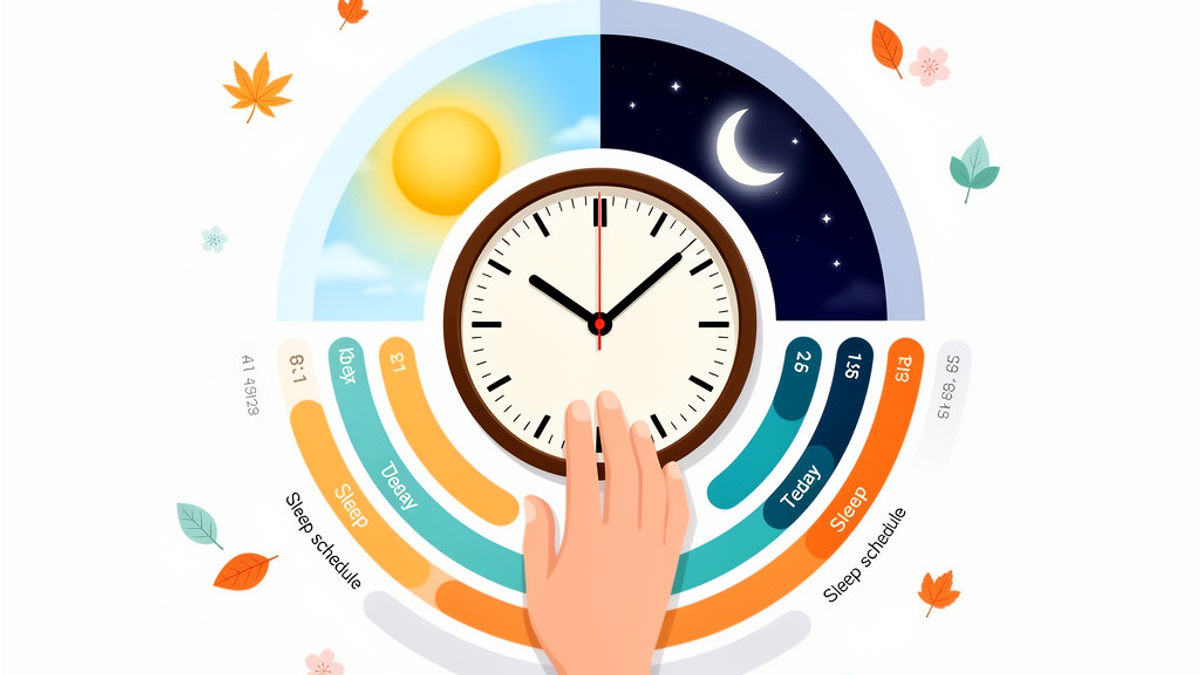
Every single year, it happens. We all collectively agree to change the clocks by exactly one hour, and suddenly the entire country forgets how to function. You wake up staring at the microwave clock, trying to do the mental math of whether you actually got six hours of sleep or five. By Monday morning, you're a walking zombie, Venmo-ing your coworker $7 for an emergency latte and seriously considering taking a nap in your car during your lunch break.
Whether we're "springing forward" or "falling back," Daylight Saving Time (DST) is a massive shock to your circadian rhythm. It's just 60 minutes, but it can completely derail your productivity, your mood, and even your wallet. Think about it: being chronically tired is expensive. When DST hits, you're way more likely to drop $35 on DoorDash because you're too exhausted to cook the groceries sitting in your fridge. Add in the extra impulse buys on a bleary-eyed Target run, and losing an hour of sleep can easily cost you an extra $100 that week.
But it doesn't have to be this way. Here at Onyx Sound Lab, we believe in practical, science-backed sound wellness and lifestyle tweaks to keep your body clock ticking smoothly. You don't have to lose a week of your life to the time change.
Here is your ultimate survival guide to beating Daylight Saving Time, featuring the 4-day gradual shift, light exposure hacks, and the Sunday Reset Protocol.
Why a 60-Minute Shift Wrecks Us
You might be thinking, "It's just an hour. I regularly stay up an hour late watching Netflix. Why is this different?"
The problem isn't just the lost sleep; it's the sudden, unannounced shift in your environmental cues. Your circadian rhythm—your body's internal 24-hour clock—relies on consistency. It expects the sun to rise at a certain time, your core body temperature to drop at a specific hour, and your first cup of coffee to hit your bloodstream right on schedule.
When you violently shift that schedule by a full hour overnight, your brain goes into jet-lag mode. Your cortisol (the wake-up hormone) and melatonin (the sleep hormone) are completely out of sync with the clock on the wall. This misalignment is why traffic accidents spike the Monday after DST, and why you feel like you've walked 10 miles with weights on your ankles just trying to get through the workday.
The 4-Day, 15-Minute Protocol
The secret to beating the time change is simple: don't do it all at once. You need to trick your body into adjusting before the government officially changes the time.
Starting the Wednesday before the time change, you are going to shift your sleep and wake times by just 15 minutes a day. A 15-minute shift is barely noticeable to your brain, but by Sunday, you will have effortlessly moved your internal clock by a full 60 minutes.
Here is exactly how the math works if your normal bedtime is 11:00 PM and your wake time is 7:00 AM (adjust accordingly for springing forward or falling back):
If We Are Springing Forward (Losing an Hour)
- Wednesday: Go to bed at 10:45 PM. Wake up at 6:45 AM.
- Thursday: Go to bed at 10:30 PM. Wake up at 6:30 AM.
- Friday: Go to bed at 10:15 PM. Wake up at 6:15 AM.
- Saturday: Go to bed at 10:00 PM. Wake up at 6:00 AM.
- Sunday: The clocks change! Your 6:00 AM is now 7:00 AM. You wake up feeling completely normal.
If We Are Falling Back (Gaining an Hour)
- Wednesday: Go to bed at 11:15 PM. Wake up at 7:15 AM.
- Thursday: Go to bed at 11:30 PM. Wake up at 7:30 AM.
- Friday: Go to bed at 11:45 PM. Wake up at 7:45 AM.
- Saturday: Go to bed at 12:00 AM. Wake up at 8:00 AM.
- Sunday: The clocks change! Your 8:00 AM is now 7:00 AM.
It sounds almost too simple, but this gradual ramp-up completely eliminates the Monday morning shock to your system.
Master Your Light Exposure
Light is the most powerful signal your brain uses to set its internal clock. If you want to adjust your sleep schedule, you have to control the light.
Morning Sunlight
When you wake up, your goal is to get natural sunlight into your eyes as quickly as possible. This halts the production of melatonin and signals to your brain that it's time to release cortisol.
Even if it's a brisk 40 degrees Fahrenheit outside, put on a jacket and step onto your porch or take a quick 10-minute walk. Don't just look through a window—window glass filters out the specific wavelengths of light your brain needs to wake up. If you live in an area where it's pitch black when you wake up, consider taking a trip to Home Depot or hopping on Amazon to buy a $30 sunrise alarm clock or a 10,000-lux light therapy lamp.
Evening Darkness
Conversely, you need to ruthlessly eliminate blue light in the evening. If you're trying to shift your bedtime earlier, you cannot be staring at your phone or a bright TV screen.
Do a quick Target or Walmart run and grab some $20 blackout curtains for your bedroom. If you don't want to install curtains, buy a high-quality sleep mask. Dim your overhead lights two hours before your target bedtime. If you have smart bulbs, set them to a warm, amber glow.
The Caffeine Cutoff Adjustment
We love our coffee, but caffeine has a half-life of about 5 to 6 hours. That means if you buy a $6 iced latte at 3:00 PM, half of that caffeine is still actively blocking the sleep receptors in your brain at 8:00 PM or 9:00 PM.
When you are adjusting your sleep schedule for DST, your caffeine cutoff time has to shift with it.
If you are springing forward and trying to go to bed 15 minutes earlier each night, you need to cut off your caffeine 15 minutes earlier each day. By Friday, your usual 2:00 PM cutoff should be 1:15 PM. If you feel the afternoon slump hitting hard, resist the urge to Zelle your coworker for a coffee run. Instead, drink a massive glass of ice water or take a brisk 5-minute walk outside. The cold and the movement will wake you up without ruining your evening sleep pressure.
The Sunday Reset Protocol
Sunday is the most critical day of the Daylight Saving Time transition. A lot of people make the mistake of treating it like a lazy weekend day, completely undoing all their hard work.
Here is your step-by-step Sunday Reset Protocol to lock in your new time zone and guarantee a smooth Monday.
1. Wake Up at the "New" Time
Do not sleep in. If your alarm usually goes off at 7:00 AM for work, set it for 7:00 AM on the new clock. Get out of bed immediately. No snoozing.
2. The Sound Wellness Morning Routine
Your brain might be feeling a little foggy. This is where frequency therapy comes in. At Onyx Sound Lab, we recommend listening to Alpha wave binaural beats (around 8 to 12 Hz) while you make your morning coffee or brush your teeth. Alpha waves help bridge the gap between sleep and wakefulness, promoting a state of calm, focused alertness without the jittery feeling of a caffeine overload.
3. Exercise Early
Get your heart rate up before noon. A quick 2-mile run, a living room yoga session, or a heavy lifting session at the gym will raise your core body temperature. This spike in temperature, followed by a gradual cooling throughout the day, helps solidify your circadian rhythm.
4. Meal Prep to Avoid the "Tired Tax"
We talked about the $35 DoorDash trap earlier. Prevent it by meal prepping on Sunday afternoon. Cook a big batch of chili, roast some vegetables, or make a stack of breakfast sandwiches. Having food ready to go means that even if you feel a little sluggish on Monday or Tuesday, you won't bleed cash on takeout.
5. The Evening Wind-Down
Sunday night is the final boss of DST. Two hours before your target bedtime, turn off the overhead lights. Lower the thermostat to around 65 to 68 degrees Fahrenheit—your body needs to cool down to initiate deep sleep.
Instead of watching TV or scrolling social media, use sound therapy to guide your brain into a state of deep relaxation. Put on a pair of headphones and queue up a Delta wave frequency track (0.5 to 4 Hz) from Onyx Sound Lab. Delta waves are associated with the deepest, most restorative stages of sleep. Listening to these frequencies for 20 to 30 minutes before bed can help override the mild anxiety of the time change and signal to your nervous system that it is safe to shut down.
Stop Letting the Clock Boss You Around
Daylight Saving Time doesn't have to be a week-long struggle of brain fog, expensive coffee runs, and missed alarms. By taking a proactive approach, you can outsmart the clock.
The beauty of the 4-day, 15-minute shift is that it requires minimal effort but delivers massive results. Combine that with strategic light exposure, a strict caffeine cutoff, and the restorative power of frequency therapy, and you'll be cruising into Monday morning while everyone else is still trying to figure out what time it is.
Actionable Takeaway: Open the clock app on your phone right now. If the time change is coming up this weekend, set four different alarms for Wednesday, Thursday, Friday, and Saturday, shifting your wake-up time by exactly 15 minutes each day. Your future self will thank you on Monday morning.

SunMaster USA
Editorial Team
The SunMaster USA team finds, tests, and shares the smartest lifehacks, money moves, and home improvement tips that make everyday life easier for American families.