Grilling Season: The Only BBQ Guide You'll Ever Need
Get ready for backyard season with the ultimate American grilling guide. From charcoal vs. gas to the perfect reverse-sear, learn how to master your grill and make steakhouse-quality meat at home.

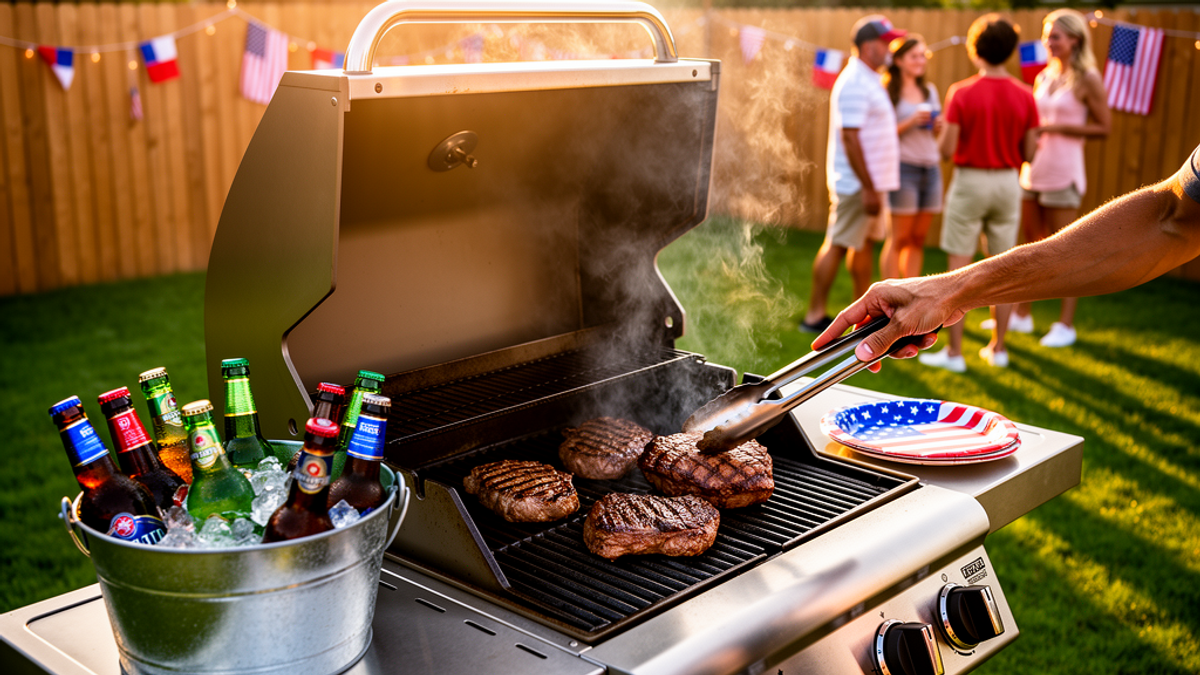
There is a specific moment every year when the weather breaks, the days get longer, and the unmistakable scent of burning charcoal drifts over the fence from your neighbor's yard. It is the official kickoff to an American summer. Whether you are gearing up for Memorial Day, the Fourth of July, or just a random Tuesday night, firing up the grill is a sacred backyard tradition.
But let's be real for a second: a lot of us are out there ruining perfectly good, expensive meat. We are burning the outside of chicken breasts while the inside stays raw. We are turning $30 ribeyes into shoe leather. We are stressing out over the grill while everyone else is relaxing on the patio.
Grilling shouldn't be stressful, and it certainly shouldn't be a guessing game. Think of this as your ultimate, down-to-earth manual for dominating the grill this season. Grab a cold drink, pull up a chair, and let's get into the only BBQ guide you'll ever need.
The Great Debate: Charcoal vs. Gas
If you ask ten people which grill is better, you will probably start a neighborhood war. The truth? They both have their place, and it all comes down to your lifestyle.
Gas Grills: The King of Convenience
Gas grills are the microwave ovens of the backyard. You turn a dial, hit the igniter, and ten minutes later, you are ready to cook. If you have a busy household, kids running around, and you just want to throw some burgers on after a long commute, gas is your best friend.
The Cost: A decent starter gas grill will run you about $200 to $400 at Home Depot. A standard 20-pound propane tank exchange is around $20. The Catch: You sacrifice that deep, smoky flavor. Plus, there is nothing worse than running out of propane halfway through a cookout. Always keep a backup tank in the garage.
Charcoal Grills: The Flavor Champion
Charcoal is an event. It takes time. You have to light the coals, wait for them to ash over, and manage the airflow. But the reward? That incredible, smoky, wood-fired flavor you simply cannot replicate on a gas grill. It is perfect for lazy Saturday afternoons when you have nowhere to be.
The Cost: You can grab a classic 22-inch Weber Kettle at Target or Walmart for about $139. A twin pack of Kingsford charcoal at Costco will cost you around $20 and last for weeks. The Catch: It requires patience and a bit of a learning curve to control the temperature.
The Essential Tool Kit (And What to Stop Buying)
Every Father's Day, millions of Americans receive those massive, shiny aluminum briefcases filled with 25 different grilling tools. Do yourself a favor: skip the briefcase. You will never use the tiny corn cob holders or the weird silicone basting brush that melts on the grates. By skipping the fancy gimmicks, you'll easily save $50 to $100 right out of the gate.
Here is what you actually need:
- Long-Handled Locking Tongs: Go to Target and spend $15 on a heavy-duty, 16-inch pair of tongs. They are an extension of your arm.
- An Instant-Read Thermometer: This is non-negotiable. Stop poking your meat and guessing if it is done. You can buy a top-of-the-line Thermapen for $100, or a highly rated knockoff on Amazon for $20. Either way, buy one. It will save you from ruining hundreds of dollars of meat over the years.
- A Chimney Starter (For Charcoal): Lighter fluid belongs in the trash. It makes your food taste like a gas station. Spend $20 on a chimney starter, stuff some newspaper in the bottom, and you'll have perfect coals in 15 minutes.
- A Safe Grill Brush: Those cheap wire brushes are dangerous—the bristles can snap off, stick to your grates, and end up in your food. Grab a wood scraper or a coiled stainless steel brush instead.
The Secret to Everything: Two-Zone Cooking
If you take only one thing away from this article, let it be this: Stop turning all your burners on high.
Whether you are using gas or charcoal, you need to set up a two-zone fire. This means making one side of your grill incredibly hot (the direct heat zone) and leaving the other side unlit or on very low (the indirect heat zone).
Think of the indirect side as your oven, and the direct side as a blazing hot skillet. You can gently roast a thick piece of chicken on the cool side until it is cooked through, and then move it to the hot side for two minutes to get those beautiful, crispy grill marks. If a burger starts causing massive grease flare-ups, you have a safe, cool zone to slide it over to so it doesn't turn into a hockey puck.
The Ultimate Temperature Chart
Throw away the idea of cooking by time. "Ten minutes a side" is a myth because every grill, every day, and every cut of meat is different. You are cooking to temperature, measured in Fahrenheit (°F).
Print this out, memorize it, or save it on your phone. Insert your instant-read thermometer into the thickest part of the meat:
- Poultry (Chicken & Turkey): 165°F. Pro Tip: Pull chicken breasts off the grill at 160°F and let them rest on a plate under foil. The residual heat (carryover cooking) will bring them up to a safe 165°F without drying them out.
- Pork Chops & Tenderloin: 145°F. Yes, pork can be slightly pink in the middle! The USDA changed their guidelines years ago. Stop cooking pork until it turns white and dry.
- Ground Beef (Burgers): 160°F for food safety, though many prefer 150°F for a medium well burger.
- Steak (Medium Rare): 130°F - 135°F.
- Steak (Medium): 140°F - 145°F.
Flavor Town: Marinades and Rubs
Meat is expensive right now. If you want to save money, buy large primal cuts at Costco, portion them out yourself, and freeze them. You can literally Zelle or Venmo your neighbor $40 to split a massive pack of ribeyes, saving you both a fortune compared to the local grocer.
To make that meat sing, you need the right seasoning.
The Holy Trinity Rub
In the Texas BBQ world, they use SPG: Salt, Pepper, Garlic. It works on literally everything. Mix equal parts kosher salt, coarse black pepper, and granulated garlic. Keep a shaker of it by the grill. Skip the expensive $12 bottles of pre-made rubs at the boutique butcher. Buying bulk spices at Costco and mixing your own will save you about $30 a month if you grill regularly.
The Foolproof Marinade Formula
A good marinade doesn't need to be complicated. You just need a 3-to-1 ratio of fat to acid, plus flavorings.
- Fat: Olive oil, avocado oil, or mayonnaise (trust me, mayo makes an incredible crust on grilled chicken).
- Acid: Lemon juice, lime juice, apple cider vinegar, or even a splash of cheap beer.
- Flavor: Soy sauce, minced garlic, a squirt of Dijon mustard, or fresh herbs.
Put your meat in a Ziploc bag, pour the marinade over it, and leave it in the fridge for at least 2 hours (but no more than 24, or the acid will turn the meat mushy).
The Game Changer: The Reverse-Sear Method
If you want to cook a thick, steakhouse-quality steak at home—the kind that is perfectly pink from edge to edge with a dark, crusty exterior—you need to learn the reverse sear. It is practically foolproof.
Here is exactly how to do it with a thick cut (at least 1.5 inches thick):
- Prep: Salt your steak heavily and leave it in the fridge uncovered for a few hours. This dries out the surface, which guarantees a better crust later.
- Low and Slow: Set up your grill for two-zone cooking. Keep the temperature low, around 225°F to 250°F. Place your steak on the indirect (cool) side of the grill. Close the lid.
- Monitor: Let it roast slowly. Check it with your thermometer. You are waiting for the internal temperature to hit 115°F (for a medium-rare finish). This might take 30 to 45 minutes.
- Rest and Fire Up: Take the steak off the grill and let it rest on a cutting board for 10 minutes. While it rests, crank your gas grill to absolute maximum heat, or pile a chimney full of fresh, blazing hot charcoal onto your direct side.
- The Sear: Throw the steak onto the raging hot direct heat. Sear it for exactly 60 seconds per side. You want fire, sizzle, and smoke.
- Serve: Pull it off. Because you already rested it in step 4, you can slice into it immediately. Enjoy the best steak of your life.
Don't Forget the Sides (Or the Cleanup)
Nobody wants to stand over a hot grill for an hour only to realize they have nothing to serve with the meat. Keep it simple. Toss some asparagus in olive oil and salt, and throw it on the grill for 5 minutes. Wrap potatoes in foil and bury them in the indirect heat zone for an hour.
And if you completely forgot about sides because you were too busy perfecting your reverse sear? There is zero shame in firing up DoorDash and ordering a massive tray of mac and cheese from the local BBQ joint down the road. Work smarter, not harder.
Finally, clean your grill while it is still hot. When you take the meat off to rest, take your scraper and brush the grates immediately. The heat makes the grease wipe right off. If you wait until the next day, it will harden like concrete, and you'll be miserable trying to chip it away.
Your Actionable Takeaway
Knowledge is useless if you don't use it. Here is your game plan for this weekend:
- Take Inventory Today: Go to your backyard right now. Check your propane tank level by pouring a cup of hot water down the side (run your hand down the tank—where it feels cold, that's your gas level). If you use charcoal, make sure you have at least half a bag left.
- Upgrade One Tool: If you don't own an instant-read thermometer, open your phone and order a $20 one right now. It will arrive before the weekend.
- Plan the Meat Share: Text your friends or neighbors. Ask who wants in on a bulk pack of thick-cut steaks or chicken thighs from Costco. Have them Venmo you their share, go buy the meat, and plan to test out the two-zone setup this Saturday.
Grilling is not an exact science, but with the right tools, a little patience, and respect for the temperature chart, you will be the absolute hero of your backyard this summer. Now get out there and fire it up.

SunMaster USA
Editorial Team
The SunMaster USA team finds, tests, and shares the smartest lifehacks, money moves, and home improvement tips that make everyday life easier for American families.