Grocery Shopping on a Budget: How One Family Feeds Four for $400 a Month
Beat inflation and grocery store sticker shock. Learn the exact strategies one family uses to feed four people for $400 a month, from mastering loss leaders to building a foolproof freezer meal system.

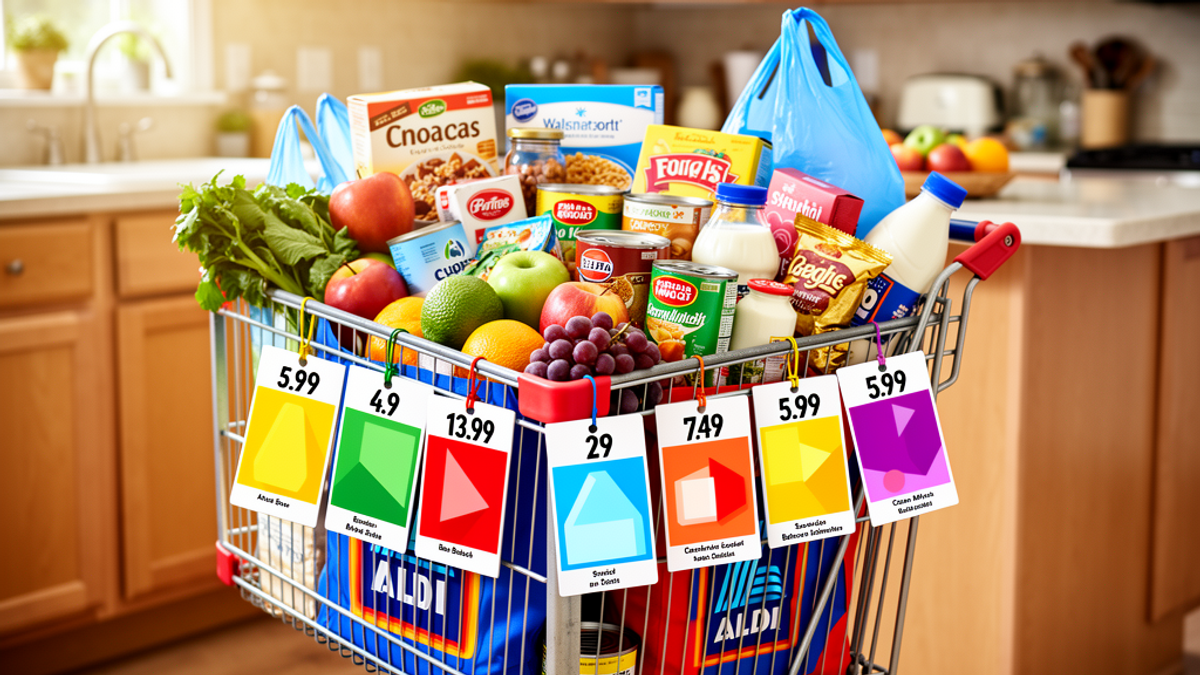
Here at Onyx Sound Lab, we spend a lot of time talking about sound wellness, frequency therapy, and calming your nervous system. But let's be incredibly real for a second: there is no sound bath on earth that can completely wash away the cortisol spike of a $350 weekly grocery receipt. Financial stress is a massive barrier to holistic wellness. When you're constantly worried about how to afford basic necessities, your body stays in a state of fight-or-flight.
Finding harmony in your life means finding harmony in your household budget, too. Today, we're taking a practical detour into everyday financial wellness by tackling the second-largest expense for most American families: groceries.
Feeding a family of four on $400 a month sounds like a myth from 2012. In today's economy, where a standard trip for "just a few things" somehow costs $85, claiming you can feed four humans for $100 a week feels like a stretch. That's just $3.57 per person, per day.
But it is entirely possible. It doesn't require extreme couponing, eating rice and beans for every meal, or spending forty hours a week hunting for deals. It requires a mindset shift, a little bit of planning, and a ruthless commitment to a few core strategies. Grab a cup of coffee, and let's break down exactly how to pull this off.
The Mindset Shift: Intentionality Over Convenience
Before we talk about stores and sales, we have to talk about habits. The modern American food system is designed to sell you convenience at a massive premium. Pre-chopped onions, individually packaged snacks, and the ultimate convenience—ordering a $45 Tuesday night dinner on DoorDash because you're too tired to cook.
To hit a $400 monthly budget, you have to trade a little bit of convenience for a lot of intentionality. You are no longer walking into a store and asking your stomach, "What sounds good this week?" You are walking in with a tactical plan based on what is on sale, what is in season, and what is already sitting in your pantry.
The Store Wars: Aldi vs. Walmart vs. Costco
Brand loyalty is the enemy of a tight budget. If you are doing 100% of your shopping at one mid-tier or high-end regional grocery store, you are leaving hundreds of dollars on the table every month. The $400-a-month family masters the "Store Wars" by utilizing a three-pronged approach.
Aldi: The Heavy Lifter
Aldi is the undisputed MVP of the budget grocery game. For the uninitiated, Aldi is a no-frills German grocery chain where you rent a cart for a quarter and bring your own bags. You will do 70% to 80% of your shopping here.
Why? Because their business model strips out the fluff. You aren't paying for elaborate end-cap displays or a coffee shop in the produce section. You're paying for the food. A gallon of milk, a dozen eggs, fresh spinach, cheese, and pantry staples like flour and sugar are consistently 30% to 50% cheaper here than at a traditional supermarket. A standard week's foundation—produce, dairy, and basics—should cost you about $50 to $60 at Aldi.
Walmart: The Strategic Gap-Filler
Aldi is fantastic, but it doesn't have everything. They have limited selections, and sometimes you just need a very specific ingredient. Enter Walmart.
The secret to Walmart isn't wandering the aisles; it's using their free curbside pickup. When you walk into a massive supercenter, you are hit with thousands of temptations. By ordering your gap-filler items via the Walmart app, you pay exactly what you intended to pay. No impulse buying a $12 graphic tee or a new throw pillow on your way to the grocery section. You just pull up, pop the trunk, and leave.
Costco: The Double-Edged Sword of Bulk
Costco is incredible for a family of four, but it's also where budgets go to die. We call it the "Costco Effect." You go in for toilet paper and a rotisserie chicken, and you walk out with a kayak, a 5-pound tub of pretzels, and a $350 receipt.
To use Costco on a $400 budget, you must be disciplined. Use Costco exclusively for high-quality meat, butter, and household staples. Buy the massive packs of chicken breasts or ground beef, bring them home, and immediately portion them into freezer-safe bags.
Pro-Tip: If the bulk sizes are too big for your freezer, split a Costco run with a friend or neighbor. Buy the massive pack of paper towels or the 6-pack of bell peppers, divide it in the parking lot, and just Venmo or Zelle them for your half. You get the bulk discount without the bulk storage problem.
Loss Leader Shopping: Beating the House
If you want to drastically reduce your grocery bill, you need to understand the concept of a "loss leader."
Supermarkets will intentionally price certain items at or below cost to get you into the store. They might advertise bone-in chicken thighs for $0.99 a pound or a 10-pound bag of potatoes for $2.99. They are losing money on that chicken, but they know that 90% of shoppers will also buy a $5 bottle of BBQ sauce, a $6 box of brand-name cereal, and an $8 pack of beer while they're there.
To win, you have to beat them at their own game. Look at the weekly ads for your local grocery stores before you make your meal plan. If pork shoulder is the loss leader this week at $1.49 a pound, guess what? You're eating pulled pork sandwiches, pork carnitas, and pork ragu. You build your menu around the front page of the weekly ad, you buy the heavily discounted items, and you ignore the rest of the store.
The Store Brand Swap-Out Game
Let's talk about the marketing markup. National brands spend billions of dollars on advertising, packaging, and shelf placement. When you buy a box of name-brand toasted oats cereal for $5.49, you are paying for their Super Bowl commercials.
When you buy the store brand equivalent for $1.89, you are paying for the oats. In many cases, the store brand and the name brand are manufactured in the exact same facility, on the exact same assembly line, and just put into different boxes at the end.
Take a hard look at your pantry. If you swap out just ten name-brand items (canned beans, pasta, cereal, peanut butter, chicken broth, shredded cheese, bread, frozen vegetables, oats, and rice) for their store-brand equivalents, you can easily save $20 to $30 a week. Over a month, that's $100—a full 25% of your $400 budget, saved simply by choosing a different label.
Seasonal Produce: Stop Buying Strawberries in December
We've gotten incredibly spoiled by the global supply chain. We expect to be able to eat whatever we want, whenever we want it. But when you buy fresh strawberries in the northeast US in December, you are paying a massive premium to have those berries flown thousands of miles from a warmer climate.
Shopping seasonally is not only better for your budget; it's better for your health and the flavor of your food.
- Fall/Winter: Focus on apples, oranges, root vegetables (carrots, potatoes, sweet potatoes), squash, and hearty greens like kale and cabbage.
- Spring/Summer: This is when you load up on berries, peaches, tomatoes, zucchini, and corn.
When produce is in season locally, there is an abundance of it, and the price plummets. If you crave summer vegetables in the dead of winter when it's 20 degrees Fahrenheit outside, head to the frozen aisle. Frozen vegetables are picked and flash-frozen at the peak of their ripeness, making them just as nutritious (and often much cheaper) than out-of-season fresh produce.
The Freezer Meal System: Your Anti-DoorDash Insurance Policy
The biggest threat to a $400 monthly grocery budget isn't buying the wrong brand of ketchup; it's the 5:30 PM panic. It's Wednesday night, everyone is exhausted, the kids are cranky, and the thought of chopping an onion feels like climbing Mount Everest. So, you grab your phone and order delivery. Boom. There goes $50, plus a tip, and 12% of your monthly food budget is gone in one mediocre meal.
To prevent this, you need an insurance policy. You need the Freezer Meal System.
If you have the space, consider making a one-time investment in a small chest freezer (you can usually find a reliable 5-cubic-foot model at Home Depot or Lowe's for around $150 to $200). This allows you to capitalize on bulk meat sales and loss leaders. But more importantly, it allows you to batch cook.
Whenever you make a freezer-friendly meal—like chili, baked ziti, enchiladas, or soup—double the recipe. It takes only marginally more effort to chop two onions instead of one, or brown two pounds of beef instead of one. Eat half for dinner, and put the other half in a disposable aluminum pan or freezer-safe container.
Label it clearly with the date and cooking instructions. Build up a stash of 5 to 10 of these meals. The next time the 5:30 PM panic sets in, you don't open a delivery app. You open the freezer, pull out a tray of homemade baked ziti, and pop it in the oven. You just saved $50 and kept your budget perfectly intact.
Your Action Plan: What to Do Today
Reading about budgeting is easy; changing your habits is the challenge. If you want to start finding financial harmony and bringing your grocery bill down to $400 a month, here are the physical steps to take today:
- Audit Your Pantry: Go into your kitchen right now and write down 5 name-brand items you buy regularly. Commit to buying the store-brand equivalent on your next trip.
- Separate the Funds: Don't leave your grocery money in your main checking account where it can get swallowed up by Amazon purchases or gas station snacks. Open a secondary, fee-free checking account. On the 1st of the month, use Zelle or a bank transfer to move exactly $400 into that account. When the debit card declines, you're done shopping. It forces creativity.
- Plan Around the Ad: Before you write your next grocery list, pull up the weekly digital ad for your local supermarket. Find the top two "loss leader" meats on the front page, and build at least three of your week's dinners around those specific proteins.
- Avoid the Target Trap: Target is a wonderful store, but it is a terrible place to buy your weekly groceries on a strict budget. The "Dollar Spot" and the home goods aisles are designed to extract extra money from you. Stick to grocery-first stores like Aldi.
Feeding a family of four for $400 a month isn't about deprivation. It's about outsmarting a system designed to make you overspend. By leveraging store brands, shopping seasonally, utilizing loss leaders, and building a freezer stash, you take control of your money. And as we know here at Onyx Sound Lab, taking control of your environment—and your finances—is the first step toward true, lasting wellness. Now, go grab that quarter and head to Aldi.

SunMaster USA
Editorial Team
The SunMaster USA team finds, tests, and shares the smartest lifehacks, money moves, and home improvement tips that make everyday life easier for American families.