How to Buy a Used Car Without Getting Ripped Off
Buying a used car doesn't have to feel like a scam. Learn how to check VINs, ace the test drive, and negotiate like a pro so you can drive off the lot with a great deal and zero regrets.

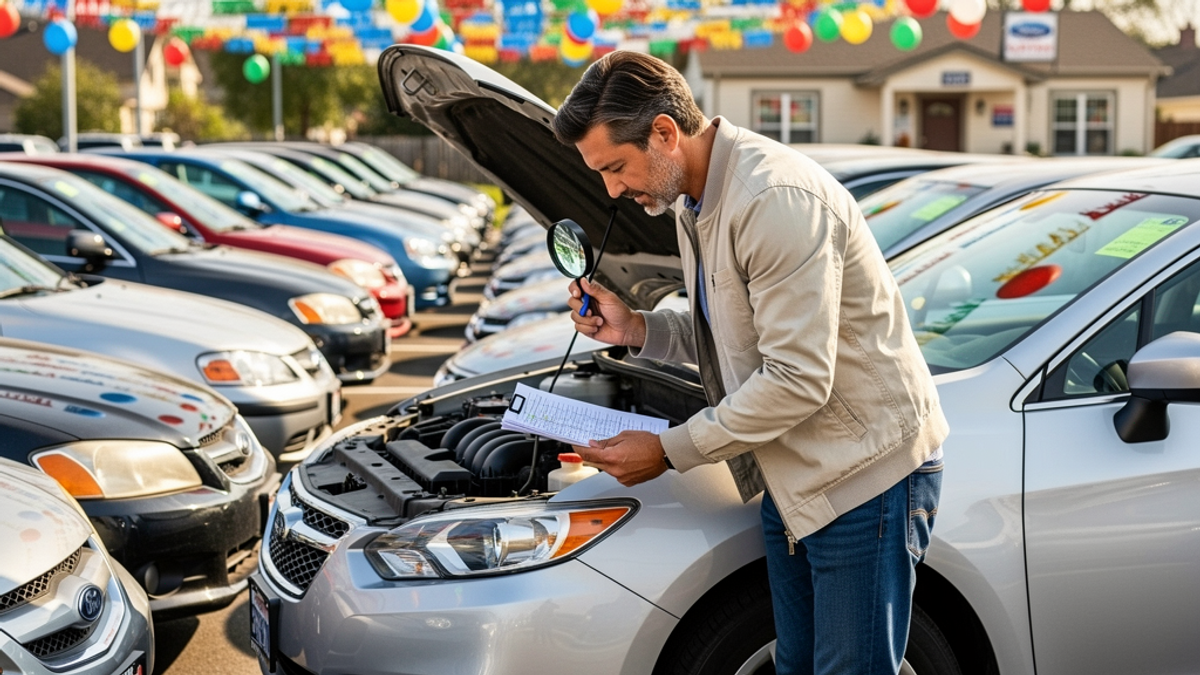
Let's be honest: for most of us, buying a used car ranks right up there with getting a root canal or trying to cancel a gym membership. You just know, deep down in your bones, that someone is trying to separate you from your hard-earned dollars. The used car market has been an absolute rollercoaster over the last few years, and navigating it can feel like walking through a minefield blindfolded.
But here is the good news: you don't have to be a master mechanic or a slick Wall Street negotiator to get a great deal. You just need a game plan. Think of me as that car-obsessed friend you grabbed coffee with, here to give you the inside scoop. If you follow this guide, you can easily save anywhere from $1,000 to $3,000 on your next vehicle purchase, avoid buying someone else's headache, and actually feel good when you finally drive it to Costco for a celebratory bulk-buy run.
Here is your step-by-step, no-nonsense American guide to buying a used car without getting taken for a ride.
Step 1: Secure Your Financing Before You Shop
The biggest mistake people make happens before they even look at a car: they let the dealership dictate their financing. If you walk onto a lot and say, "I can afford $350 a month," you have already lost. Dealerships love "monthly payment buyers" because they can stretch a loan out to 72 or 84 months at a terrible interest rate, pack it full of hidden fees, and still hit your $350 target while you end up paying $5,000 extra in interest.
Instead, get pre-approved. Go to your local credit union or check with your bank online. Find out exactly what they will lend you and at what interest rate. Let's say you get pre-approved for $15,000 at 6% interest. Now, you are effectively a cash buyer. When the dealer asks how you're paying, you just smile and say, "I'm bringing my own financing, let's just talk about the out-the-door price."
Step 2: Where to Shop (And Where to Avoid)
You have three main options for buying a used car in the US, and each comes with its own pros and cons.
The Big Box Retailers (CarMax, Carvana)
These are the Targets of the car-buying world. The experience is usually pleasant, the cars are clean, and the pricing is no-haggle. The catch? You are paying a premium for that convenience. You will rarely find a "steal" at CarMax, but you usually won't get outright scammed, either. It's safe, but you're paying for that safety.
Traditional Dealerships
This is where the negotiation happens. Dealerships get trade-ins every day. The trick here is to look for a used car at a franchise dealership of a different brand. For example, if someone traded in a perfectly good Honda Civic at a Ford dealership, the Ford dealer usually just wants it off their lot quickly because it doesn't fit their primary inventory. You can often negotiate a much better deal here than you could at a Honda lot.
Private Sellers (Facebook Marketplace, Craigslist)
This is the Wild West, but it's also where the best deals live. You're cutting out the middleman. You might find yourself meeting a guy named Dave in a Home Depot parking lot to look at a 2014 Toyota Camry. When dealing with private sellers, beware of scams. Never, ever send a deposit via Venmo or Zelle before you have seen the car in person and verified the title. If they say, "I'm out of the country on military deployment and eBay is handling the transaction," run. It's a classic scam.
Step 3: The Holy Grail of Used Cars: The VIN Check
Never buy a car without running the Vehicle Identification Number (VIN). Services like Carfax or AutoCheck cost around $40, and they are worth their weight in gold.
When you pull the report, here is exactly what you are looking for:
- Title Status: You want a "Clean" title. If it says "Salvage," "Rebuilt," or "Flood," walk away immediately. A car that was flooded in a Florida hurricane might look pristine on the outside, but the electrical gremlins will bankrupt you.
- Number of Owners: A 10-year-old car with two owners is great. A three-year-old car with six owners? Something is wrong with that car, and everyone keeps selling it to make it someone else's problem.
- Maintenance Records: You want to see regular oil changes every 5,000 to 7,500 miles.
- Accidents: A minor fender bender isn't necessarily a dealbreaker if the price is right and it was repaired properly, but structural or airbag deployment damage is a hard pass.
Step 4: The Test Drive (More Than Just a Joyride)
When you show up to look at the car, tell the seller ahead of time that you want the engine to be completely cold. A warm engine can hide a lot of horrible sounds and starting issues. Put your hand on the hood before you start it to verify they didn't warm it up before you got there.
Once you fire it up, don't just turn on the radio and cruise around the block. You need to put this machine to the test.
- The Fluid Check: Pop the hood and pull the oil dipstick. The oil should look like honey or dark syrup. If it looks like a frothy chocolate milkshake, the engine has a blown head gasket, and you should run for the hills.
- The Highway Test: Get it onto the highway and push it up to 70 miles per hour. Does the steering wheel shake? That could mean bad tires or suspension issues. Does the transmission shift smoothly, or does it clunk and hesitate?
- The Climate Control: Crank the AC down to 60 degrees Fahrenheit. It should blow ice cold within a minute or two. Then, crank the heat all the way up. Replacing an AC compressor can easily cost you $1,200, so make sure it works now.
- The Brake Test: On an empty street, hit the brakes firmly (warn your passengers first!). The car should stop in a straight line without pulling to the left or right, and the brake pedal shouldn't pulsate.
- The Tech Check: Test every single button. Windows, sunroof, radio, Bluetooth, backup camera, windshield wipers. If you are going to use this car for a DoorDash side hustle, you need to know the navigation and charging ports work flawlessly.
Step 5: The Pre-Purchase Inspection (Your $150 Insurance Policy)
If you only take one piece of advice from this entire article, make it this one: ALWAYS get a Pre-Purchase Inspection (PPI) from an independent, trusted mechanic.
Tell the seller or the dealership, "I love the car, and I'm ready to buy it at this price, pending an inspection by my mechanic." If they refuse or make excuses, walk away. They are hiding something.
You will pay your mechanic about $150 to $200 for this service. They will put the car on a lift, check for rust, look at the brake pads, test the battery, and scan the computer for recently cleared engine codes. I once paid $150 for a PPI on a used Subaru that looked flawless. The mechanic found a leaking head gasket that would have cost me $2,500 to fix the following month. That $150 saved me thousands.
Step 6: How to Negotiate Like a Boss
Negotiation doesn't have to be confrontational. It's just a business transaction. Here are your golden rules for getting the price down:
Focus Only on the "Out-The-Door" Price
The Out-The-Door (OTD) price is the absolute final number you will write on the check, including taxes, title, and fees. Dealerships love to agree to a $12,000 price, only to tack on a $995 "dealership prep fee," a $300 "VIN etching fee," and $400 for nitrogen in the tires. Ask for an itemized OTD breakdown. When you see garbage fees, point to them and say, "I'm not paying for this $200 interior protection package. Take it off, or I'm leaving." (Pro tip: if you want cheap floor mats, go to Walmart; don't pay the dealer $150 for them).
Watch out for the "doc fee" (documentation fee). Some states cap this at $75, but in states like Florida, dealers will routinely charge $999 just to print some paperwork. You can't always get them to remove the doc fee, but you can demand they lower the price of the car by an equal amount to offset it.
Keep Your Trade-In a Secret
If you have a trade-in, keep it a secret until the very end. Dealerships love to mingle the math. They will give you a great price on the new car but legally steal your trade-in by underpaying you by $3,000. Negotiate the price of the car you are buying first. Once that OTD price is locked in on paper, then say, "Actually, I might want to trade in my old car. Let's see what you'll give me for it." If they lowball you, just sell it yourself or take it to CarMax.
Use the Flaws as Leverage
Did your mechanic's PPI show that the car needs new tires soon? Use that. Say, "The car is great, but a new set of Michelins at Costco is going to run me $800. I need you to knock $800 off the asking price so I can replace them."
Be Willing to Walk Away
The absolute strongest negotiation tactic in the world is your feet. If the seller won't meet your reasonable price, or if they are being unnecessarily pushy, stand up, shake their hand, and say, "I appreciate your time, but we are too far apart on the numbers." Start walking to your car. Half the time, they will stop you before you open your door with a better offer. If they don't, you just saved yourself from a bad deal.
Step 7: Closing the Deal and Protecting Yourself
If you are buying from a private seller, you need to make sure the paperwork is airtight.
- Check the Title: Make sure the name on the title matches the seller's driver's license. If Dave is selling a car and the title says "Susan," ask why. If he says he is selling it for his aunt, tell him you need Susan there to sign it. "Title jumping" is illegal and will cause you massive headaches at the DMV.
- Bill of Sale: Print out a standard Bill of Sale template for your state. Both of you sign it. It should state the purchase price, the VIN, the mileage, and that the car is being sold "As-Is."
- The Payment: For private sales, go to your bank together. Hand them a cashier's check or cash right there in the bank lobby. It's safe, there are cameras, and it ensures nobody gets scammed with fake checks or sketchy wire transfers.
The Bottom Line
Buying a used car is a massive financial decision, but it doesn't have to be a stressful one. By doing your homework, securing your own financing, demanding a VIN history, insisting on an independent inspection, and negotiating purely on the out-the-door price, you flip the power dynamic. You go from being a potential victim to an informed, empowered buyer.
Actionable Takeaway: Before you even look at a single car online, go pull your free credit score today. Once you know where you stand, call your local credit union and ask about their current used auto loan rates. Getting that pre-approval in your pocket is your very first step to driving away with a deal you can brag about.

SunMaster USA
Editorial Team
The SunMaster USA team finds, tests, and shares the smartest lifehacks, money moves, and home improvement tips that make everyday life easier for American families.