How to Buy a Used Car Without Getting Ripped Off: A Stress-Free Guide
Buying a used car doesn't have to be a high-anxiety ordeal. From running VIN checks to mastering the test drive and dodging shady sellers, here is your stress-free guide to scoring a reliable ride without getting ripped off.

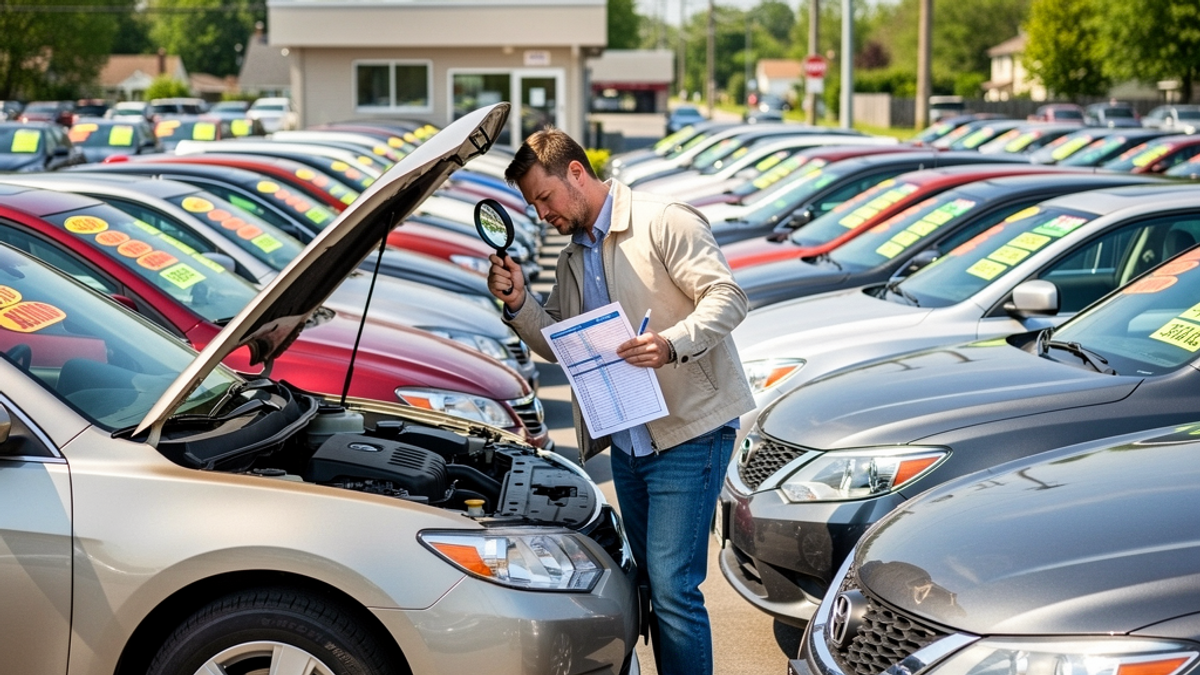
Buying a used car usually ranks right up there with getting a root canal or trying to cancel a gym membership. It is notoriously stressful. You are worried about buying a lemon, overpaying, or dealing with a pushy salesperson who won't take no for an answer. Here at Onyx Sound Lab, we are usually focused on keeping your nervous system regulated through sound wellness and frequency therapy. But honestly, financial wellness and avoiding massive, unexpected stressors—like a blown transmission on a car you just bought—is a huge part of living a calm, balanced life.
Buying a car isn't like wandering into Target for paper towels and accidentally dropping $250 on candles and throw pillows. It is a major financial commitment. But if you know what to look for, where to shop, and how to negotiate, you can navigate the wild west of the used car market with total peace of mind.
Grab a cup of coffee, take a deep breath, and let's break down exactly how to buy a used car without getting ripped off.
1. Set Your Real Budget (Not Just the Sticker Price)
Before you even open a browser tab to look at cars, you need to figure out your out-the-door budget.
When you see a car listed for $15,000, that is not what you are actually going to pay. You have to account for state sales tax, title transfer fees, and registration. Depending on your state, these can add anywhere from 5% to 10% to the purchase price. If you have exactly $15,000 in cash to spend, you should really be looking at cars priced around $13,500 to leave room for taxes and fees.
Furthermore, hold back an emergency fund. If you are buying a used car with over 60,000 miles on it, keep at least $1,000 set aside for immediate maintenance. You might need new brake pads, a fresh set of tires, or a fluid flush right out of the gate.
2. Where to Shop (And Where to Run Away From)
The platform you use to find your car will dictate the kind of experience you have. Here is the breakdown of the American used car landscape.
The Dealership Route
Traditional dealerships offer convenience, but you will pay a premium. If you hate haggling, look into the Costco Auto Program. If you are an executive member, you can often bypass the negotiation entirely and get a pre-arranged, discounted price at participating local dealers. Alternatively, places like CarMax or Carvana offer no-haggle pricing, but you are generally paying $1,500 to $2,500 more for that convenience.
The Private Seller Route
Craigslist and Facebook Marketplace are where the real deals live, but they are also the digital equivalent of the Wild West. You are dealing directly with the owner, which means you can negotiate better prices, but you also have zero buyer protection.
Red Flags on Marketplace:
- Title Jumping: If the name on the seller's ID does not match the name on the car's title, walk away immediately. This is illegal and will be a nightmare for you at the DMV.
- Weird Payment Requests: Never Venmo or Zelle a stranger a $500 "holding deposit" before you have seen the car. Scammers post fake listings for underpriced Honda Civics and Toyota Camrys just to steal these deposits.
- Sob Stories: If the listing says they are deploying to the military tomorrow and need to sell the car immediately via an eBay escrow service, it is a scam.
3. The Digital Detective Work: VINs and History Reports
Once you find a car you like, do not drive across town to look at it until you have the Vehicle Identification Number (VIN).
Ask the seller for the VIN. If they refuse or make excuses, block them and move on. Once you have the VIN, run it through a service like Carfax or AutoCheck (usually about $40).
What you are looking for:
- Title Status: You want a "Clean Title." If it says "Salvage" or "Rebuilt," run. That means the car was totaled by an insurance company due to a severe crash, flood, or fire.
- Ownership History: A 10-year-old car with two owners is great. A three-year-old car with six owners is a massive red flag. Why does everyone keep getting rid of it?
- Maintenance Records: Regular oil changes reported on the Carfax are a beautiful sight. It shows the previous owner actually cared.
4. The In-Person Inspection: Channel Your Inner Mechanic
You do not need to be a gearhead to spot a lemon. You just need to be observant. When you go to look at the car, bring a flashlight and ideally, a cheap $20 OBD2 scanner you can pick up from Walmart or Amazon.
The Cold Start
Tell the seller beforehand: "Please do not start the car before I get there. I want to see a cold start." When you arrive, physically touch the hood. If it is warm, they warmed it up. Why? Because cars with failing engines or bad belts often make horrible rattling noises when they are completely cold, which magically disappear once the engine warms up.
The Walk-Around and Fluids
- The Penny Test: Take a standard Lincoln penny and stick it into the tire tread upside down. If you can see all of Lincoln's head, the tires are bald, and you will need to spend $500-$800 on a new set immediately. Negotiate that out of the price.
- Check for Rust: Look underneath the car. A little surface rust on the exhaust is normal. But if the frame has deep, flaking rust that looks like a forgotten wheelbarrow left outside a Home Depot for five years, walk away.
- Check the Oil: Pull the dipstick. The oil should look like honey or dark syrup. If it looks like a frothy, chocolate milkshake, the head gasket is blown. Run for the hills.
5. The Test Drive: Turn Off the Radio
Sellers love to turn on the radio during a test drive to show off the speakers (and conveniently drown out the sound of a failing wheel bearing). Turn the radio completely off. Turn the climate control off for a moment. You need to listen to the car.
- City Streets: Drive over some bumps. Do you hear loud clunks or squeaks from the suspension?
- Highway Speeds: Get the car out on the highway and take it up to 65 or 70 miles per hour. Does the steering wheel shake violently? Does the car pull hard to the left or right?
- Braking: On an empty street, hit the brakes firmly. The car should stop straight. If the brake pedal pulses under your foot, the brake rotors are warped.
- Climate Control: Blast the AC, even if it is 30 degrees Fahrenheit outside. Blast the heater, even if it is 90 degrees out. Fixing a broken AC compressor can easily cost $1,200.
6. The Golden Rule: The Pre-Purchase Inspection (PPI)
If you take absolutely nothing else away from this article, remember this: Never buy a used car without a Pre-Purchase Inspection (PPI) from an independent mechanic.
If the test drive goes well and you want the car, tell the seller: "I love the car. I just want to take it to my mechanic for a quick inspection, and if it checks out, I will buy it today."
A PPI usually costs between $100 and $200. The mechanic will put the car on a lift, check the brakes, suspension, look for hidden oil leaks, and read the computer codes. Spending $150 on a PPI can save you from buying a car that needs a $3,500 transmission rebuild next month.
If a seller refuses to let you get a PPI, they are hiding something. Thank them for their time and leave.
7. The Art of the Deal: Negotiation and Payment
Negotiating doesn't have to be an aggressive, sweaty confrontation. It is just a conversation based on data.
Look up the car's private party value on Kelley Blue Book (KBB.com). Let's say the car is listed for $10,000, KBB says it is worth $9,000, and your mechanic noted it needs $500 worth of new tires.
Your strategy: Be polite, point to the data, and make an offer. "I really like the car, but based on the Kelley Blue Book value and the fact that I need to put a fresh set of tires on it right away, my highest offer is $8,500. I have the cash ready today."
Then, be quiet. Let the silence hang. The first person to speak loses.
If they counter at $8,800, you just saved yourself $1,200 off the asking price. If they refuse to budge and the price doesn't make sense, exercise your ultimate superpower: the willingness to walk away. There are millions of used cars in America. Another one will pop up tomorrow.
How to Pay Safely
If you reach a deal, do not carry $10,000 in physical cash in a duffel bag. Go to your local bank branch together. Have the teller draft a cashier's check directly to the seller. This protects you from carrying massive amounts of cash, and it gives the seller peace of mind that the funds are guaranteed. Sign the title right there in the bank lobby.
The Actionable Takeaway
Buying a used car is a massive transaction, but it doesn't have to ruin your week. Your actionable step today: If you are in the market, pull up your banking app and calculate exactly what you can spend in cash (or secure pre-approved financing from your local credit union). Write down your hard limit, subtract 10% for taxes and fees, and only search for cars under that number.
Stick to the process: Run the Carfax, do the cold start, demand the PPI, and negotiate based on facts, not emotions. Keep your nervous system calm, trust your gut, and don't rush. By staying disciplined, you will drive away in a reliable vehicle with cash left in your pocket—so you can go home, kick your feet up, and DoorDash a celebratory dinner with zero buyer's remorse.

SunMaster USA
Editorial Team
The SunMaster USA team finds, tests, and shares the smartest lifehacks, money moves, and home improvement tips that make everyday life easier for American families.