How to Cut Your Electric Bill by 30% Without Sacrificing Comfort
Tired of opening your utility bill and wincing? You don't have to sit in the dark or sweat through the summer to save money. Here are the highest-impact tweaks to slash your electric bill by 30% without sacrificing an ounce of comfort.

Here at Onyx Sound Lab, we talk a lot about optimizing your environment for peace, focus, and wellness. But let's be honest: it is incredibly hard to relax into a restorative sound bath or frequency meditation when you're secretly stressing over the hum of an AC unit that's about to cost you $300 this month.
Let's be real. Opening that envelope (or email notification) from your local utility company in the dead of August or the freezing depths of January is basically an extreme sport. You brace yourself, mentally calculate if you need to skip ordering DoorDash this weekend to cover the difference, and open it. Ouch.
For a long time, the prevailing advice for saving money on electricity was rooted in suffering. Dads across America would stand by the thermostat like bouncers at a club, refusing to let the house drop below 80°F in the summer or rise above 62°F in the winter. We were told to sit in the dark, unplug everything we own, and basically live like pioneers.
But you don't have to sacrifice your comfort to keep your hard-earned dollars in your bank account. By making a few strategic, high-impact changes to how your home operates, you can easily slash your electric bill by up to 30%. For the average American household paying around $2,000 a year for electricity, that's $600 back in your pocket—enough for a nice weekend getaway or a significant boost to your savings.
Here are the top energy-saving changes, ranked by their financial impact, along with the exact steps you can take today to start saving.
1. Smart Thermostat Scheduling (The Heavy Hitter)
Estimated Savings: $180+ per year
Heating and cooling your home accounts for roughly 47% of your total energy use. It is the undisputed heavyweight champion of your electric bill. If you are still walking up to a plastic dial on your wall and manually adjusting the temperature like it's 1998, you are leaving serious money on the table.
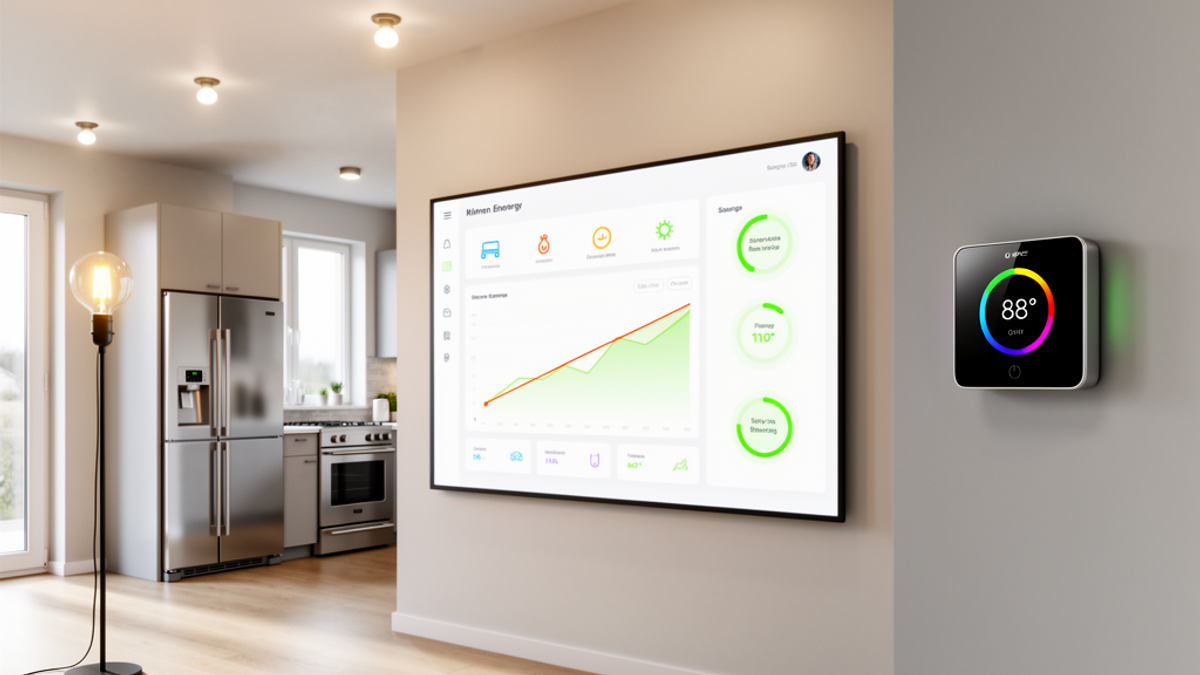
Upgrading to a smart thermostat—like a Google Nest or an Ecobee—is the single best investment you can make for your home's energy efficiency. You can pick one up at Home Depot or Best Buy for around $130 to $250, and many local utility companies actually offer $50 to $100 rebates just for installing one.
But the magic isn't just in buying the device; it's in the scheduling. Smart thermostats learn your habits and adjust the temperature based on when you are actually home.
How to Optimize Your Schedule:
- The Geofencing Trick: Most smart thermostats have an app that tracks your phone's location. When you are more than a few miles away from the house, the system automatically dials back the heating or cooling. When you cross back into that radius, it kicks on so the house is perfectly comfortable by the time you walk through the door.
- The Sleep Shift: You actually sleep better in cooler temperatures. In the winter, let the house drop to 60°F or 62°F while you're buried under your blankets. In the summer, rely on a fan (more on that later) and let the AC rest at 76°F or 78°F overnight.
- The 8-Hour Away Rule: If your house is empty while you are at work for 8 hours, let the temperature drift by 7 to 10 degrees from your normal comfort zone.
By fully utilizing smart scheduling, the Department of Energy estimates you can save up to 10% on heating and cooling a year.
2. Upgrade to LED Bulbs (The Absolute No-Brainer)
Estimated Savings: $225 per year (for an average 40-bulb home)
I know, I know. You've been hearing about LED bulbs for a decade. But if you still have old incandescent bulbs or those curly, slow-to-warm-up CFL bulbs in your house, you are literally burning money.
An old-school 60-watt incandescent bulb uses exactly that: 60 watts of electricity. A modern LED bulb that produces the exact same amount of light uses about 9 watts. That is an 85% reduction in energy use for the exact same result. Plus, incandescent bulbs waste 90% of their energy as heat. If you have five lamps on in your living room during the summer, you are actively fighting your air conditioner.
How to Make the Switch Today:
Listen, you don't need to overcomplicate this. Head to Costco, Walmart, or Target and grab a bulk pack of LEDs.
- Pick the Right Color: The biggest complaint people have about LEDs is that they look like a sterile hospital. That's because they bought the wrong "color temperature." Look for bulbs labeled "Soft White" or "Warm White" (2700K to 3000K) for your living rooms and bedrooms. Save the "Daylight" (5000K) bulbs for your garage or basement.
- Do a House Sweep: Start with the high-traffic fixtures. The kitchen overhead lights, the living room lamps, and the porch light that you accidentally leave on all night.
If you replace 40 old bulbs with LEDs, you'll save over $200 a year, and the bulbs will last for 10 to 20 years. You won't be climbing a wobbly ladder to change a burnt-out bulb anytime soon.
3. Eliminate "Phantom" Loads (The Silent Leech)
Estimated Savings: $100 to $200 per year
Did you know that many of your electronics are drawing power even when they are turned "off"? This is called standby power, vampire power, or a phantom load.
Your big-screen TV, your gaming consoles (Xbox and PlayStation are notorious for this), your desktop computer, your microwave, and that fancy Keurig coffee maker are all sipping electricity 24/7 just waiting for you to press a button. According to the Natural Resources Defense Council (NRDC), phantom loads cost the average American household about $165 a year. That's a lot of money to pay for appliances that are literally doing nothing.
How to Slay the Vampires:
- Smart Power Strips: You aren't going to crawl behind your entertainment center to unplug your TV every night. Instead, buy an Advanced Power Strip (APS) from Amazon or Target for about $20. These strips detect when a primary device (like your TV) is turned off, and automatically cut the power to peripheral devices (like your soundbar, gaming console, and streaming box).
- The Unplug Audit: Take a walk around your house right now. Do you have a spare TV in the guest room that gets used twice a year? Unplug it. Is there a phone charger plugged into the wall with no phone attached? Pull it.
- Hold Roommates Accountable: If you live with roommates who constantly leave their gaming rigs on standby, it might be time for a friendly intervention. If they refuse to change, just Venmo request them for their share of the phantom load. (I'm mostly kidding, but it's tempting!).
4. Shift to Off-Peak Usage (The Timing Hack)
Estimated Savings: $50 to $100 per year
When you use electricity can be just as important as how much you use. Many utility companies across the US—especially in states like California, Texas, and New York—have shifted to "Time-of-Use" (TOU) pricing.
Here's how it works: Between 4:00 PM and 9:00 PM, everybody comes home from work. They crank up the AC, turn on the oven, start a load of laundry, and fire up the TV. Because demand on the power grid is massively high, the utility company charges you a premium rate for electricity during these "peak" hours. Sometimes, the peak rate is double or triple the normal rate!
How to Outsmart the Grid:
- Delay Your Dishwasher: Almost every modern dishwasher has a "Delay Start" button. Load your dishes after dinner, but set the delay for 4 or 6 hours so it runs at 1:00 AM when electricity is dirt cheap.
- Weekend Laundry: Your electric dryer uses a massive amount of energy. If you can, shift your laundry days to the weekend mornings or late evenings during the week.
- Check Your Plan: Log into your utility provider's website today. See if you are on a Time-of-Use plan. If you aren't, see if switching to one makes sense for your lifestyle. If you work night shifts or are naturally a night owl, a TOU plan is basically free money.
5. Reverse Your Ceiling Fans (The Seasonal Spin)
Estimated Savings: $50+ per year
Ceiling fans are the unsung heroes of home comfort, but 80% of people are using them wrong. A ceiling fan does not actually lower the temperature of a room; it cools you by creating a wind-chill effect on your skin.
Because a fan can make a room feel up to 4 degrees cooler than it actually is, you can raise your smart thermostat by 4 degrees in the summer without noticing a single difference in your comfort level. Raising your thermostat by just a few degrees can cut your AC costs by 10%.
But here is the secret: fans have seasons.
The Two-Second Fan Fix:
Grab a step stool and look at the base of your ceiling fan. There is a small toggle switch on the side.
- Summer Mode (Counter-Clockwise): During the hot months, your fan should spin counter-clockwise. This pushes air straight down, creating that beautiful, breezy wind-chill effect.
- Winter Mode (Clockwise): In the winter, flip the switch so the fan spins clockwise on a low speed. Because heat naturally rises to the ceiling, the clockwise motion gently pulls cool air up and pushes the warm air down the walls and back into the living space, making your heater work much less hard.
Important Note: Because fans cool people, not rooms, turn them off when you leave the room! Leaving a fan running in an empty room is just wasting electricity.
The Bottom Line
Let's tally up the potential savings:
- Smart Thermostat: ~$180
- LED Bulbs: ~$225
- Phantom Loads: ~$100
- Off-Peak Usage: ~$80
- Ceiling Fans: ~$50
Total Potential Savings: $635 a year.
If your annual electric bill is around $2,000, you've just successfully cut your costs by over 30%. And the best part? You didn't have to freeze in the winter, sweat in the summer, or read a book by candlelight to do it. You just made your home smarter and more efficient.
Your Actionable Takeaway for Today:
Don't try to do all of this at once. Pick one thing to do right now. Grab your phone and order a $20 smart power strip from Target, or walk into your living room and flip the switch on your ceiling fan to the correct seasonal direction. Once you see your next utility bill drop, you'll have all the motivation you need to tackle the rest of the list.
Stay comfortable, stay financially savvy, and keep your home's frequency exactly where it needs to be.

SunMaster USA
Editorial Team
The SunMaster USA team finds, tests, and shares the smartest lifehacks, money moves, and home improvement tips that make everyday life easier for American families.