How to Cut Your Grocery Bill in Half Without Couponing
Tired of spending your whole paycheck at the supermarket? Discover how to slash your grocery bill in half without clipping a single coupon. Learn the secrets of loss leaders, store brand math, and smart bulk buying to save hundreds every month.

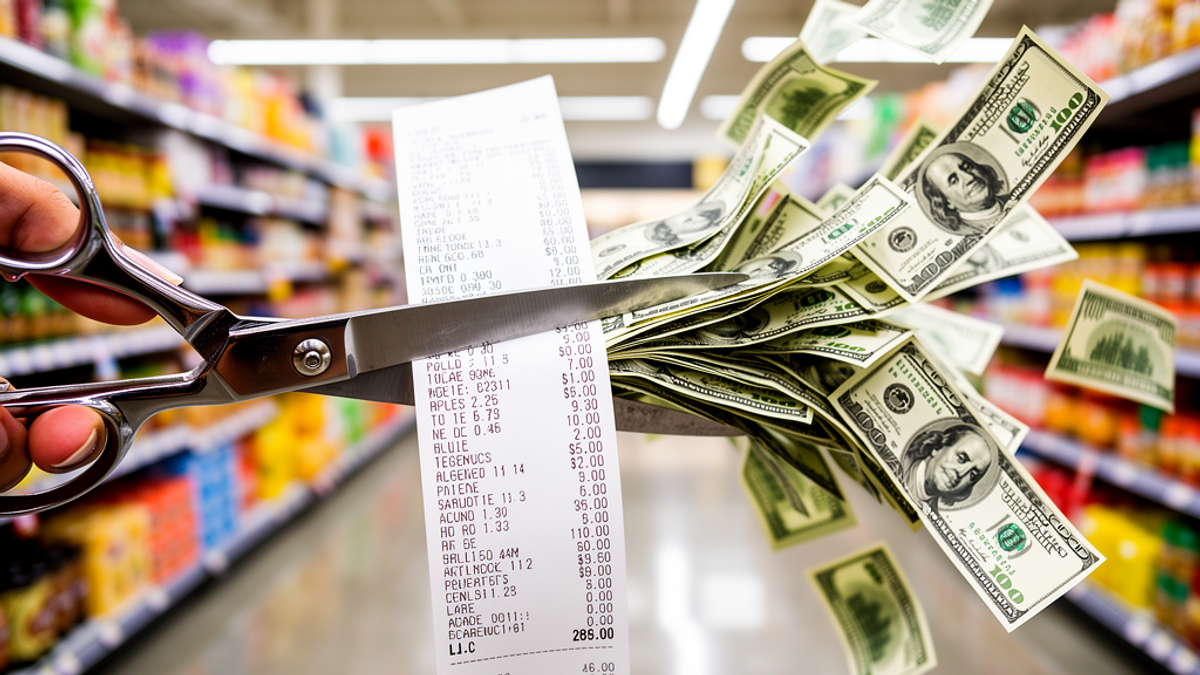
Let's be real for a second. Have you looked at a grocery receipt lately and thought, "Did I accidentally buy a small boat?" You run into the store for milk, eggs, and a box of cereal, and suddenly you're tapping your card for $85. It's enough to make your blood pressure spike. Here at Onyx Sound Lab, we talk a lot about reducing stress and tuning your environment to achieve a state of wellness. And let's be honest: nothing spikes your cortisol faster than watching the total climb at the checkout counter.
Financial stress is a massive barrier to overall wellbeing. When you're constantly worrying about how to afford basic necessities, it's hard to focus on mindfulness, sound therapy, or self-care. But here is the good news: you do not need to become an extreme couponer to take back control of your budget. You don't need a three-ring binder full of newspaper clippings, and you don't need to spend 15 hours a week hunting for promo codes.
Cutting your grocery bill in half is entirely possible, and it comes down to strategy, not scissors. By understanding how supermarkets are designed to make you spend money—and flipping the script on them—you can easily keep hundreds of dollars in your checking account every single month.
Grab a cup of coffee, and let's break down the exact, step-by-step playbook to slash your grocery bill without clipping a single coupon.
The Magic of "Loss Leaders" (The Store's Bait is Your Catch)
If you want to win the grocery game, you have to understand the concept of a "loss leader."
Supermarkets operate on razor-thin profit margins. To get you to walk through their automatic doors instead of driving across the street to a competitor, stores like Kroger, Safeway, and Publix will heavily discount a few popular items. We're talking about pricing things so low that the store actually loses money on them. These are the "loss leaders."
They might advertise boneless, skinless chicken breasts for $1.99 a pound, or a carton of strawberries for $0.99. Why would they do this? Because their data shows that once you're inside the store to buy the cheap chicken, you're probably also going to buy the $7 paper towels, the $5 box of crackers, and the $12 six-pack of craft beer. They lose $2 on the meat, but they make $10 on the rest of your cart.
How to Play the Game
Your strategy is simple: Buy the bait, leave the trap.
Check the front page of your local grocery store's weekly ad (it's usually available right on their app). Build your weekly meal plan around only those front-page loss leaders. If pork shoulder is on sale for $1.49 a pound, guess what? You're having pulled pork tacos this week. If ground turkey isn't on sale, you skip it. By strictly shopping the loss leaders for your proteins and expensive items, you can easily shave $30 to $50 off your bill right off the bat.
Store Brand Math: The Illusion of the Label
Americans have a weird emotional attachment to brand names. We've been conditioned by decades of commercials to believe that the name-brand box of oats is somehow vastly superior to the store-brand box sitting right next to it.
Here is the industry secret: In many cases, they are manufactured in the exact same facility, on the exact same assembly line, and put into different boxes.
Let's do some store brand math. A 14.5 oz can of name-brand diced tomatoes might cost you $2.49. The Walmart Great Value or Target Good & Gather version of that exact same can of tomatoes is $0.99.
It might seem like a small difference—what's a buck fifty, right? But let's zoom out. If you swap out 30 name-brand items for store-brand items during a weekly shopping trip, saving an average of $1.50 per item, you just saved $45.
Do that every week for a year, and you have saved $2,340. That is not pocket change; that is a down payment on a car, a massive chunk of high-interest debt wiped out, or a very nice vacation. Stop paying the "marketing tax" for a fancy logo. Let the store brands do the heavy lifting for your budget.
The "Outside Aisles" Rule
Supermarkets are designed by psychologists. Every single inch of the store is optimized to make you part with your hard-earned dollars.
Have you ever noticed that the milk is always at the very back of the store? That's not an accident. They want you to walk past thousands of highly profitable, brightly colored boxes of processed food to get to the one essential item you actually came for.
To cut your bill in half, adopt the "Outside Aisles" rule. The perimeter of the grocery store is where the real, whole foods live: produce, fresh meat, dairy, and eggs. These items are generally cheaper per serving and infinitely better for your physical and mental wellness.
When you venture into the middle aisles, you are entering the danger zone. This is where the $6 bags of chips, the $7 sugary cereals, and the $8 frozen pizzas live. These processed convenience foods are where your grocery budget goes to die. Stick to the perimeter for 80% of your shopping. You'll eat healthier, feel better, and your wallet will thank you.
The Seasonal Produce Calendar
We've gotten incredibly spoiled in the US. We expect to be able to walk into a grocery store and buy fresh strawberries in the dead of winter in Minnesota.
But buying out-of-season produce is a massive drain on your budget. When you buy a pint of blueberries in January, you aren't just paying for the fruit. You are paying the massive transportation costs to fly those blueberries up from South America, keep them refrigerated, and rush them to your local store before they spoil. That's why they cost $6.99 and taste like crunchy water.
Eat What the Earth is Doing Right Now
Learn the seasonal produce calendar.
- Spring: Asparagus, peas, spinach.
- Summer: Berries, tomatoes, corn, zucchini.
- Fall: Apples, sweet potatoes, squash, pumpkins.
- Winter: Citrus fruits, root vegetables, cabbage.
In July, that same pint of blueberries will be on sale for $1.99 and will taste incredible. Buy produce when it is in season and abundant. If you really want berries in the winter, buy the large bags of frozen fruit. They are picked and flash-frozen at peak ripeness, making them both cheaper and more nutritious than the out-of-season fresh stuff.
The Bulk Bin Strategy: Buy What You Need, Not What They Package
Let's talk about spices, grains, and nuts. If you are buying these items in pre-packaged jars or bags, you are getting robbed blind.
A tiny, 2-ounce glass jar of paprika in the baking aisle will easily run you $5.99. But if you walk over to the bulk bins at stores like WinCo, Whole Foods, or your local co-op, you can buy the exact same spice by weight. If you only need a few tablespoons of a specific spice for a recipe, you can scoop it into a little bag, weigh it, and pay literally $0.35 for it.
The same goes for oats, rice, quinoa, and almonds. When you buy pre-packaged, you are paying for the plastic, the branding, and the convenience. By bringing your own containers or using the provided bags in the bulk section, you control exactly how much you buy. No more spending $8 on a bag of specialty flour only to use half a cup and let the rest sit in your pantry until the next presidential election.
The Meat Reduction & Repurposing Playbook
Meat is almost always the most expensive line item on a grocery receipt. You don't have to become a strict vegan to save money, but treating meat as an accent rather than the main event will drastically reduce your bill.
Incorporate "Meatless Mondays" into your routine. A hearty black bean chili or a rich lentil soup costs pennies per serving compared to a steak dinner.
When you do buy meat, learn the art of repurposing. Let's look at the greatest deal in American retail: the $4.99 Costco rotisserie chicken.
Amateurs eat the chicken for dinner on Tuesday and throw the rest away. Strategists stretch it into three meals:
- Dinner 1: Sliced chicken breast with roasted seasonal veggies.
- Dinner 2: Shred the leftover dark meat for chicken tacos or a chicken salad sandwich.
- Dinner 3: Take the carcass, throw it in a pot with some water, carrots, celery, and an onion, and boil it down overnight. You just made a massive batch of rich, immune-boosting bone broth that would cost you $12 at the store.
One $5 chicken. Three meals. That is how you win the game.
Inventory Your Pantry Before You DoorDash
Finally, we have to address the elephant in the room. The number one reason American grocery budgets get blown out of the water isn't actually the grocery store—it's the food waste mixed with the convenience economy.
You buy $150 worth of groceries on Sunday. By Thursday, you're tired, you don't feel like cooking, and you stare into a fridge full of food and say, "I have nothing to eat." So, you open DoorDash. A $15 burrito turns into $32 after the delivery fee, the service fee, and the tip. You just wasted money on takeout, and the fresh spinach you bought on Sunday is currently turning into a science experiment in your crisper drawer.
This cycle is destroying your budget.
Before you ever set foot in a supermarket, "shop" your own kitchen. Look in the back of the pantry. Look in the depths of the freezer. You probably have a bag of frozen shrimp, a box of pasta, and half a jar of marinara sauce. Boom. That's dinner.
Make it a rule: you are not allowed to buy new groceries until you have exhausted the viable meals currently sitting in your house.
Your Actionable Takeaway for Today
Reading about saving money feels good, but taking action is what actually changes your bank account.
Here is your specific step to take today: Go into your kitchen right now and do a "Pantry Audit." Grab a piece of paper and write down three dinners you can make using only ingredients you currently have in your freezer, fridge, and pantry.
Commit to making those three meals this week before you step foot inside a Walmart or Target. You'll instantly save yourself a trip to the store, prevent food waste, and keep $50 to $100 safely tucked away in your bank account.
Financial wellness isn't about restriction; it's about intentionality. By shopping smarter, ignoring the marketing noise, and getting creative with what you have, you can cut your grocery bill in half—leaving you with more money, more peace of mind, and zero coupons to clip.

SunMaster USA
Editorial Team
The SunMaster USA team finds, tests, and shares the smartest lifehacks, money moves, and home improvement tips that make everyday life easier for American families.