How to Get Through Airport Security in 5 Minutes Flat
Stop sweating in the TSA line. From the psychology of the left lane to strategic packing and the ultimate pre-security checklist, here is your blueprint to breeze through airport security in five minutes flat.

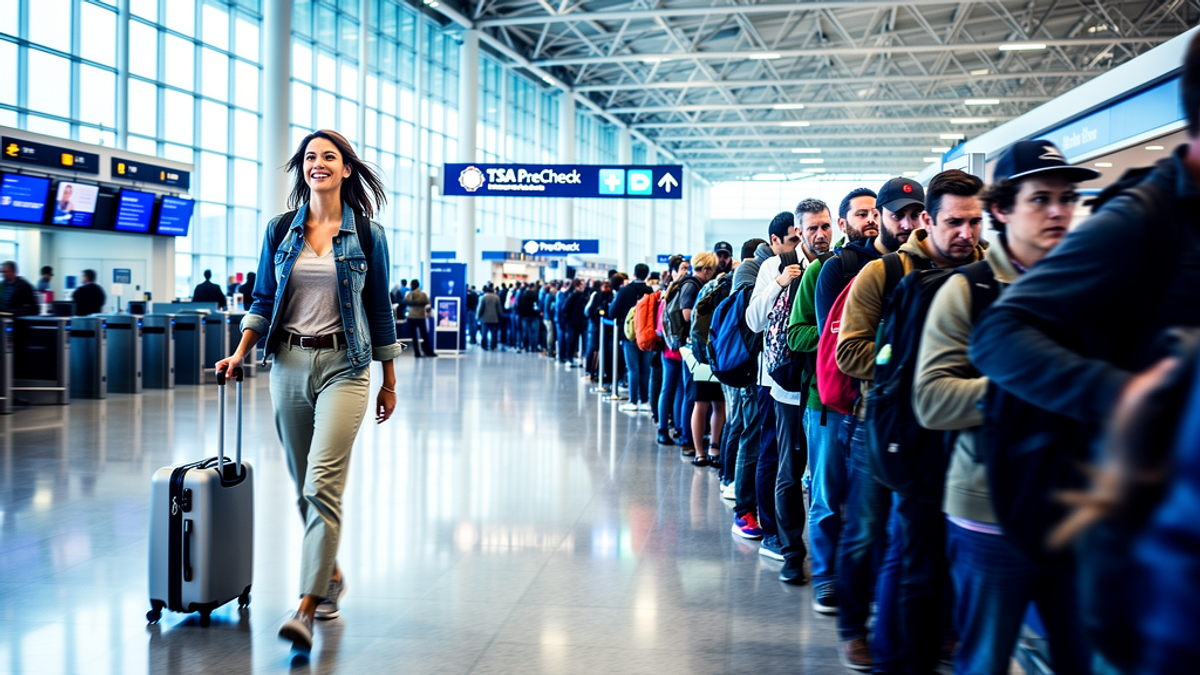
We have all been there. You walk through the sliding glass doors of the airport, the air conditioning blasting at a crisp 68 degrees Fahrenheit, and you look ahead to see it: the TSA security line. It looks like a theme park queue gone horribly wrong. Hundreds of people shuffling forward, dragging overstuffed roller bags, frantically chugging water bottles, and untying complicated lace-up boots.
At Onyx Sound Lab, we talk a lot about nervous system regulation and keeping your internal frequencies balanced. Well, nothing spikes your cortisol and throws your baseline out of whack quite like the panic of almost missing a flight because the guy in front of you forgot he had a family-sized bottle of shampoo in his backpack. Travel is stressful enough. Your nervous system shouldn't be redlining at 110 beats per minute before you even reach your gate.
But then, there is that other type of traveler. The business traveler. They glide past the chaos, flash a screen, drop a single sleek bag onto the belt, and walk through the metal detector without breaking a stride. They are putting their laptop away before you have even taken off your shoes.
You can be that traveler. Even if you are flying in deep economy, you can master the art of the security checkpoint. Here is your comprehensive, step-by-step guide to getting through airport security in five minutes flat.
The Golden Ticket: TSA PreCheck and CLEAR
Let's get the most obvious but most important step out of the way first. If you fly more than once a year, you need TSA PreCheck. Period.
TSA PreCheck costs exactly $78 for five years. If you do the math, that is $15.60 a year. You probably spend more than that on a single DoorDash order for a burrito bowl after delivery fees. For less than sixteen bucks a year, you get to keep your shoes on, keep your laptop in your bag, keep your light jacket on, and leave your liquids packed away. It is the single highest return on investment in the travel world.
Better yet, check your wallet right now. Many premium travel credit cards—like the Chase Sapphire Reserve, Capital One Venture, or Amex Platinum—will reimburse you for the application fee. You literally just pay with the card, and a $78 statement credit magically appears a few days later.
If you travel internationally, spend the extra money and get Global Entry. It currently costs $120 for five years (though prices are slated to shift slightly, it remains a bargain) and includes TSA PreCheck automatically.
What about CLEAR?
If you fly out of major hubs like Atlanta, Denver, or JFK, you might want to stack PreCheck with CLEAR Plus. CLEAR uses your biometric data (eyes or fingerprints) to verify your identity, allowing you to skip the ID checker completely and jump straight to the front of the physical security line. It costs $189 a year, which is steeper, but if you have a Delta SkyMiles or United MileagePlus account, you can usually knock that down to $119 or even get it for free depending on your status. If you value your time and want to guarantee a five-minute transit, the PreCheck + CLEAR combo is the ultimate cheat code.
The "Left-Lane Trick" and Line Psychology
Let's say you don't have PreCheck yet, or the PreCheck line itself is looking surprisingly long. It is time to use human psychology to your advantage.
Americans are culturally conditioned to favor the right side. We drive on the right side of the road, we walk on the right side of the sidewalk, and when we enter a grocery store like Target or Walmart, the store layout is usually designed to funnel us to the right.
When travelers approach a massive bank of security checkpoints, their subconscious brains almost always steer them toward the lanes on the right. Always look left. The furthest left lanes are consistently shorter and move faster because fewer people naturally drift in that direction.
Furthermore, you need to read the crowd. When picking a lane, do not just look at the number of people; look at who is in the line.
Avoid getting behind:
- Families with strollers and multiple toddlers (bless them, but it takes time to fold a stroller).
- Large tour groups or student groups wearing matching t-shirts.
- People who are already arguing with airport staff.
Look for:
- Solo travelers carrying sleek, dark-colored backpacks or briefcases.
- People wearing slip-on shoes and minimal outerwear.
- Travelers who already have their IDs in their hands.
Get behind the business road warriors. They want to get to the Delta Sky Club just as badly as you want to get past security, and they move with absolute ruthless efficiency.
The Airport Uniform: Dress for Egress
Your five-minute sprint through security starts in your closet at home. What you wear to the airport dictates how fast you get through the scanners.
The metal detector or body scanner is looking for anomalies. Do not give it any.
- Shoes: Leave the 14-hole lace-up Doc Martens in your checked bag. Wear slip-on sneakers, loafers, or Chelsea boots. If you have PreCheck, you keep your shoes on, but if you ever get randomly selected for regular screening, you want shoes you can kick off in two seconds.
- Belts and Jewelry: Avoid massive metal belt buckles. Opt for a simple leather belt with a small buckle, or better yet, wear comfortable travel pants that don't require a belt at all. Keep jewelry minimal.
- Pockets: This is the big one. Do not be the person emptying their pockets at the conveyor belt. When you are 10 minutes away from the airport—whether you are sitting in the back of an Uber you just split with your buddy on Venmo, or parking your car—empty your pockets completely. Keys, wallet, loose change, lip balm, AirPods. All of it goes directly into a designated zipper pocket in your personal item. Your pockets should be completely empty before you even step foot in the terminal.
Strategic Packing: The Bins and the Bag
How you pack your carry-on is the difference between smoothly walking away from the belt and standing there awkwardly while a TSA agent swabs your bag for explosives because they couldn't identify your massager.
The 3-1-1 Rule and the Target Run
If you are in the standard line, your liquids must be 3.4 ounces (100ml) or less, all fitting in a single quart-sized bag. Do not try to sneak through a half-empty 64-ounce Costco tub of CeraVe lotion. They will throw it away, and you will hold up the line arguing about it.
Go to Target or Walmart, head to the travel aisle, and buy a set of reusable silicone travel bottles for $10. Fill them with your favorite products at home. Keep this clear bag at the very top of your carry-on or in an exterior pocket so you can grab it in one motion.
The Tech Pouch
Cords look like a tangled nightmare on an X-ray machine. If you have a laptop charger, phone charger, power bank, and a bunch of loose USB cables floating around the bottom of your backpack, the X-ray operator is going to flag it for a manual search.
Buy a dedicated tech organizer pouch (you can find great ones on Amazon or at Home Depot for under $20). Coil your cords neatly. Not only does this save you from a manual bag check, but it also saves your sanity when you are trying to charge your phone at the gate.
Laptop Accessibility
If you are in the standard line, your laptop has to come out. Pack it in an easily accessible laptop sleeve in your backpack. You should be able to slide it out with one hand.
The 60-Second Pre-Security Checklist
You have picked the left lane. You are wearing slip-on shoes. Your pockets are empty. You are now approaching the ID podium.
This is where most people fumble. They wait until the TSA agent asks for their ID to start digging through their massive tote bag. Do not do this. Use the time you spend standing in line proactively.
Here is your 60-second pre-security checklist to execute while you are walking up to the podium:
- Chug and Toss: If you have a water bottle, finish it now. Dump the ice in a trash can or a nearby bathroom sink before getting in line. Pack the empty bottle away.
- Boarding Pass and ID Ready: Have your physical driver's license (or passport) out and in your hand. If you are using a mobile boarding pass, make sure your phone screen brightness is turned all the way up and the QR code is open. Do not rely on airport Wi-Fi to load it at the last second; take a screenshot of your boarding pass before you leave for the airport.
- Put the Phone Away: Once the agent scans your ID and boarding pass, put your phone immediately into your bag. Do not hold it in your hand while trying to manage bins.
- The Bin Strategy: When you get to the conveyor belt, grab two bins immediately. Bin 1: Laptop (if required) and your light jacket. Bin 2: Your carry-on bag and your liquids (if required). Push them onto the belt, walk through the scanner, and do not stop at the end of the belt to repack.
- The Repack Shuffle: Grab your bins and carry them to the metal benches located 15 feet away from the scanner. Put your laptop back in your bag and put your jacket on over there. Keep the conveyor belt clear for the people behind you.
The Bottom Line
Navigating airport security doesn't have to be a high-stress event that wrecks your nervous system before your vacation or business trip even begins. It is simply a game of preparation, spatial awareness, and strategic packing. By treating the security checkpoint like a minor logistical puzzle rather than a massive hurdle, you keep your internal frequencies calm and your travel days smooth.
Your Actionable Takeaway: Do not close this tab and say, "I'll do that eventually." If you do not have TSA PreCheck, open a new tab right now, search "TSA PreCheck application," and spend the 5 minutes to fill out the form. Check your credit card benefits to see if it covers the $78 fee. Schedule your quick fingerprint appointment at a local Staples or enrollment center this week. Your future self—breezing past a 45-minute line at 6:00 AM on a Monday—will thank you.

SunMaster USA
Editorial Team
The SunMaster USA team finds, tests, and shares the smartest lifehacks, money moves, and home improvement tips that make everyday life easier for American families.