How to Organize Under Your Kitchen Sink Once and For All
Tired of the chaotic abyss under your kitchen sink? Transform this messy cabinet into a clean, accessible space using tension rods, stackable bins, and a lazy Susan. Outer order equals inner calm—let's tackle this weekend project!

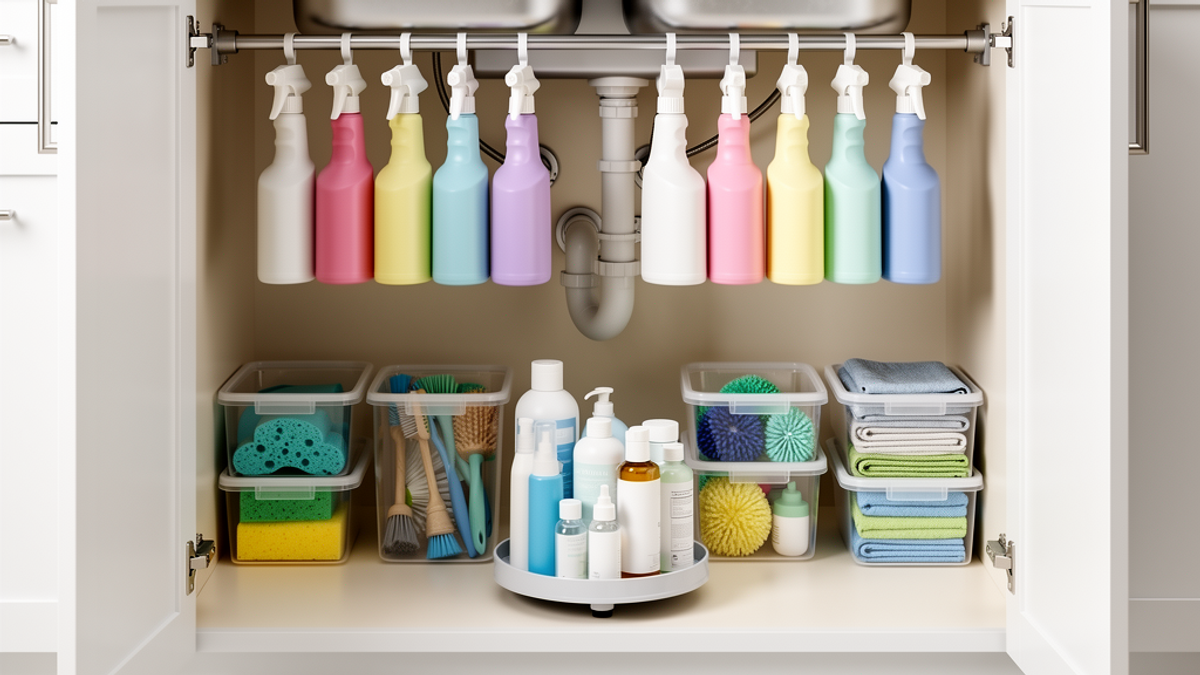
Hey there. Grab a cup of coffee and let’s have a little heart-to-heart about the darkest, most chaotic real estate in your entire home: the cabinet under your kitchen sink.
If you’re anything like the average American, opening those two cabinet doors is a game of structural Jenga. You reach for a fresh sponge and accidentally knock over three half-empty bottles of glass cleaner, a Costco-sized jug of Dawn dish soap, and a box of trash bags that somehow got wedged behind the garbage disposal. It’s a mess. And honestly, it’s stressing you out more than you realize.
Here at Onyx Sound Lab, we usually focus on sound wellness and frequency therapy, but we also know that your physical environment drastically impacts your mental frequency. Visual clutter creates cognitive static. When your home is chaotic, your mind feels chaotic. Transforming just one high-traffic area—like the kitchen sink—can create a ripple effect of calm throughout your day.
Plus, getting organized saves you cold, hard cash. How many times have you spent $5 on a new bottle of kitchen cleaner at Target, only to find three nearly full bottles hiding in the back of the cabinet a month later?
Today, we are going to fix this once and for all. No more buying duplicates. No more digging through the abyss. We’re going to turn that messy cabinet into a clean, accessible, and functional space using a foolproof system: tension rods, stackable bins, and a lazy Susan.
Let’s roll up our sleeves and get into it.
Step 1: The Great Purge (aka Facing Your Demons)
Before we can build a beautiful system, we have to tear down the old one. You cannot organize clutter. Period.
Start by pulling absolutely everything out from under the sink. Yes, everything. Lay it all out on your kitchen floor. You are going to be shocked at what you find. You’ll probably uncover a bottle of specialized granite cleaner you bought in 2018, a leaky bottle of bleach, and enough plastic grocery bags to stretch for five miles down the interstate.
Sort your items into three distinct piles: Keep, Toss, and Relocate.
- Keep: Daily and weekly cleaning supplies, dishwasher pods, trash bags, fresh sponges, and dish soap.
- Toss: Anything expired, crusty, leaking, or empty. Toss out sponges that have lived past their prime. If you wouldn’t wash your coffee mug with it, it belongs in the trash.
- Relocate: Does that giant jug of floor cleaner really need to live under the sink where space is at a premium? Probably not. Move bulk refills, heavy-duty chemicals, and rarely used items to the garage, a laundry room shelf, or a hallway utility closet.
Cost Savings Check: By consolidating half-empty bottles of the same product, you'll likely realize you don't need to buy surface cleaner or dish soap for the next six months. That’s an easy $20 to $30 saved right there. You can Venmo or Zelle me your thanks later.
Step 2: Deep Clean and Prep the Canvas
Now that the cabinet is completely empty, take a good look at it. It’s probably a little gross. There might be mysterious water rings, spilled soap, or crumbs that somehow bypassed the countertop.
Grab a bucket of warm water (around 120 degrees Fahrenheit to really cut through the grime), a squirt of dish soap, and a microfiber cloth. Scrub the bottom, the sides, and the inside of the cabinet doors.
Once it’s bone dry, it’s time for the most underrated step in under-sink organization: the shelf liner. Head to Home Depot, Walmart, or Target and grab a waterproof, non-adhesive shelf liner. They usually cost around $10 to $15 a roll. Measure the base of your cabinet and cut the liner to fit perfectly.
Why do this? Because plumbing leaks happen. Bottles drip. A waterproof liner protects the actual wood or MDF of your cabinetry from water damage and warping, which can cost hundreds of dollars to repair. Plus, it makes future wipe-downs a breeze. If a bottle of pine cleaner leaks, you just pull the liner out, rinse it in the sink, dry it, and put it back.
Step 3: Map the Obstacle Course
The reason the under-sink area is so notoriously difficult to organize is the plumbing. You aren't dealing with a nice, empty square box. You are dealing with the P-trap, the hot and cold water supply lines, the garbage disposal, and maybe even a bulky water filtration system.
Before you buy a single organizing bin, grab a tape measure. You need to know your exact clearances.
- Measure the width of the cabinet doors.
- Measure the depth from the front frame to the back wall.
- Crucially, measure the height from the floor of the cabinet to the lowest hanging pipe or disposal unit.
Jot these numbers down in your phone's notes app. There is nothing worse than driving all the way to The Container Store, dropping $75 on beautiful acrylic drawers, and realizing they don't fit under your garbage disposal by half an inch.
Step 4: Assemble Your Organization Arsenal
This is where the magic happens. We are going to use a three-pronged approach to maximize vertical space, ensure accessibility, and keep things categorized. You don't need to spend a fortune; you can find all of these items at big box stores or online for under $50 total.
The Tension Rod Trick
This is a classic organization hack for a reason. Grab a heavy-duty tension rod (the kind you’d use for a small window curtain or a narrow shower stall). You can pick one up at Home Depot or Target for about $5 to $8.
Install the tension rod across the width of the cabinet, positioning it high up, just under the sink basin, and in front of the plumbing pipes. Make sure it’s twisted tightly into place so it doesn't slip.
Now, take all your spray bottles—glass cleaner, all-purpose spray, stainless steel polish—and hang them by their triggers over the rod.
This does two brilliant things:
- It utilizes the dead airspace at the top of the cabinet that usually goes completely wasted.
- It frees up a massive amount of floor space on the bottom of the cabinet for your other, bulkier items.
Stackable Acrylic Drawers or Bins
With the spray bottles hanging out in the penthouse, let’s deal with the ground floor. Because you have pipes right in the middle, you’ll usually have open vertical space on the far left and far right sides of the cabinet.
This is where stackable bins or pull-out drawers shine. Clear acrylic drawers are fantastic because you can see exactly what’s inside, but opaque plastic bins from Walmart work just as well if you prefer a cleaner, hidden look.
Use the left side for your dishwasher pods, rinse aids, and extra sponges. Use the right side for trash bags and microfiber cloths. By stacking them two or three high (depending on your plumbing clearance), you are doubling your usable square footage.
Pro-tip for American households: If you buy your trash bags in those massive 200-count heavy boxes from Costco or Sam’s Club, take the rolls out of the cardboard box. The box takes up entirely too much space. Stand the rolls upright in a deep bin, or lay them flat in a pull-out drawer. You'll save at least six inches of horizontal space.
The Trusty Lazy Susan
The middle of your cabinet—right under the U-joint of the pipes—is the danger zone. If you push bottles to the back, you’ll never see them again. They will disappear into the shadows, only to be found three years later when you move out.
The solution? A lazy Susan (turntable). You can find a basic 10-inch or 12-inch plastic turntable for about $10 to $15. Place it right in the middle, front and center.
Load this up with your daily drivers: your dish soap, hand soap refills, countertop spray, and that little bottle of Goo Gone. When you need something, you just give it a spin. No more knocking over the front row of bottles to reach the back row. Everything is instantly accessible.
Step 5: The Restock and Maintain Strategy
Now comes the satisfying part. Put everything back into your newly structured cabinet.
- Spray bottles hanging neatly on the tension rod.
- Sponges, pods, and trash bags tucked into your stackable bins on the sides.
- Daily liquids spinning happily on the lazy Susan in the middle.
Take a step back and look at it. Take a picture. Send it to your group chat. It feels incredibly good, doesn't it? That feeling of satisfaction is your nervous system thanking you for creating order out of chaos. It’s exactly the kind of environmental frequency shift we love to see at Onyx Sound Lab.
But how do you keep it this way? The secret to maintenance is the 'One In, One Out' rule.
If you buy a new bottle of cleaner, an old one needs to be finished and recycled. Don't let backstock pile up under the sink. If you do a massive Costco haul and split it with a neighbor, store your bulk overflow in the garage or basement, not under the kitchen sink. The sink cabinet is for active duty supplies only.
Make it a habit to wipe down the shelf liner once a month. It takes thirty seconds. If you order DoorDash on a Friday night, take the three minutes while you're waiting for your food to arrive to just quickly check under the sink, toss any empty bottles, and make sure the lazy Susan is spinning freely.
The Hidden Benefits of a Clean Cabinet
You might be thinking, 'It's just a cabinet, who cares?' But think about how often you use your kitchen sink. You are standing in front of it multiple times a day. Every time you open those doors to grab a trash bag or a sponge, you are either met with a micro-dose of stress (clutter, falling bottles, mess) or a micro-dose of peace (order, accessibility, cleanliness).
Over the course of a year, those micro-doses add up. By investing maybe $40 and one hour of your weekend, you are buying yourself a smoother, less frustrating daily routine. You're preventing water damage. You're stopping the cycle of re-buying things you already own. You are setting a tone of intentionality in the heart of your home.
Your Actionable Takeaway for Today
Don't wait for the weekend to start this project. Your actionable step for today is to complete Step 1: The Great Purge.
Set a timer on your phone for exactly 15 minutes. Open the cabinet, pull everything out, and throw away the garbage. Consolidate the half-empty bottles. Just getting the junk out will instantly make the space feel 50% better and give you the visual clarity to see what bins or tension rods you actually need to buy on your next Target run.
You don’t have to live with the under-sink abyss anymore. Take control of your space, elevate your home’s frequency, and enjoy the peace of mind that comes with knowing exactly where your favorite sponge is. Happy organizing!

SunMaster USA
Editorial Team
The SunMaster USA team finds, tests, and shares the smartest lifehacks, money moves, and home improvement tips that make everyday life easier for American families.