How to Soundproof Your Apartment Without Your Landlord Knowing
Tired of hearing your neighbors' every move? Discover renter-friendly soundproofing hacks like heavy curtains, bookshelf walls, and weatherstripping to block up to 60% of noise without risking your security deposit.

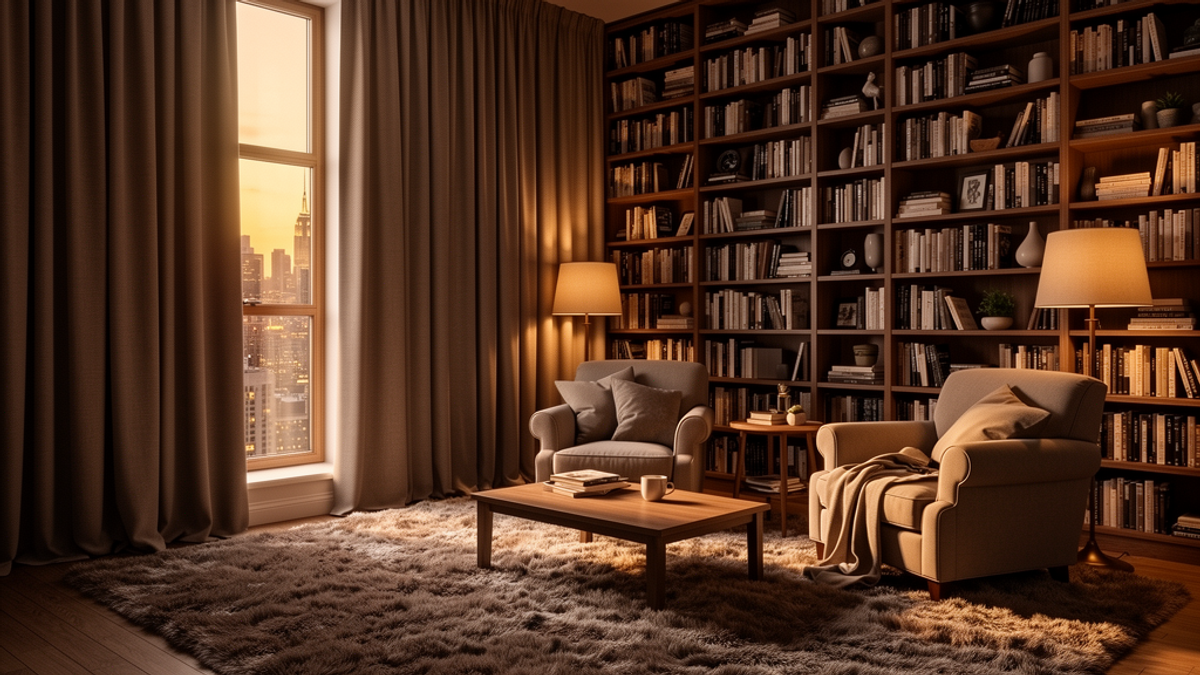
The Reality of Paper-Thin Walls
Let’s be completely real for a second: apartment living in America often means knowing way too much about your neighbors' daily routines. You know exactly when their DoorDash gets delivered because you hear the crinkle of the paper bag in the hallway. You know when they’re arguing about whose turn it is to take out the trash, and you definitely hear the aggressive ping of them Venmo-requesting their roommate for the electric bill.
Thin walls are practically a national epidemic in modern apartment buildings. You want peace, quiet, and a sanctuary where you can actually hear yourself think. But there’s a massive roadblock: your lease.
Most leases specifically state that you cannot make structural modifications to your unit. If you start tearing down drywall to install mass-loaded vinyl or drilling heavy acoustic brackets into the studs, your landlord is going to keep your $1,500 security deposit so fast it’ll make your head spin.
But here is the good news—you do not have to live in a sonic warzone. By using clever, 100% renter-friendly soundproofing tactics, you can actually reduce neighbor noise by 40% to 60%. That is the difference between hearing every single word of their 2 AM phone call and just hearing a faint, easily ignorable hum.
Grab a coffee, because we’re going to walk through exactly how to soundproof your apartment without your landlord ever finding out.
Step 1: Diagnose Your Noise Leaks
Before you run to Home Depot and start throwing money at the problem, you need to understand what kind of noise you are dealing with. Sound generally falls into two categories:
- Airborne Noise: This is sound that travels through the air. Think voices, a television playing, a dog barking, or music. Airborne noise looks for any tiny gap or crack to slip through.
- Impact Noise: This is physical vibration. It’s the sound of your upstairs neighbor stomping around in heavy boots, a door slamming, or something heavy dropping on the floor. Impact noise travels through the actual structure of the building.
To fight airborne noise, you need to seal gaps and add density. To fight impact noise, you need to add cushioning and decoupling (separating hard surfaces). Let’s break down how to tackle both, room by room.
Step 2: Seal the Front Door (The $25 Hallway Fix)
If you live in a complex with an interior hallway, your front door is likely your biggest acoustic weakness. Most apartment doors are hollow-core, meaning they are essentially two pieces of thin wood with some cardboard honeycomb in the middle. Worse, they usually have massive gaps around the frame.
Here is a golden rule of soundproofing: If light can get through, sound can get through.
Stand inside your apartment, turn off the lights, and look at your front door while the hallway lights are on. See that glowing perimeter? That is where all the noise is coming from.
The Action Plan:
- Weatherstripping Tape: Head to Home Depot or Walmart and buy a roll of high-density foam weatherstripping tape. It’ll cost you about $8. Wipe down your door frame with rubbing alcohol so the adhesive sticks, and line the inside of the frame where the door meets the jamb. This seals the side and top gaps perfectly.
- The Draft Stopper: To fix the massive gap at the bottom of the door, buy a heavy-duty, slide-on draft stopper from Amazon (usually around $15 to $20). It just slides right under the door—no screws required.
The Savings: A landlord-approved, professionally installed solid-core door would cost you upwards of $1,200. You just solved 80% of your hallway noise problem for under $25, and when you move out, you just peel the tape off.
Step 3: The Floor Strategy (Rugs on Rugs)
Hardwood and laminate floors look gorgeous, but acoustically, they are a nightmare. They bounce sound waves around your room, making everything echo, and they do absolutely nothing to stop impact noise from the unit below you.
If you have a downstairs neighbor who constantly complains about your footsteps, or if you can hear every time they slide a dining chair, you need to introduce mass and absorption to your floors.
The Action Plan:
Go to Costco or Target and look for the thickest, plushest area rug you can find that fits your budget. But here is the secret—the rug alone isn't enough. You need to decouple the rug from the hard floor.
Buy a 1/2-inch thick felt or memory foam acoustic rug pad to go underneath it. This pad absorbs the kinetic energy of footsteps and acts as a dense barrier against airborne noise coming up through the floorboards.
Pro-Tip: If your roommate is splitting the cost of living room decor with you, just have them Zelle you their half for the rug pad. It makes a $100 budget rug feel like a luxurious, million-dollar carpet under your feet, while quietly doing the heavy lifting for your room's acoustics.
Step 4: The Shared Wall (The Bookshelf Hack)
We’ve all been there: your bed shares a wall with your neighbor’s living room, and apparently, their favorite hobby is watching action movies at midnight.
You can’t open the wall and add fiberglass insulation, so you have to build a secondary wall on the outside. Sound waves lose energy when they have to pass through heavy, dense objects.
The Action Plan:
This is where the "Bookshelf Hack" comes into play. Buy a large, sturdy bookshelf—like the IKEA Kallax or a heavy-duty Mainstays shelf from Walmart. Place it against the shared wall, covering as much surface area as possible.
Now, fill it. And I don’t mean with a few decorative succulents. Fill it with the heaviest things you own: thick books, vinyl records, tightly packed storage bins, and heavy decorative objects.
By placing a dense, heavy piece of furniture against that wall, you are forcing the sound waves to travel through the drywall, through the air gap behind the shelf, and through the solid mass of your books before it ever reaches your ears. This can easily muffle neighbor noise by 40% or more.
Step 5: The Windows (Heavyweight Curtains)
If your apartment faces a busy street, you are likely battling sirens from fire trucks 3 miles away, loud exhausts, and barking dogs. Standard apartment blinds do absolutely nothing to stop this.
The Action Plan:
Invest in heavy-duty, sound-dampening blackout curtains. You want curtains that are labeled as "noise-reducing" or "acoustic." These curtains are made with multiple layers of dense fabric and a thick inner liner that catches and absorbs sound waves trying to bounce off your glass windows.
The Bonus ROI: These curtains don't just block noise; they are incredible thermal insulators. In the dead of summer, when the afternoon sun is pushing the temperature to a blistering 95 degrees Fahrenheit, pull these curtains shut. They will block the radiant heat from baking your apartment. In the winter, they keep the freezing drafts out.
By investing $60 in good curtains, you could easily save $30 to $50 a month on your electric bill because your AC and heater won't have to work nearly as hard. They pay for themselves in two months.
Step 6: Renter-Friendly Acoustic Panels
You’ve probably seen those foam egg-crate panels on the walls of podcasters and streamers. Here is a hard truth: cheap foam does not block sound from entering or leaving a room. It only stops echoes inside the room.
If you want to actually block sound on a shared wall without buying a massive bookshelf, you need high-density acoustic panels (often made of compressed fiberglass or dense polyester fiber).
The Action Plan:
Normally, you have to glue or screw these into the wall—a massive lease violation. Here is the renter-friendly workaround:
- Buy a pack of dense, hexagon acoustic panels from Amazon.
- Buy a large piece of cheap foam core board or poster board from a craft store.
- Use heavy-duty construction adhesive to glue the acoustic panels to the poster board (creating one large, lightweight acoustic cloud).
- Mount the poster board to your apartment wall using heavy-duty 3M Command Strips.
When your lease is up, you simply pull the Command Strip tabs straight down. The board comes off the wall, your paint is perfectly intact, and your landlord is none the wiser.
Step 7: Fight Sound with Sound (The Onyx Sound Lab Strategy)
Even if you execute every single physical soundproofing trick on this list perfectly, you cannot block 100% of the noise in a standard apartment. You might get a 60% reduction, but that remaining 40% can still be incredibly distracting, especially when you are trying to sleep or focus on work.
When physical barriers reach their limit, you have to change your strategy: you must fight sound with sound.
This is the core philosophy behind sound wellness. By introducing a consistent, pleasant audio frequency into your environment, you raise the "noise floor" of the room.
Imagine a drop of water falling into a totally silent room—it sounds incredibly loud. Now imagine that same drop of water falling while you are in the shower—you don't even hear it. That is what sound masking does.
The Action Plan:
Instead of letting the random, jarring noises of your neighbors dictate your peace, take control of your sonic environment.
- Get a High-Quality Sound Machine: Don't just rely on a tiny phone speaker. Invest in a dedicated sound machine with a robust speaker that can produce deep bass tones.
- Utilize Brown Noise: While white noise is great, brown noise is the ultimate neighbor-blocker. Brown noise has deeper, lower frequencies (rumbling sounds like a heavy waterfall or a distant ocean). Because impact noises (like footsteps or thumping bass) are low-frequency, brown noise masks them far better than higher-pitched white noise.
- Explore Frequency Therapy: At Onyx Sound Lab, we specialize in utilizing specific sound frequencies to promote relaxation, focus, and deep sleep. Playing continuous, ambient frequency tracks in your apartment doesn't just mask the neighbor's TV; it actively calms your nervous system, lowering the stress and anxiety that apartment noise typically triggers.
Your Actionable Takeaway
You don't have to break your lease or forfeit your security deposit to get some peace and quiet. Soundproofing your apartment is a weekend project that requires a little bit of strategy and a trip to a local big-box store.
Here is your specific to-do list for this weekend:
- Assess the gaps: Turn off your lights and look at your front door. If you see light, order a $15 draft stopper and an $8 roll of weatherstripping tape today.
- Add mass: Move your heaviest furniture (like bookshelves or dressers) to the shared walls where you hear the most noise.
- Mask the rest: Tonight, pull up a deep Brown Noise or Onyx Sound Lab frequency playlist on your best speaker, place it between your bed and the noisy wall, and finally get the uninterrupted sleep you deserve.
Your apartment is your sanctuary. Take control of your soundscape today—your landlord will never know, but your sanity will thank you.

SunMaster USA
Editorial Team
The SunMaster USA team finds, tests, and shares the smartest lifehacks, money moves, and home improvement tips that make everyday life easier for American families.