How to Split Expenses Fairly When You Have Roommates (And Keep the Peace)
Splitting bills with roommates doesn't have to ruin your friendship. From calculating rent for unequal bedrooms to managing Costco runs and late payers, here is your practical guide to keeping the peace and your finances intact.

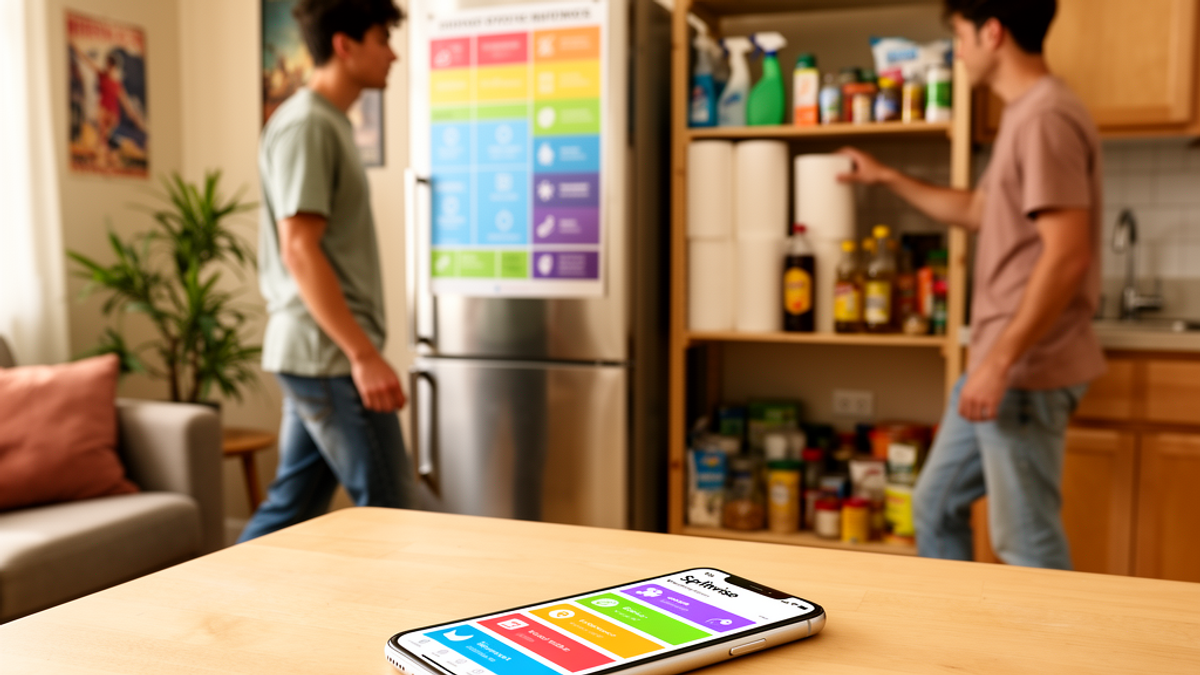
Moving in with a roommate is an exciting milestone. You've signed the lease, figured out who is bringing the TV, and successfully navigated the nightmare that is renting a U-Haul on a Saturday morning. But once the dust settles and the empty pizza boxes from moving day are thrown out, a dark cloud looms on the horizon: the first round of bills.
Money is the number one reason roommates clash. It is all fun and games until someone leaves the AC running at 65 degrees Fahrenheit all July, or one person realizes they are single-handedly subsidizing the apartment's entire supply of Costco toilet paper.
Navigating shared finances doesn't have to be a relationship-ruining event. With a little upfront communication, some basic math, and the right apps, you can make splitting expenses completely painless. Here is your comprehensive, down-to-earth guide to splitting rent, utilities, groceries, and shared supplies fairly—plus exactly what to do when your roommate conveniently "forgets" to Venmo you.
1. Splitting the Rent: Not All Bedrooms Are Created Equal
The biggest expense you will share is rent, and the default assumption is almost always a 50/50 split. But unless your apartment is a perfect mirror image, a 50/50 split is rarely fair. One bedroom is usually bigger, has better natural light, or boasts a walk-in closet.
If you want to avoid resentment, you need to calculate rent based on the reality of the space. Here are two practical ways to do it.
The Square Footage Method
This is the most mathematically objective way to split rent. You divide the cost of the apartment based on the square footage each person exclusively occupies, while splitting the cost of the common areas equally.
Let's say you and a roommate rent a 1,000-square-foot apartment for $2,400 a month.
- Common areas (living room, kitchen, shared bathrooms): 600 square feet.
- Bedroom A (Master): 250 square feet.
- Bedroom B (Standard): 150 square feet.
First, figure out the price per square foot: $2,400 / 1,000 = $2.40 per square foot.
The common area costs $1,440 ($2.40 x 600). You split this equally, so you each pay $720 for the shared space.
Now, add your individual bedroom costs:
- Roommate A pays: $720 (common) + $600 (250 sq ft x $2.40) = $1,320
- Roommate B pays: $720 (common) + $360 (150 sq ft x $2.40) = $1,080
Roommate A pays $240 more per month, which accurately reflects the massive size difference in their room.
The Amenity Method
If measuring square footage sounds like too much work, you can use a flat-rate adjustment for specific amenities. Start with a 50/50 split, and then add or subtract specific dollar amounts based on perks.
For a $2,400 two-bedroom apartment, the baseline is $1,200 each. But let's adjust for perks:
- En-suite private bathroom: +$100 to $150/month
- Walk-in closet: +$50/month
- Dedicated parking spot: +$75 to $100/month (especially if you live in a city where street parking is a nightmare)
- Better view or balcony access: +$25 to $50/month
If Roommate A gets the master bedroom with the private bath and the parking spot, they might pay $1,400, while Roommate B pays $1,000. It keeps things fair and assigns a real dollar value to the luxuries.
2. Utilities: The Thermostat Wars and Wi-Fi Upgrades
Utilities—electricity, gas, water, and internet—are usually split right down the middle, 50/50. Most of the time, this is completely fine. But there are a few uniquely American roommate friction points you need to watch out for.
The Work-From-Home Discrepancy
If one roommate commutes 20 miles a day to an office and the other works from home full-time, the WFH roommate is objectively using more electricity, water, and heating/cooling. If your electric bill jumps to $180/month in the summer, the commuter might feel slighted paying half.
The Fix: If the utility bills are noticeably high due to one person being home 24/7, a 60/40 split on electricity and gas is a very reasonable compromise.
The Thermostat Debate
Someone always runs hot, and someone always runs cold. If one roommate insists on keeping the AC at a frosty 68 degrees Fahrenheit from May through September, while the other is perfectly happy at 74 degrees, you have a problem.
The Fix: Agree on a baseline temperature range (usually 70-72 degrees) when you move in. If someone wants it significantly colder in the summer or warmer in the winter, they need to supplement it themselves—buying a fan or a space heater—or agree to take on a slightly larger percentage of the electric bill. (Pro tip: If your roommate buys a massive space heater, expect your electric bill to spike. Those things are energy hogs).
Internet Speeds
If you just need basic Wi-Fi to watch Netflix and scroll TikTok, a standard $50/month plan is fine. But if your roommate is a hardcore gamer or a video editor who insists on the $120/month Gigabit fiber-optic package, you shouldn't have to subsidize their hobby. You pay $25 (half of the basic plan), and they cover the rest.
3. Groceries and Shared Supplies: The Target and Costco Conundrum
When it comes to food and household supplies, the lines can get blurry very fast. "I'll buy the paper towels this time, you get them next time" is a recipe for disaster because people have terrible memories.
Do Not Share Groceries (Mostly)
Unless you are married to your roommate, do not try to split all your groceries. You will inevitably end up resentful when you are paying for their $8-a-pint organic ice cream or their daily DoorDash habits.
Keep your food separate. Designate specific shelves in the fridge and the pantry for each person.
The only exception? The "Basics." It makes zero sense to have two separate bottles of olive oil, two bags of flour, and two containers of salt taking up space. Create a shared list for pantry staples and split those 50/50.
The "Household Fund" for Shared Supplies
Toilet paper, dish soap, trash bags, surface cleaner, and the occasional trip to Home Depot for AC filters or lightbulbs—these benefit everyone, so everyone should pay.
The Fix: Set up a "Household Fund." At the beginning of every month, each roommate sends $20 to $25 to a designated pot (you can just leave this as a balance in Venmo). When someone makes a Target or Walmart run for toilet paper and Swiffer pads, they pay for it out of that shared fund. It completely eliminates the "whose turn is it to buy dish soap?" argument. If the fund runs low, everyone chips in another $15.
4. The Tech Stack: Apps to Make the Math Painless
You do not need a complicated Excel spreadsheet to track who owes what. We live in the future, and there are free apps designed specifically to prevent roommate murders over $14.
- Splitwise: This is the holy grail of roommate apps. Whenever someone pays for a shared expense (like a $120 electric bill or a $45 shared grocery run), they enter it into Splitwise. The app tracks everything and calculates a running total of who owes who. At the end of the month, you just hit "Settle Up" and pay the final balance. It takes all the emotional weight out of asking for money.
- Venmo / Zelle: Once Splitwise tells you the total, use Venmo or Zelle to actually move the money. Zelle is often better for rent payments because the money goes directly from bank account to bank account with no transfer fees or holding periods.
- Bilt Rewards: If your landlord accepts credit card payments, look into the Bilt Mastercard. It allows you to pay rent without the typical 3% credit card fee, letting you earn travel points on your biggest monthly expense. You can pay the full rent on your card, and your roommates can just Venmo or Zelle you their share.
5. The Awkward Part: Handling the Roommate Who Never Pays on Time
Even with the best systems in place, you might end up with a roommate who treats due dates as loose suggestions. Covering someone else's rent or utility share is stressful and unfair. Here is how to handle the chronically late payer without setting the apartment on fire.
Step 1: Set a "Fake" Due Date
If rent is due to the landlord on the 1st of the month, the roommate due date should be the 28th of the previous month. This gives you a three-day buffer for Zelle transfers to clear or to remind them before a late fee is incurred.
Step 2: Automate the Reminders
Don't rely on your memory or bear the mental load of being the debt collector. If you use Splitwise, the app can send automated push notifications. If you use Venmo, send the "Request" three days before the money is due.
Step 3: The Script for Confrontation
If they are consistently late, you need to have a direct, in-person conversation. Do not do this over text, where tone is easily misinterpreted. Keep it casual but firm.
"Hey man, I wanted to talk about the bills. I get really stressed when rent and utilities aren't paid by the 28th because I don't have enough buffer in my checking account to front the whole cost. Can we agree to get everything settled by the 28th moving forward so we don't risk late fees from the landlord?"
If they are late again, enforce a boundary: "Hey, since I've had to front the electric bill the last three months, I'm going to need you to take over the account and put it in your name moving forward."
6. Actionable Takeaways: Do This Today
Splitting expenses fairly requires a tiny bit of upfront work, but it pays massive dividends in peace of mind. If you are moving in with a roommate soon, or if your current financial setup is a mess, here is your homework:
- Have the "Money Talk" tonight: Sit down and explicitly agree on how rent is divided. If you have unequal rooms, calculate the square footage or assign a dollar value to the parking spot.
- Download Splitwise: Have everyone in the apartment download it and create a group. Agree that all shared expenses (utilities, internet, shared basics) go into the app immediately.
- Start a Household Fund: Have everyone Venmo $25 to one person today. Use that money exclusively for your next Target/Costco run for toilet paper, trash bags, and cleaning supplies.
- Put it in writing: Draft a simple, one-page "Roommate Agreement" that lists the rent split, the utility split, and the agreed-upon thermostat temperature. Tape it to the fridge.
Money doesn't have to be awkward. By treating your shared apartment like a small business partnership, you protect your finances, your credit score, and most importantly, your friendship.

SunMaster USA
Editorial Team
The SunMaster USA team finds, tests, and shares the smartest lifehacks, money moves, and home improvement tips that make everyday life easier for American families.