How to Spot Fake Reviews and Actually Find Good Products Online
Tired of buying 5-star garbage? Learn how to spot fake reviews, use tools like Fakespot, and avoid wasting your hard-earned cash on bogus products. Here is your ultimate guide to smart, scam-free online shopping.

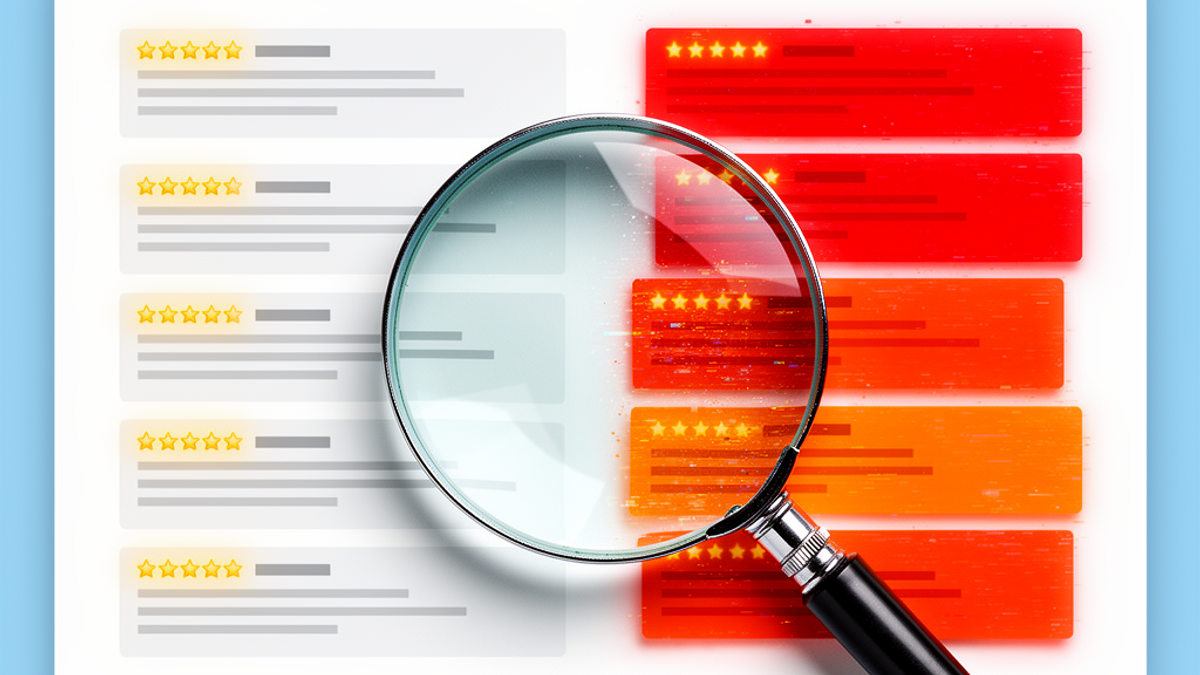
Picture this: It is a chilly 45-degree Fahrenheit Tuesday night. You are curled up on the couch, waiting for your DoorDash order to arrive, and scrolling through Amazon for a new white noise machine. You want something to help you sleep, maybe a device that plays specific sound frequencies to calm your nervous system.
You spot one for $49.99. It has 18,000 ratings and a glowing 4.8-star average. The reviews are ecstatic. "This changed my life!" says one. "Best sound quality ever!" says another. You hit 'Buy Now,' feeling like a savvy shopper.
Two days later, the box arrives. You plug it in, and instead of a soothing 432 Hz frequency, it sounds like a dying lawnmower trapped inside a tin can. The plastic feels cheap, the buttons stick, and you realize you have just been duped by the internet's oldest trick: fake reviews.
Here at Onyx Sound Lab, we are passionate about the real, measurable benefits of sound wellness and frequency therapy. But to get those benefits, you need gear that actually works. Whether you are buying high-fidelity headphones, a sound bath bowl, or just a blender from Walmart, navigating online reviews has become a minefield.
Let's sit down, grab a coffee, and talk about how to protect your wallet. Here is exactly how to spot fake reviews, outsmart the bots, and actually find good products online.
The Underground Economy of Fake Reviews
To spot a fake review, you first have to understand how they are made. Gone are the days when a seller would just create a bunch of fake email addresses and leave reviews themselves. Today, the fake review industry is a highly organized, multimillion-dollar underground economy.
Here is how the most common scam works today:
Sellers set up private groups on Facebook, Discord, or Telegram. They post a picture of their product—let's say it is a $75 bone-conduction headphone set. They tell the group members, "Buy this full price on Amazon. Leave a 5-star review with a photo. Once it is published, send us the link, and we will refund you the $75 via Venmo or Zelle. We might even throw in a $10 bonus for your trouble."
Why do they do this? Because it completely bypasses the platform's security. To Amazon, this looks like a legitimate, organic transaction. The buyer used their own credit card, the item was shipped to their house, and they left a review. It gets the coveted "Verified Purchase" badge.
This is why you can no longer blindly trust the "Verified Purchase" tag. The purchase was verified, but the sentiment was bought and paid for.
The "C-Curve" Warning Sign
One of the easiest ways to spot a manipulated product without using any special tools is to look at the distribution of the star ratings.
When a product is genuinely good, the review graph usually looks like a ski slope. You will see a ton of 5-star reviews, a healthy chunk of 4-stars, a few 3-stars (from people who are just hard to please), and a tiny sliver of 2s and 1s.
When a product is propped up by fake reviews, the graph often looks like a letter "C". You will see 85% 5-star reviews (the paid actors and bots) and 15% 1-star reviews (the real customers who bought the garbage product and are furious about it). There is almost nothing in the middle. If you see a product with thousands of 5-star reviews but a surprisingly thick bar of 1-star reviews complaining about the exact same defect, run the other way. You just saved yourself a headache and a trip to the UPS store.
Tool #1: Fakespot (Your First Line of Defense)
If you do not have the Fakespot browser extension installed, you are shopping blindfolded. Fakespot (which was recently acquired by Mozilla) uses artificial intelligence to analyze the language, patterns, and history of reviewers on a given product page.
Here is how it works: When you are looking at a product on Amazon, Best Buy, or Sephora, Fakespot analyzes the reviews in seconds and gives the product a letter grade from A to F.
- A or B: The reviews are generally reliable and organic.
- C: There is a mix of reliable and suspicious reviews. Proceed with caution.
- D or F: The reviews are highly suspicious, heavily manipulated, or outright fake.
Fakespot will also give you an "Adjusted Rating." That $49.99 sound machine with a 4.8-star average? Fakespot might strip away the fake reviews and reveal that it actually has a 2.1-star average.
Actionable Step: Download the Fakespot extension for Chrome, Safari, or Firefox today. If you are shopping on your phone, you can download the Fakespot app and share the Amazon link directly to the app to get an instant grade. It takes three seconds and can easily save you $100 on a junk purchase.
Tool #2: ReviewMeta (The Data Nerd's Dream)
While Fakespot is great for a quick letter grade, ReviewMeta is the tool you want when you need to dig deep. ReviewMeta strips away the fluff and looks purely at the data and statistics of the reviews.
ReviewMeta looks for red flags like:
- Unverified Purchases: If 40% of the 5-star reviews are unverified, ReviewMeta filters them out.
- Overlapping Review History: Did 50 of the people who reviewed this sound machine also review the exact same garlic press and the exact same cheap sunglasses? That is a massive indicator of a review ring.
- Phrase Repetition: If 20 different reviews use the exact phrase "superior acoustic resonance for the price point," ReviewMeta catches the copy-paste job.
- One-Hit Wonders: Reviewers who created an account, left one glowing 5-star review for this specific product, and never reviewed anything else.
ReviewMeta gives you a "Pass/Fail" report on these metrics and shows you what the star rating would be if you only counted the trustworthy reviews.
Beyond Amazon: Syndicated Reviews at Big Box Stores
We love to pick on Amazon, but this problem is everywhere. Let's say you decide to skip Amazon and drive 5 miles down the road to Target, Walmart, or Home Depot. You are standing in the aisle, looking at a $150 air purifier or a set of smart home speakers. You pull out your phone, check the Walmart app, and see it has 4.9 stars. Safe, right?
Not necessarily. Welcome to the world of Syndicated Reviews.
If you look closely at the reviews on Target.com or HomeDepot.com, you will often see a tiny gray disclaimer that says: "Review originally posted on [BrandName].com."
Here is the trick: Brands use third-party software to collect reviews on their own websites. Because they control their own site, they can easily delete or hide the 2-star and 3-star reviews. They curate a perfectly sanitized list of 5-star reviews, and then they "syndicate" (push) those reviews out to their retail partners like Target, Walmart, and Costco.
So, while the reviews might be from real people, you are only seeing the ones the brand wants you to see.
How to beat it: When shopping on big box retailer sites, use the filter option to sort by "Lowest Rating" first. Read the 2-star and 3-star reviews. These are usually the most honest assessments of a product's true flaws. If the 3-star reviews say, "The sound quality is great but the battery only lasts two hours," you now have the truth and can make an informed decision.
5 Red Flags You Can Spot With the Naked Eye
Even without browser extensions, you can train your brain to spot fake reviews. Here are the five biggest red flags to look for:
1. The "SEO Keyword" Dump
Real humans don't talk like search engines. If a review says, "I absolutely love my new Premium White Noise Machine Sound Therapy Device for Adults and Baby Sleep 110V, it fits perfectly on my nightstand!" ...that is a fake review. The seller required the reviewer to use the exact product title to boost their search ranking.
2. The Generic Profile Name
Look at the names of the reviewers. If you see a cluster of reviews from "User1234," "Customer," "John S.," and "Amazon Shopper," be highly skeptical. Real people often use their first and last names or unique nicknames.
3. The Date Cluster
Take a look at the dates the reviews were posted. If a product has been on the market for two years, but 85 of its 5-star reviews were posted between July 12th and July 15th, that is a coordinated review drop. The seller bought a batch of reviews to boost a sagging product.
4. The Staged Photos
Real customer photos usually feature bad lighting, a messy living room in the background, or a product sitting on a kitchen counter. If the customer photos look like they were shot in a professional studio with perfect lighting and a pristine white background, they were likely provided by the seller to the reviewer.
5. Over-the-Top Emotion
Beware of extreme enthusiasm for mundane products. If someone is claiming that a $12 set of earplugs "literally saved my marriage and cured my depression," they are probably overcompensating for a paid review.
The Cost of Fake Reviews on Your Wellness
Why does all this matter? Aside from the obvious frustration of wasting money, fake reviews can actively hinder your wellness journey.
If you are exploring frequency therapy, sound baths, or acoustic wellness, precision matters. A cheap, poorly manufactured speaker with fake reviews isn't just going to break in a month; it might actually distort the frequencies you are trying to use for relaxation or focus. You might spend $150 thinking you are getting a premium 528 Hz tuning fork, only to receive a piece of cheap aluminum that rings hollow.
By taking an extra 60 seconds to vet a product, you are not just protecting your bank account—you are protecting the quality of your wellness practices.
Your Actionable Takeaway Checklist
Don't let the bots win. The next time you are ready to drop your hard-earned dollars online, run through this quick checklist:
- Check the C-Curve: Look at the distribution of stars. Is it 90% 5-stars and 10% 1-stars? Skip it.
- Run it through Fakespot or ReviewMeta: Never buy a highly-rated, unrecognized brand without checking its letter grade first.
- Filter by 3-Star Reviews: Read the middle-of-the-road reviews. These are almost always written by real, level-headed Americans who will tell you the actual pros and cons.
- Watch for Syndication: If you are shopping at Walmart, Costco, or Target, check if the reviews were imported from the manufacturer's website.
- Buy from Trusted Curators: When it comes to specialized gear—like sound wellness equipment—buying from dedicated, expert platforms (like us here at Onyx Sound Lab) ensures you are getting vetted, high-quality products, not cheap knockoffs propped up by bots.
Online shopping is supposed to be convenient, not a battle of wits against overseas scam rings. Equip yourself with these tools, stay skeptical of things that look too good to be true, and go find the products that actually deserve your five stars.

SunMaster USA
Editorial Team
The SunMaster USA team finds, tests, and shares the smartest lifehacks, money moves, and home improvement tips that make everyday life easier for American families.