How to Stop Wasting Food: The Average American Family Throws Away $1,500/Year
The average American family tosses $1,500 of food every year. Stop feeding your trash can and start saving cash with these practical, no-stress strategies to reduce food waste, from the FIFO method to the weekly eat the fridge challenge.

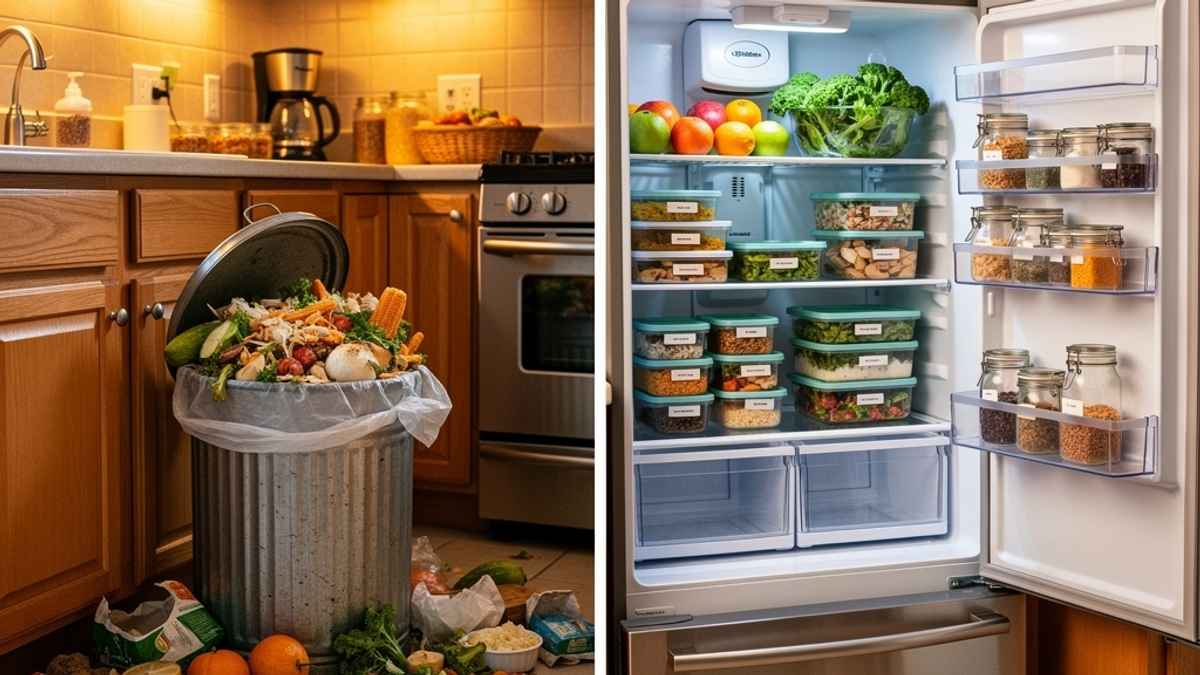
Imagine walking out of your local Walmart, pulling three crisp $100 bills and four $50s out of your wallet, and just dropping them straight into the parking lot trash can. Sounds completely insane, right? You'd never do that.
But the reality is, that’s exactly what the average American family does every single year. According to the USDA, a family of four throws away roughly $1,500 worth of uneaten food annually. That is a decent vacation, a set of new tires, or a whole lot of sound therapy sessions here at Onyx Sound Lab.
We all know the drill. You go to Costco or Target on a Sunday, feeling like a health god. You buy the giant plastic tub of organic spring mix, a mountain of fresh fruit, and a three-pound pack of chicken breasts. You are going to meal prep. You are going to be that person.
Fast forward to Thursday night. You're exhausted from work. That aspirational spinach has morphed into a sad, green, liquid swamp in the crisper drawer. The chicken is looking questionable. Instead of cooking, you open the DoorDash app and drop $45 on pad thai. The cycle repeats.
At Onyx Sound Lab, we talk a lot about intentionality and mindful living through frequency and sound. But mindfulness doesn't stop when you take your headphones off. It extends to how we consume, how we treat our resources, and how we manage our daily environments. Wasting food isn't just bad for your bank account; it's a massive drain on the environment and a source of low-level, chronic guilt.
It’s time to stop feeding the trash can and start keeping that cash in your pocket. Here is your practical, down-to-earth guide to stopping food waste today.
Strategy 1: The FIFO Method (First In, First Out)
If you've ever worked in a grocery store or a restaurant, you know about FIFO: First In, First Out. It’s the golden rule of inventory management, and you need to bring it into your kitchen right now.
When you come home from the grocery store, do not just shove the new groceries to the front of the fridge or pantry. Take an extra 60 seconds to pull the older items forward and put the new items in the back.
Create an "Eat Me First" Bin
Go to Target, buy a cheap, clear plastic bin, and put it at eye level in your fridge. Label it "Eat Me First." Anything that is on its last legs—that half-jar of marinara sauce, the yogurt expiring in two days, the leftover roasted veggies—goes into this bin. When you open the fridge looking for a snack or planning dinner, you have to look in this bin first.
Master Your Fridge Temperature
Did you know your fridge has microclimates? The door is the warmest part of the fridge. Stop putting your expensive milk and eggs in the door! Keep them in the back of the fridge where it's coldest. Your fridge should be set to exactly 37°F. Any warmer, and food spoils faster; any colder, and your lettuce freezes into a sad, icy brick.
Strategy 2: Decode the Expiration Date Matrix
One of the biggest reasons Americans throw away perfectly good food is out of fear. We see a date on a package and treat it like a ticking time bomb. But here is the truth: outside of infant formula, the federal government does not regulate expiration dates.
- "Best If Used By" simply means the product will have the best flavor or quality by this date. It is not a safety date.
- "Sell-By" is a message for the grocery store inventory system, telling them how long to display the product. You can usually eat food safely for days or even weeks after this date.
- "Use-By" is the last date recommended for peak quality.
Trust your senses. If your milk smells fine, looks fine, and tastes fine, it’s probably fine. Stop throwing away a $6 gallon of organic milk just because the calendar flipped.
Strategy 3: The "Eat the Fridge" Weekly Challenge
To really claw back that $1,500 a year, you need a system for the end-of-the-week leftovers. Enter the "Eat the Fridge" challenge.
Pick one night a week—usually Thursday or Friday, right before your weekend grocery run—where cooking a new meal is strictly forbidden. You must make dinner entirely out of what is already in the fridge, freezer, and pantry. Make it a game. Call it "Home Chopped."
Here are three foolproof formats for turning random odds and ends into a cohesive meal:
- The "Garbage" Fried Rice: Day-old rice is actually better for fried rice. Toss it in a skillet with some oil, crack an egg into it, and throw in literally any vegetable that is about to go bad. Carrots, peas, half an onion, that sad bell pepper—chop it up, add soy sauce and a dash of sesame oil. Boom. A $15 restaurant dish made for pennies.
- The Kitchen Sink Frittata: Eggs are the ultimate unifier. Whisk together 6-8 eggs, throw in those wilting spinach leaves, the last handful of cheddar cheese, and some leftover breakfast sausage. Bake it at 350°F for 20 minutes.
- The Power Bowl: Got half a sweet potato, a scoop of quinoa, and a handful of cherry tomatoes? Roast the veggies, put them over the grain, and drizzle with whatever salad dressing you have.
Every time you do this instead of ordering takeout, you are saving roughly $30 to $50. If you do this once a week, that's $1,560 to $2,600 a year.
Strategy 4: Leftover Transformation 101
Let’s be honest: eating the exact same meal three days in a row is boring. The trick to not wasting leftovers is learning how to remix them so they feel like a completely new meal.
- Roast Chicken: Night one is traditional chicken with a side of potatoes. Night two, shred the leftover chicken and toss it with some salsa and taco seasoning for Taco Tuesday. Night three, boil the bones to make a rich broth for a soup.
- Chili or Stew: Eat it in a bowl on day one. On day two, bake a couple of potatoes and use the chili as a heavy, comforting topping. On day three, mix it with some Velveeta or cheddar for a loaded queso dip.
The Freezer is a Time Machine
If you know you aren't going to eat those leftovers in the next three days, don't let them die in the fridge. Toss them in the freezer immediately.
Pro tip: Freeze things in single-serving, flat containers or freezer bags. If you freeze a massive block of soup, it takes hours to thaw. If you freeze it flat in a Ziploc bag, it thaws in minutes.
Strategy 5: Composting Basics (Without Making Your House Smell)
Even with the best planning, you are going to have food scraps. Banana peels, coffee grounds, eggshells, and the ends of onions. Instead of throwing them in the trash—where they go to a landfill, produce methane gas, and contribute to climate change—start composting.
Composting sounds intimidating, like something you only do if you live on a 10-acre farm in Vermont. But you can easily do it in a suburban backyard or even an apartment.
The Easy Setup
Head to Home Depot or order a countertop compost bin online. Get one with a charcoal filter in the lid—this is the secret to ensuring your kitchen doesn't smell like a dumpster.
What goes in: Fruit and vegetable scraps, coffee grounds, paper tea bags, crushed eggshells, and plain grains. What stays out: Meat, dairy, bones, and fats/oils. These will rot, smell terrible, and attract every raccoon within a 5-mile radius.
Once your indoor bin is full, dump it into an outdoor tumbler or a designated compost pile in your yard. Over time, this breaks down into incredibly rich soil that you can use for your houseplants or garden. It’s the ultimate form of recycling.
Mindful Consumption is a Practice
Reducing food waste isn’t about being perfect. You are still going to occasionally forget about a cucumber until it turns to mush. The goal is simply to be more mindful and intentional about the resources coming into your home.
When we align our consumption habits with our wellness goals, we create a more harmonious environment. A clean, organized fridge where everything has a purpose is inherently calming. It reduces decision fatigue and financial stress, leaving you with more mental bandwidth to focus on your health, your family, and your peace of mind.
Your Actionable Takeaway for Today
Don't just read this and move on. Here is your specific action step for today: Go to your fridge right now and spend exactly five minutes doing a FIFO reorganization.
Pull all the older items to the front. Identify three items that will go bad in the next 48 hours, and commit to using them for dinner tonight.
And here’s a fun psychological trick: Calculate what you would have spent on DoorDash tonight if you hadn't cooked those leftovers. Let's say it's $35. Open your banking app, and use Zelle or Venmo to transfer that exact $35 from your checking account into your savings account. Watch that $1,500 physically build up over the year. You've earned it.

SunMaster USA
Editorial Team
The SunMaster USA team finds, tests, and shares the smartest lifehacks, money moves, and home improvement tips that make everyday life easier for American families.