How to Stretch Properly: A 10-Minute Daily Routine for Non-Athletes
You don't need to be a marathon runner to benefit from a good stretch. If you sit at a desk all day, this simple 10-minute daily stretching routine will relieve tight hamstrings, stiff shoulders, and lower back pain.

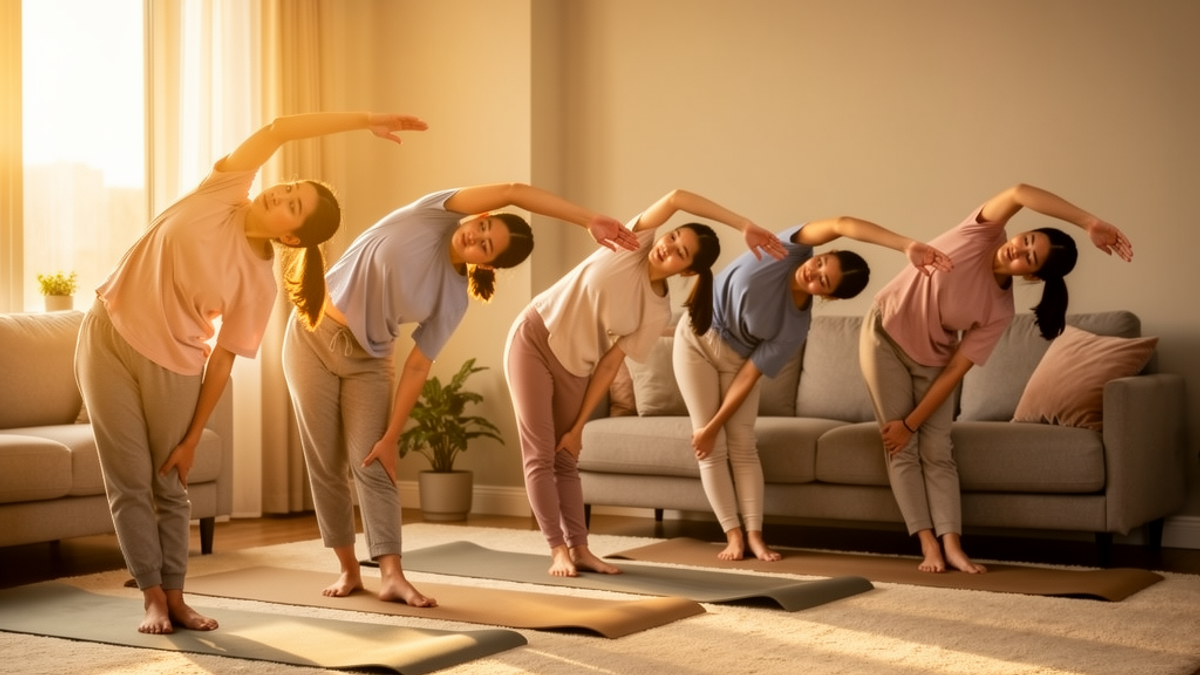
Let's be honest for a second. If your daily athletic output consists of a 15-mile commute in stop-and-go traffic, wrestling a massive cart through Costco, and speed-walking to the front door because your DoorDash driver is lost, your body is probably feeling it.
We tend to think that stretching is only for athletes—the marathon runners, the CrossFit enthusiasts, or the yogis who can twist themselves into human pretzels. But the truth is, desk workers and non-exercisers actually need a daily mobility routine more than anyone else. Sitting hunched over a laptop for eight hours a day, scrolling on our phones, and binge-watching Netflix takes a massive physical toll on the human body.
Your hamstrings shorten, your hip flexors lock up, your shoulders round forward, and your lower back starts screaming. You don't need to be an Olympic gymnast to feel stiff, and you certainly don't need to spend an hour a day fixing it. In fact, you can undo a massive amount of the damage caused by modern life with a simple, 10-minute daily stretching routine.
The Financial Upside of Stretching
Before we get into the routine, let's talk about why this is worth your time—and your money. Skipping proper mobility work leads to chronic pain, and chronic pain is expensive.
A standard physical therapy session can easily run you $150 a pop without good insurance. A decent deep tissue massage to work out those knots in your neck? That's at least $120 plus a tip. If you have to Venmo your friend for their fancy chiropractor recommendation, or Zelle a massage therapist every other week, you are bleeding cash. By investing just 10 minutes a day into your physical wellness, you can easily save yourself $1,000 to $2,000 a year in out-of-pocket wellness expenses.
You don't need to buy a bunch of PVC pipes and lumber at Home Depot to build a DIY home gym, and you don't need expensive gear. Whether it's a freezing 20 degrees Fahrenheit outside in the dead of winter or a sweltering summer day, you can do this routine from the comfort of your living room. All you need is a comfortable spot on the floor or a cheap $15 yoga mat from Target.
The Golden Rules of Stretching (Mistakes to Avoid)
Before you drop to the floor and start pulling on your limbs, we need to cover some ground rules. Most people stretch completely wrong, which can actually cause more harm than good.
1. Never Bounce
This is the most common mistake people make. It's called "ballistic stretching," and unless you are warming up for a dynamic sport, you shouldn't be doing it. When you bounce into a stretch, your muscles actually contract to protect themselves from tearing. This defeats the entire purpose. Instead, ease into the stretch smoothly and hold it completely still.
2. Breathe Through the Tension
If you are holding your breath, your body thinks it's in danger. This triggers your sympathetic nervous system (your fight-or-flight response), making your muscles tense up. This is where Onyx Sound Lab comes in. Try putting on some of our 432 Hz frequency tracks or binaural beats while you stretch. Deep, rhythmic breathing paired with sound wellness signals to your parasympathetic nervous system that it's safe to relax and let the muscle lengthen.
3. Seek Tension, Not Pain
Stretching should feel like a "good hurt." You are looking for a deep, pulling sensation, not a sharp, stabbing pain. On a scale of 1 to 10, with 10 being excruciating pain, you should be hanging out around a 6 or 7. If your face is grimacing and you're gritting your teeth, back off immediately.
The 10-Minute Daily Routine for Non-Athletes
This sequence is specifically designed to counteract the "desk worker posture." We are going to target the neck, shoulders, hip flexors, hamstrings, and lower back.
For each stretch, you will hold the position for 45 to 60 seconds. Do not rush. Set a timer on your phone, put on a relaxing frequency track, and let's get to work.
1. The "Tech Neck" Release (Neck and Upper Traps)
Why you need it: Every time you look down at your phone or lean closer to your monitor, you are putting up to 60 pounds of pressure on your cervical spine. This causes massive tension in your upper back and neck.
How to do it:
- Sit or stand up straight.
- Take your right hand and reach it over the top of your head, resting your fingers just above your left ear.
- Gently pull your right ear down toward your right shoulder.
- Take your left hand and reach it down toward the floor, flexing your wrist as if you are trying to push the ground away.
- You should feel a deep stretch along the left side of your neck and top of your shoulder.
- Hold for 45 seconds, breathing deeply. Slowly release and switch sides.
2. The Doorway Chest Opener (Pecs and Shoulders)
Why you need it: When you type, drive, or eat, your arms are in front of you. Over time, your chest muscles (pectorals) shorten, pulling your shoulders forward into a permanent hunch.
How to do it:
- Find a standard doorway in your house.
- Stand in the middle of the doorway and place your forearms on the doorframe on either side of you. Your elbows should be bent at a 90-degree angle, roughly at shoulder height.
- Stagger your stance, placing one foot slightly in front of the other.
- Gently lean your body weight forward through the doorway until you feel a stretch across your chest and the front of your shoulders.
- Keep your chest up and do not let your lower back arch excessively.
- Hold for 60 seconds.
3. The Couch Stretch (Hip Flexors)
Why you need it: Your hip flexors are the muscles on the front of your hips that lift your legs. When you sit in a chair all day, these muscles are stuck in a shortened position. Tight hip flexors are actually the number one hidden cause of lower back pain.
How to do it:
- You can do this in front of your couch or a sturdy chair.
- Kneel on the floor facing away from the couch. (Put a pillow or folded towel under your knee if you have hard floors).
- Place your left knee on the floor, and reach your left foot back so the top of your foot rests on the couch cushion.
- Step your right foot forward so your right knee is bent at a 90-degree angle, foot flat on the floor (like a lunge position).
- Squeeze your left glute (butt muscle) hard. This is the secret to this stretch—squeezing the glute forces the hip flexor on the front to relax.
- Sit up tall. You should feel an intense stretch on the front of your left thigh and hip.
- Hold for 60 seconds, then switch sides.
4. The Easy Seated Reach (Hamstrings)
Why you need it: Just like your hip flexors, your hamstrings (the back of your thighs) get incredibly tight from sitting with your knees bent all day. Tight hamstrings pull down on your pelvis, which flattens the natural curve of your lower back.
How to do it:
- Sit on the floor with your right leg extended straight out in front of you.
- Bend your left knee and place the sole of your left foot against your right inner thigh (like a tree pose on the floor).
- Sit up as tall as you can to lengthen your spine.
- Slowly hinge forward at your hips, reaching your hands toward your right foot.
- Keep your back relatively straight—do not just round your spine to try and touch your toes. The goal is to bring your belly button toward your thigh, not your nose to your knee.
- Stop when you feel a strong stretch in the back of your right leg.
- Hold for 60 seconds, breathing deeply, then switch legs.
5. Child's Pose to Cat-Cow (Lower Back)
Why you need it: Your lower back takes the brunt of the abuse from bad posture and tight hips. This combination gently decompresses the spine and restores natural movement.
How to do it:
- Start on your hands and knees on the floor.
- Bring your big toes together and spread your knees slightly wider than your hips.
- Sit your hips all the way back onto your heels and reach your arms straight out in front of you, resting your forehead on the floor. This is Child's Pose. Hold this for 30 seconds, breathing deeply into your lower back.
- Next, rise up onto all fours (hands under shoulders, knees under hips).
- Take a deep breath in, drop your belly toward the floor, and look up toward the ceiling (Cow Pose).
- Exhale sharply, push the floor away, and round your back up toward the ceiling like a Halloween cat, tucking your chin to your chest (Cat Pose).
- Move slowly between Cat and Cow for 60 seconds, letting your breath dictate the movement.
Making It a Habit
The hardest part of stretching isn't the physical act; it's remembering to do it. The best way to build this habit is through "habit stacking." This means taking a habit you already do every single day and attaching your new 10-minute stretching routine to it.
For example, if you always watch an episode of a show before bed, make a rule that you have to do your stretching routine on the living room rug while the first 10 minutes of the show plays. Or, if you work from home, do this routine right after you close your laptop for the day to signal to your brain that the workday is over.
Pairing this routine with intentional sound therapy from Onyx Sound Lab can turn a boring physical chore into a deeply relaxing mental reset. Frequency therapy helps lower cortisol levels, making it easier for your muscles to let go of the tension they've been holding onto all day.
Actionable Takeaway
Don't wait until your back "goes out" or your neck gets so stiff you can't check your blind spot in traffic.
Your action step for today: Tonight, right after you brush your teeth, lay a towel or a mat on the floor. Put on a relaxing frequency track, set a timer on your phone, and run through these five stretches. It will cost you exactly zero dollars and take only 10 minutes of your time, but your body will thank you tomorrow morning.

SunMaster USA
Editorial Team
The SunMaster USA team finds, tests, and shares the smartest lifehacks, money moves, and home improvement tips that make everyday life easier for American families.