How to Tip in America: The Complete Guide Nobody Teaches You
Tired of the dreaded iPad screen flip? From restaurants to rideshares, here is your no-nonsense guide to American tipping etiquette, including exact percentages, math shortcuts, and when you absolutely shouldn't tip.

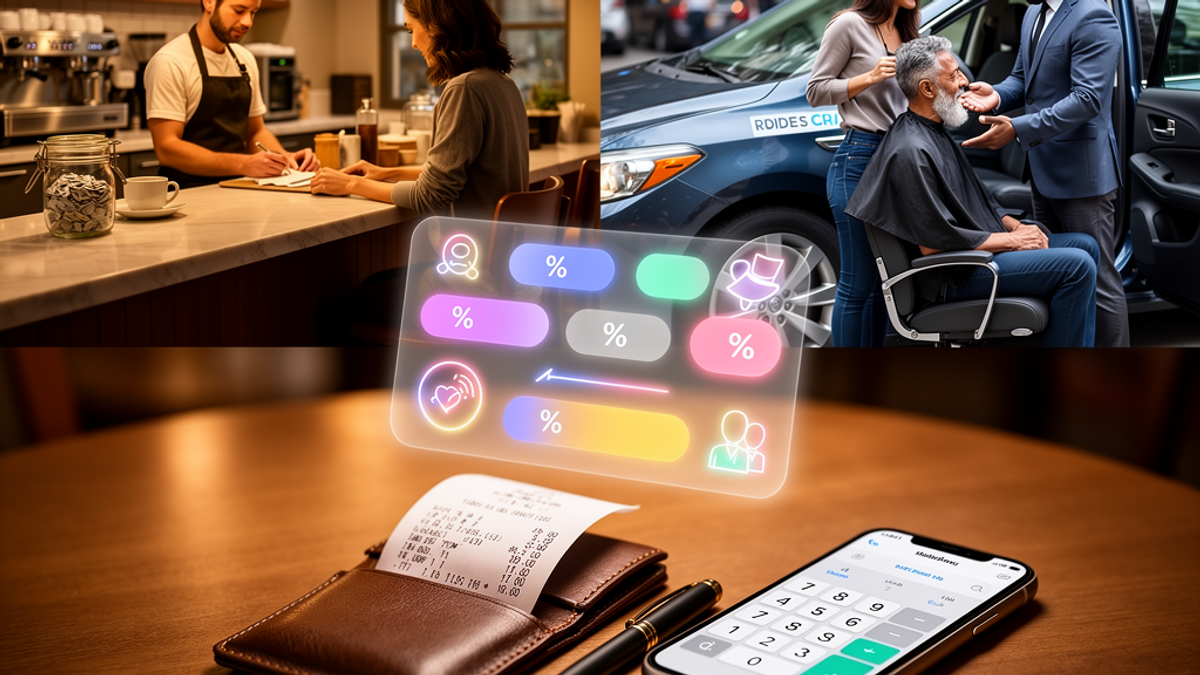
Let’s be honest: tipping in America has gotten completely out of hand.
You run into a local bakery, grab a bottle of water and a pre-packaged muffin from a glass case, and suddenly the cashier spins an iPad around with a deadpan stare. The options glowing back at you? 20%, 25%, 30%, or a tiny, guilt-inducing "Custom Amount" button. You panic, hit 20%, and walk out having paid a $1.50 tip for someone literally just handing you a bottle of water.
If you feel confused, frustrated, or anxious about tipping, you are not alone. "Tip creep"—the phenomenon where tipping is expected in more places, at higher percentages than ever before—is a very real thing.
But here is the truth: you don’t have to tip for everything, but you do need to know how to tip correctly when it matters. Tipping in the US isn't just a polite gesture; in many industries, it makes up the bulk of a worker’s living wage.
Consider this your definitive, no-nonsense guide to tipping in America. We are going to cover exactly who to tip, how much to tip, the math shortcuts to figure it out instantly, and—most importantly—when to keep your hard-earned dollars in your wallet.
The Golden Rule and the 20% Math Shortcut
Before we dive into specific scenarios, let’s talk about the baseline. In America, 20% has become the standard tip for good, sit-down service.
If you hate math, don't worry. You never need to pull out your phone calculator again. Here is the easiest way to calculate a 20% tip in your head:
- Take your total bill.
- Move the decimal point one place to the left (this gives you 10%).
- Multiply that number by 2.
Example: Your bill is $45.00. Move the decimal one spot to the left: $4.50. Multiply by two: $9.00. Your tip is $9.
The Pre-Tax Savings Trick: Should you tip on the pre-tax amount or the post-tax amount? Etiquette dictates you only need to tip on the pre-tax subtotal. If your family eats out once a week and your pre-tax bill is usually $100, your post-tax bill in a high-tax city might be $110. If you tip 20% on the post-tax amount ($22) rather than the pre-tax amount ($20), you’re overpaying by $2 a week. Over a year, that’s over $100 in lost savings just from a simple math error. Always tip on the subtotal.
Restaurants, Bars, and Coffee Shops
The food and beverage industry is where tipping is most deeply ingrained in American culture. Because the federal minimum wage for tipped employees is a shocking $2.13 an hour, your tip is literally paying their rent.
Sit-Down Restaurants
- The Standard: 15% to 20%.
- The Breakdown: Tip 20% for great service, 18% for average service, and 15% for below-average service. If the service was truly atrocious, you can drop to 10%, but speak to a manager rather than just stiffing the server.
- Watch Out: Always check your receipt for an "auto-gratuity." Many restaurants automatically add an 18% or 20% service charge for parties of 6 or more. Do not double-tip unless you want to reward exceptional service.
Bars and Nightclubs
- The Standard: $1 to $2 per drink, or 20% of the total tab.
- The Breakdown: If you are ordering a simple beer or pouring a glass of wine, $1 per drink is perfectly fine. If the bartender is spending five minutes muddling herbs and crafting a complex cocktail, tip $2 per drink or 20% of your open tab.
Coffee Shops and Counter Service (The iPad Dilemma)
- The Standard: Optional, but $1 or 10% is generous.
- The Breakdown: You are under no obligation to tip 20% for counter service. If a barista simply pours a drip coffee, dropping your spare change or $1 in the jar is plenty. If they are making four customized, blended Frappuccinos for your family during the morning rush, hitting that 15% or 20% button on the iPad is a nice gesture. If you are just buying retail items (like a bag of coffee beans), hit "No Tip" without a second thought.
The Gig Economy: Delivery and Rideshare
Gig workers are using their own vehicles, paying for their own gas, and handling their own wear and tear. Their base pay from the apps is notoriously low.
Food Delivery (DoorDash, UberEats, Grubhub)
- The Standard: 20% or a $5 minimum, whichever is higher.
- The Breakdown: Delivering food is a luxury service. If you order a $12 sandwich, a 20% tip is only $2.40. That is not enough to ask a human being to drive to a restaurant, wait for your food, and drive it to your doorstep. Always tip a minimum of $5.
- Weather and Distance: If it’s 20 degrees Fahrenheit outside with icy roads, or if the driver has to travel more than 5 miles, increase your tip. Think of it as a bid for service—drivers can see the tip before they accept the order, so a better tip means your food arrives faster.
Rideshare (Uber, Lyft)
- The Standard: 15% to 20%.
- The Breakdown: For a standard ride across town, 15% is standard. Bump it up to 20% if the driver helps load your heavy luggage into the trunk, keeps the car immaculately clean, or navigates nightmare traffic with a good attitude.
Personal Care: Hair, Nails, and Spa Services
When someone is providing a highly personal, hands-on service, tipping is customary and expected.
Hair Salons and Barbershops
- The Standard: 15% to 20%.
- The Breakdown: Tip your stylist or barber based on the total cost of the service. If your haircut and color costs $200, a $40 tip is standard.
- The Venmo/Zelle Hack: Many independent stylists rent their chairs and get hit with hefty credit card processing fees. Ask them, "Do you prefer your tip on the card, or via Venmo or Zelle?" They will almost always appreciate the direct digital payment, and it ensures 100% of the tip goes straight to them.
- Shampoo Assistants: If a separate assistant washes your hair, it is polite to hand them a $3 to $5 cash tip directly.
Massages, Spas, and Nail Salons
- The Standard: 18% to 20%.
- The Breakdown: Whether it is a $40 manicure or a $150 deep tissue massage, 20% is the industry standard.
Hotels and Travel
Traveling requires carrying cash. While the rest of America has gone cashless, hotel tipping still thrives on crisp paper bills.
Housekeeping
- The Standard: $3 to $5 per day.
- The Breakdown: Do not wait until the end of your stay to leave a lump sum. Housekeeping staff rotates, so the person cleaning your room on Tuesday might not be the one working when you check out on Friday. Leave a few dollars on the pillow or desk every morning with a quick note that says "Thank you!" so they know it is for them.
Bellhops and Valets
- The Standard: $2 to $5.
- The Breakdown: Tip the bellhop $2 to $5 per bag they bring to your room. For valet parking, tip $2 to $5 when they return your car to you (you don't need to tip when you drop it off).
Home Services and Movers
Having people work in and around your house can be an awkward tipping gray area. Here is how to handle it.
Movers
- The Standard: $20 to $50 per mover, per day.
- The Breakdown: Moving is backbreaking labor. For a half-day move, $20 per person is great. For a full 8-hour day of hauling heavy furniture, $40 to $50 per person is appropriate. Pro tip: Always provide cold bottled water or Gatorade, and if they are working through lunch, buying them pizza is a highly appreciated American tradition (but it does not replace the cash tip).
Furniture and Appliance Delivery
- The Standard: $5 to $20 per person.
- The Breakdown: If you buy a massive refrigerator from Home Depot or a heavy couch from Target, and the delivery crew has to haul it up three flights of stairs, tip them $10 to $20 each. If they are just dropping a box inside your front door, $5 is fine, or you can skip it entirely.
Tradespeople (Plumbers, Electricians, HVAC)
- The Standard: $0.
- The Breakdown: You do not need to tip licensed tradespeople. They are typically making a high hourly wage or charging a flat rate for their specialized skills. However, offering them a cold drink or allowing them to use your restroom is basic courtesy.
When NOT to Tip (The Guilt-Free Zone)
Let’s relieve some of that tipping anxiety. Here are the places where you should confidently hit the "No Tip" button without an ounce of guilt:
- Self-Checkout Machines: If you are ringing up your own bulk paper towels at Costco, or scanning a frozen pizza at Walmart or Target, absolutely do not tip. The machine does not need your money.
- Fast Food Drive-Thrus: Places like McDonald's or Wendy's do not expect tips, and employees are often not allowed to accept them.
- Professionals: Never tip your doctor, lawyer, accountant, or child's teacher. It is considered inappropriate and could even be viewed as a bribe.
- Package Delivery: You do not need to tip your FedEx, UPS, or Amazon Prime drivers for standard daily deliveries. (Though leaving a basket of snacks on your porch during the December holiday rush is a wonderful gesture).
Actionable Takeaway
Tipping doesn't have to be a source of stress. To instantly make your life easier starting today, do two things: First, commit the "move the decimal and multiply by two" math trick to memory so you never panic at a restaurant again. Second, go to the bank and withdraw $40 in five-dollar bills to keep in your glovebox or wallet. The next time you stay at a hotel, use a valet, or have someone haul a heavy piece of furniture into your home, you will be prepared to tip confidently, correctly, and without the awkward scramble for cash.

SunMaster USA
Editorial Team
The SunMaster USA team finds, tests, and shares the smartest lifehacks, money moves, and home improvement tips that make everyday life easier for American families.