Packing Like a Pro: How to Fit a Week's Worth of Clothes in a Carry-On
Tired of paying $70 in baggage fees and waiting at the carousel? Learn the exact rolling methods, packing cube tricks, and outfit planning strategies to fit a week's worth of clothes into a single carry-on bag.

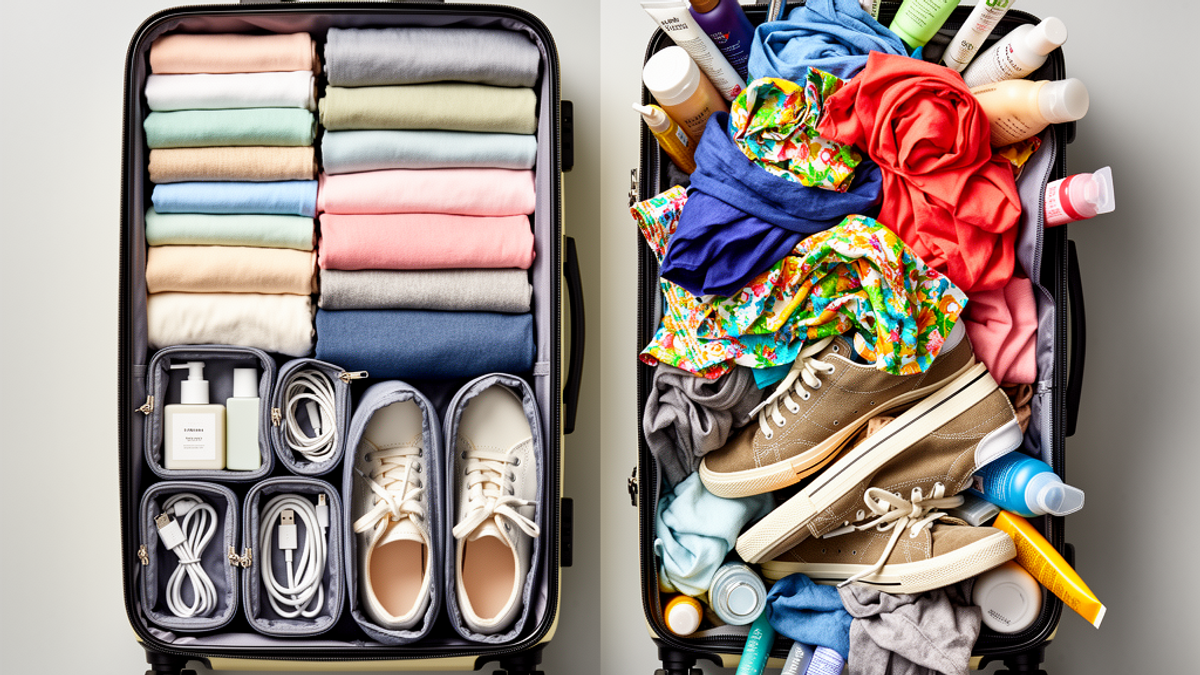
Picture this: You've just landed at O'Hare after a three-hour flight. It's 35 degrees Fahrenheit outside, you're exhausted, and all you want to do is grab an Uber to your Airbnb and order DoorDash. But instead of walking straight out the doors to freedom, you are standing shoulder-to-shoulder with a hundred other tired travelers at Carousel 4, waiting for a bag that may or may not have made the connection in Atlanta.
Waiting at the baggage carousel feels like waiting in line at the DMV—it's a massive drain on your time and energy. Worse, it's a drain on your wallet. Most major US airlines are now charging $35 to $40 each way for a standard checked bag. That's $70 to $80 round-trip just to transport your clothes.
Imagine what you could do with that extra $80. You could Venmo a buddy for a round of drinks, upgrade your dinner plans, or put it toward your next flight.
Learning to pack a week's worth of clothes into a single carry-on isn't just a minimalist flex; it's a fundamental travel skill that saves you money, protects you from the nightmare of lost luggage, and makes navigating airports a breeze. If you've ever dragged a massive 50-pound suitcase for two miles across cobblestone streets, you already know the stakes.
Here is your definitive, step-by-step guide to ditching the checked bag forever, utilizing the rolling method, packing cubes, and smart outfit planning to pack like an absolute pro.
The Golden Rule: Stop Packing "Just In Case"
The biggest enemy of the carry-on traveler is anxiety. We pack for hypothetical situations that will never happen. "What if I get invited to a black-tie gala while visiting my parents in Ohio?" "What if I need these heavy hiking boots for a walk to the local coffee shop?"
To fit seven days of clothing into a 22x14x9-inch designated carry-on space, you have to adopt a ruthless mindset. You are packing for the reality of your itinerary, not the multiverse of possibilities. If an absolute emergency happens and you spill coffee on your only good sweater, remember: they have washing machines and Target stores at your destination.
Adopt the 5-4-3-2-1 Packing Method
If you're heading out for a week, outfit planning is your best friend. You need a "capsule wardrobe"—a collection of clothes that all mix and match seamlessly. Stick to a cohesive color palette (like neutrals with one or two accent colors) so that every top matches every bottom.
The 5-4-3-2-1 rule is the holy grail for a week-long trip:
- 5 Tops: Think two casual t-shirts, one button-down or blouse, one long-sleeve, and one slightly dressier top.
- 4 Bottoms: One pair of jeans, one pair of comfortable travel pants or leggings, one pair of shorts (if it's 80 degrees in Miami) or a heavier pair of slacks, and one pair of athletic bottoms.
- 3 Accessories/Layers: One sweater or light jacket, one pair of pajamas, and one swimsuit (or alternative accessory like a scarf).
- 2 Pairs of Shoes: One comfortable pair for walking (sneakers), and one dressier pair or sandals.
- 1 "Outwear" Item: A heavier jacket or coat (which you will wear on the plane, not pack).
If you mix and match these items, you easily have over 15 unique outfit combinations. You don't need seven distinct outfits for seven days. You just need versatile pieces.
The Rolling Method: Why Folding is Obsolete
If you are still laying your shirts flat and folding them like they do on the tables at Macy's, you are wasting an incredible amount of space. Flat-folded clothes trap air, create bulky stacks, and almost guarantee hard creases by the time you unpack.
Enter the "Military Roll."
Rolling your clothes tightly serves two massive purposes: it squeezes out excess air to save space, and it prevents hard wrinkles. Here is how to execute the perfect roll:
- For Shirts: Lay the shirt flat face down. Fold the bottom hem up about two inches to create a "cuff." Fold the left side of the shirt into the center, then the right side over that (like a narrow rectangle). Starting from the collar, roll the shirt down as tightly as humanly possible. Once you reach the bottom, take that two-inch cuff you created and wrap it backward over the roll to lock it in place. It will look like a tight, fabric burrito.
- For Pants: Fold the pants in half lengthwise so the legs are stacked. Starting from the ankles, roll upwards toward the waistband. You can use a heavy-duty rubber band (the kind you'd find at Home Depot) to keep thicker denim rolled tight.
By rolling your clothes, you can stand them up vertically inside your bag. This means when you open your suitcase, you can see every single item at a glance, rather than having to dig through layers of folded shirts to find the one at the bottom.
Packing Cubes: The Ultimate Organization Hack
If the rolling method is the engine of carry-on travel, packing cubes are the steering wheel. You can grab a highly-rated, affordable set of packing cubes for about $15 to $20 at Walmart or Target, and they will change your life.
Packing cubes are essentially small, lightweight zippered fabric bags that act like drawers for your suitcase. Instead of throwing all your rolled clothes into the chaotic abyss of your luggage, you categorize them.
- Cube 1 (Medium): All your rolled tops.
- Cube 2 (Large): Your heavier bottoms (jeans, slacks, shorts).
- Cube 3 (Small): Underwear, socks, and pajamas.
Upgrade to Compression Cubes
If you want to take it a step further, invest in compression packing cubes. These have a secondary zipper around the outside. Once you fill the cube and zip it shut, you zip the second zipper, which physically compresses the cube down, squeezing out the remaining air. It's like a vacuum seal bag without needing a vacuum. You can easily save another 20% to 30% of space using compression cubes, leaving plenty of room for souvenirs or a bulky toiletry bag.
Wear Your Bulkiest Items (The TSA Shuffle)
This is the oldest trick in the frequent flyer playbook. Your carry-on bag has a strict size limit, but your body does not.
If you are traveling from sunny California to a brutal winter in Chicago, you cannot afford to put a heavy parka and knee-high winter boots into your suitcase. They will take up 70% of your available real estate.
Instead, you wear them on the plane.
Yes, doing the "TSA Shuffle"—taking off your heavy boots, your thick sweater, and your bulky winter coat at the security checkpoint—is slightly annoying for about three minutes. But the payoff is immense. Wear your heaviest jeans, your chunkiest sneakers or boots, and your thickest jacket. Once you get through security and board the plane, you can take the coat off and stuff it into the overhead bin on top of your bag, or use it as a makeshift blanket or pillow during the flight.
By wearing your largest items, you effectively cheat the airline's baggage limits.
Conquering Toiletries and Tech
Toiletries are often the downfall of the aspiring carry-on traveler. We try to cram full-sized lotions and Costco-sized shampoo bottles into our bags, only to have them confiscated by TSA.
You must obey the TSA 3-1-1 rule: liquids, gels, and aerosols must be in containers of 3.4 ounces (100 milliliters) or less, and all containers must fit inside one clear, quart-sized plastic bag.
Don't buy the overpriced travel-sized items at the pharmacy for every trip. Instead, buy a set of reusable silicone travel bottles and refill them from your bulk bottles at home. For items like toothpaste, a travel size is fine. Better yet, consider switching to solid toiletries—solid shampoo bars, solid perfume, and stick deodorants do not count toward your liquid limit, freeing up precious space in your quart bag.
Your Sound Wellness and Tech Essentials
Airports and airplanes are loud, chaotic, and stressful environments. The constant roar of jet engines, crying babies, and overhead announcements can spike your cortisol before your vacation even begins.
Since you've saved so much space with your clothes, you have room for your wellness essentials. At Onyx Sound Lab, we know the power of frequency therapy and acoustic wellness. Pack a high-quality pair of noise-canceling headphones. Before you head to the airport, download a playlist of binaural beats, solfeggio frequencies, or grounding soundscapes.
Listening to these targeted frequencies during your flight can help regulate your nervous system, reduce travel anxiety, and help you arrive at your destination feeling centered rather than depleted. Add a simple pair of silicone earplugs to your bag for sleeping in noisy hotels—they take up zero space and are worth their weight in gold.
Doing Laundry on the Go
If you are traveling for more than seven days, you still don't need a bigger bag. The secret to long-term carry-on travel is doing laundry on the road.
You don't need to pay exorbitant hotel laundry fees. Just pack a small ziploc bag with a few laundry detergent sheets or a chunk of Zote laundry soap (which you can buy for about $2 in the laundry aisle at Walmart).
When you run out of clean socks or t-shirts, simply fill your hotel sink with warm water, add your soap, agitate the clothes, rinse them, and wring them out. To dry them quickly, lay the wet garment flat on a dry hotel towel, roll the towel up tightly like a yoga mat, and step on it. The towel will absorb 80% of the moisture. Hang the clothes over the shower rod, and they will be completely dry by morning.
The Financial and Mental ROI
Let's do the math on making this switch. If you take just three round-trip flights a year, checking a bag will cost you roughly $240 annually. Over five years, that's $1,200—literally the cost of another vacation—just to haul extra clothes you probably won't even wear.
But the return on investment isn't just financial. It's the peace of mind. It's knowing that an airline can never lose your luggage because your luggage is sitting right above your head. It's the ability to easily jump on a subway or walk a few blocks to your hotel without sweating through your shirt while dragging a massive trunk. It's the freedom of traveling light.
Your Actionable Takeaway
Don't wait until the night before your next flight to try this. Your action step for today: Pull out the suitcase you plan to use for your next trip. Go to your closet and pull out 5 tops, 4 bottoms, and 3 layering items. Try the military roll technique on all of them, and place them in your suitcase.
You will be shocked to see that the bag is likely only half full.
Invest $15 in a set of packing cubes, plan your capsule wardrobe, and commit to the carry-on lifestyle. Keep your $40 baggage fee, Venmo your friends for a nice dinner on your trip, and enjoy the unparalleled feeling of walking straight past baggage claim and out into your vacation.

SunMaster USA
Editorial Team
The SunMaster USA team finds, tests, and shares the smartest lifehacks, money moves, and home improvement tips that make everyday life easier for American families.