Road Trip Essentials: The Ultimate Packing List for American Highways
Hitting the open road? From trunk emergency kits to the ultimate snack strategy and driving fatigue soundscapes, here is your foolproof guide to surviving and thriving on American highways.

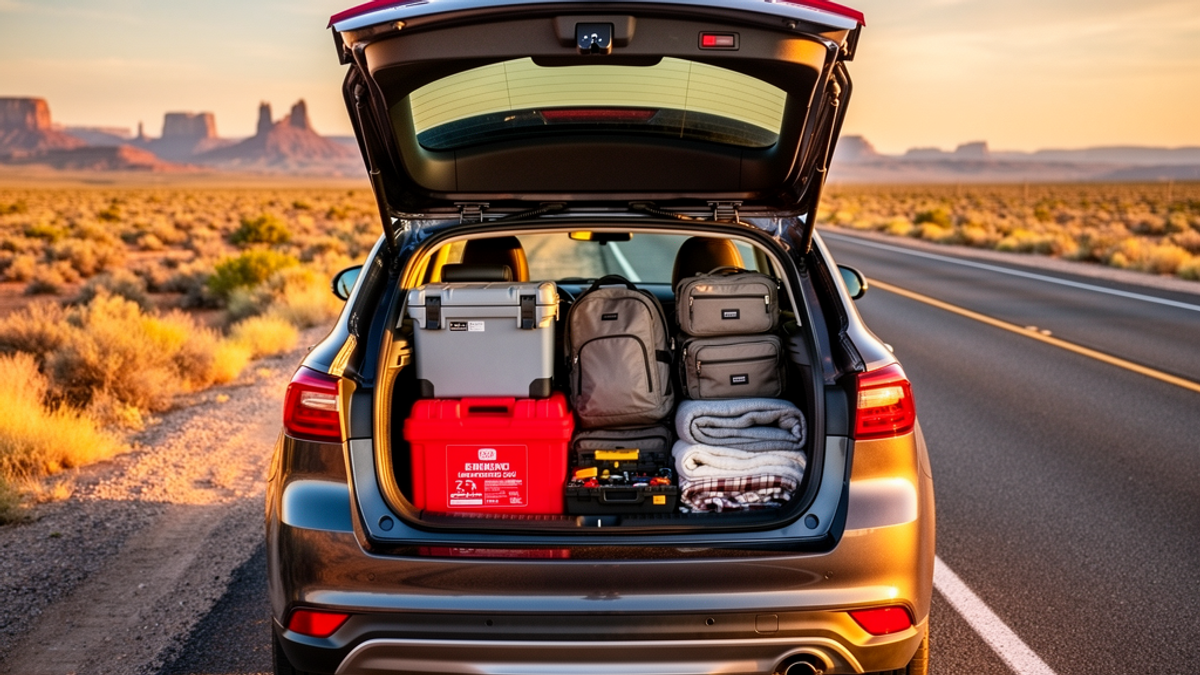
There is nothing quite like the romance of the Great American Road Trip. Picture it: the windows are rolled down, the dashboard reads a perfect 72 degrees Fahrenheit, your favorite playlist is pumping through the speakers, and you have thousands of miles of open interstate stretching out in front of you. Whether you are cruising down the iconic Route 66, navigating the scenic Pacific Coast Highway, or just grinding out a long haul on I-80 to visit family for the holidays, hitting the road is a rite of passage.
But let's be real for a second. The reality of a road trip is often a little less cinematic. Someone always has to pee right after you pass the "Next Rest Area 45 Miles" sign. The tire pressure light starts blinking in the middle of nowhere. And if you are not careful, you will end up dropping $45 at a random gas station on mediocre beef jerky and lukewarm sodas.
To make sure your cross-country adventure feels more like a movie and less like a survival test, you need a rock-solid game plan. As a writer for Onyx Sound Lab, I know that a great trip is all about maintaining the right frequency—both literally in your speakers and figuratively in your preparation. Here is your ultimate, down-to-earth packing list and strategy guide for conquering American highways.
The "Don't Call a Tow Truck" Emergency Kit
Before you even think about snacks or playlists, we need to talk about the trunk. Breaking down on the side of the highway is stressful, dangerous, and incredibly expensive. A tow truck can easily set you back $150 to $300 just to hook up your car.
Take a quick trip to Home Depot or Walmart and put together a dedicated roadside emergency kit. Do not rely on the flimsy set that came with your car ten years ago.
Here is exactly what you need in your trunk:
- Portable Jump Starter: Ditch the old-school jumper cables that require a Good Samaritan. For about $70 to $100, you can buy a lithium-ion jump starter (like a NOCO Boost). It holds a charge for months and lets you jump your own battery in seconds.
- Portable Tire Inflator: A 12V air compressor plugs right into your cigarette lighter. If you wake up at a motel with a soft tire, this $35 gadget will save your morning.
- The Fix-It Trinity: Duct tape, heavy-duty zip ties, and a basic multi-tool. You would be amazed at what you can temporarily patch together with these three things to get you to the next mechanic.
- First Aid Kit: Go beyond band-aids. Pack ibuprofen, anti-nausea meds, allergy pills, tweezers, and antiseptic wipes.
- Flashlight & Headlamp: Because flat tires only seem to happen at 11:00 PM on unlit backroads. Make sure you have extra batteries.
- Gallon of Distilled Water: Good for a thirsty radiator, or a thirsty driver in a pinch.
The Strategic Snack Cooler: Beating the Gas Station Markup
Gas station snacks are a trap. When you are tired and hungry, that $4 bag of Chex Mix and $3 bottle of water start looking reasonable. Over a three-day drive, relying on convenience stores can easily drain $100+ from your travel budget.
Your first stop before leaving town should be Costco or Sam's Club. You are going to implement the "Two-Cooler System."
Cooler 1: The Beverage Vault
This is your heavy-duty cooler kept in the back. Load it with bulk water bottles, sports drinks, and cold brew coffee. By buying a 40-pack of water at Costco for $5.99, you are paying about 15 cents a bottle instead of $2.50 at the pump. Put the drinks at the bottom and cover them completely with ice.
Cooler 2: The Cab Companion
This is a smaller, soft-sided cooler that sits behind the passenger seat, easily accessible to the driver. Every morning, transfer a day's worth of drinks from the Vault into the Companion.
The Snack Tackle Box
For dry snacks, steal this brilliant hack: go to Target and buy a cheap, clear plastic tackle box or craft organizer. Fill the compartments with different snacks—almonds, pretzels, gummy bears, cheese crackers. It is incredibly satisfying, gives you variety without having to open six different bags, and kids absolutely love it.
Route Planning & Gas Savings Strategy
Wingin' it is fun until you realize you just paid 60 cents more per gallon because you didn't wait until the next exit.
Download the GasBuddy app before you leave. It crowd-sources real-time gas prices. Planning your fill-ups around state lines is a massive money saver. For instance, gas in California might be $4.85 a gallon, but cross the border into Arizona and it drops to $3.50. On a 15-gallon tank, that is a $20 savings in a single stop.
Also, consider your toll strategy. If you are driving the East Coast or Midwest, an EZ-Pass or I-Pass is non-negotiable. Paying cash at tolls (where it is even still allowed) is usually 30% to 50% more expensive than the electronic rate. If you are road-tripping through Florida, grab a SunPass.
The 2-Hour Rest Stop Rule & Beating Highway Hypnosis
Driving fatigue is the silent killer of road trips. "Highway hypnosis" occurs when you stare at the white lines so long that your brain goes on autopilot, dulling your reaction times.
To combat this, enforce the 2-Hour or 100-Mile Rule. Every two hours or 100 miles, you pull over. Period. Even if you don't have to use the restroom, get out of the car, do five minutes of stretching, and walk around the vehicle.
The Onyx Sound Lab Secret: Frequency Therapy for Drivers
When the afternoon slump hits around 2:00 PM, most drivers reach for a sugary energy drink that inevitably leads to a crash. Instead, try utilizing sound wellness to shift your brain state.
Here at Onyx Sound Lab, we highly recommend curating a specific driving playlist that utilizes brainwave entrainment:
- For the Driver (Focus): Play tracks featuring Beta waves (13-30 Hz) or low Gamma waves (30-40 Hz). These frequencies are scientifically linked to active concentration, heightened alertness, and problem-solving. Listening to a subtle 40 Hz binaural beat underneath ambient music can naturally wake your brain up without the caffeine jitters.
- For the Passengers (Relaxation): If the kids are getting restless or your co-pilot is dealing with travel anxiety, switch the rear speakers to Alpha waves (8-12 Hz) or the 432 Hz Solfeggio frequency. These sounds promote a state of relaxed calm, effectively lowering the collective heart rate of the cabin and soothing frayed nerves.
Backseat Peacekeepers: Entertainment for Kids
If you are traveling with children, "Are we there yet?" is the soundtrack of your nightmares. Keeping the backseat peaceful requires a mix of high-tech and low-tech strategies.
First, hit the Target Dollar Spot (Bullseye's Playground) before the trip. Drop $15 on cheap window clings, coloring books, and small puzzles. Do not give them everything at once. Introduce a "new" toy every 100 miles to keep the novelty alive.
For the tech side, pre-download movies and shows on their iPads while you are still on your home Wi-Fi. Do not rely on cellular data streaming in the middle of Nebraska—you will hit a dead zone, the movie will buffer, and a meltdown will ensue.
Invest in a good pair of volume-limiting Bluetooth headphones for each child. This allows them to watch their favorite cartoons while you listen to your Onyx Sound Lab focus frequencies or your favorite true-crime podcast in the front seat.
The Digital Wallet & Hotel Hacks
Managing money and logistics on the road has never been easier, provided you have your digital life organized.
- Splitting Costs: If you are traveling with friends, do not wait until the end of the trip to do the math. Set up a group on Splitwiser, or just use Venmo or Zelle at the pump. "I'll get gas this time, you get the next one" rarely works out evenly.
- Hotel Food Delivery: After driving 500 miles, the last thing you want to do is get back in the car to find dinner. Update your DoorDash or UberEats app with your hotel's address as soon as you check in. Pro tip: meet the driver in the lobby so they don't get lost wandering the hotel hallways, ensuring your food is still hot.
- Booking Apps: Apps like HotelTonight are fantastic for finding last-minute deals if you prefer not to stick to a rigid schedule. You can often score a $150 room for $89 by booking at 4:00 PM on the day of your stay.
Your Actionable Takeaway
A successful road trip is 80% preparation and 20% execution. You don't need to be anxious about the open road, you just need to be ready.
Here is what you can do today to prepare for your next trip:
- Open your phone and create a dedicated "Road Trip" folder.
- Download GasBuddy, HotelTonight, and your preferred offline maps (Google Maps allows you to download specific regions for offline use—do this!).
- Pre-load your Onyx Sound Lab frequency tracks for focus and relaxation so they are ready even when you lose cell service.
- Make a quick inventory of your trunk. If you don't have a portable jump starter and a tire inflator, open Amazon or head to Walmart and invest that $100. It is the cheapest insurance policy you will ever buy.
Hit the road, stay focused, keep the snacks accessible, and let the miles roll by. America is waiting.

SunMaster USA
Editorial Team
The SunMaster USA team finds, tests, and shares the smartest lifehacks, money moves, and home improvement tips that make everyday life easier for American families.