Sleep Hygiene 101: How to Build a Bedroom That Actually Makes You Sleep Better
Stop tossing and turning. Learn how to optimize your bedroom for deep, restorative sleep with practical tips on temperature, lighting, white noise, and more. Transform your room into a sleep sanctuary today.

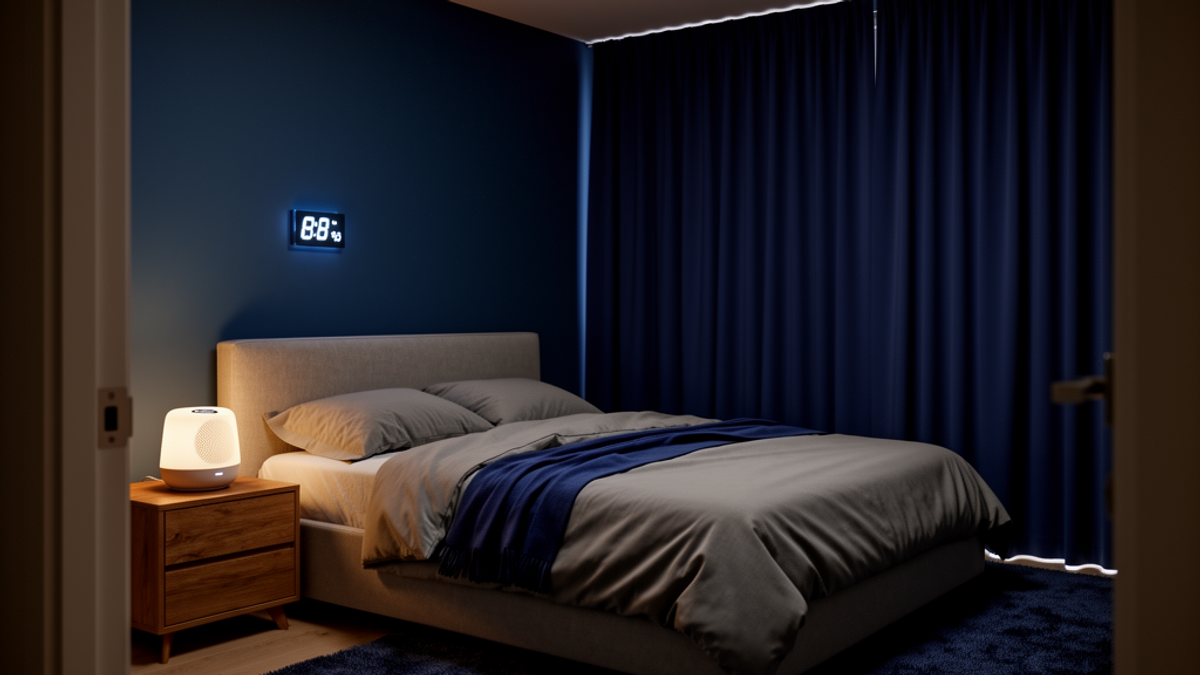
Have you ever found yourself staring at the ceiling at 2:14 AM, calculating exactly how many hours and minutes of sleep you'll get if you manage to fall asleep right this second? We’ve all been there. You’re lying in bed, your brain is doing a highlight reel of every awkward thing you said in high school, and you can hear a dog barking three miles away.
We tend to blame our brains for this. We blame the late-night DoorDash order of spicy tacos, the stress of the workday, or the fact that we drank a massive iced coffee at 4 PM. And sure, those things absolutely matter. But what if the real culprit isn't just what's in your head or your stomach, but what's in your room?
Welcome to Sleep Hygiene 101. As a sound wellness and frequency therapy platform, we at Onyx Sound Lab spend a lot of time obsessing over how the environment impacts the human body. And let me tell you, your bedroom environment is the absolute foundation of your biological recovery.
Think about it. You wouldn't try to bake a cake in an oven that's turned off, and you shouldn't try to get deep, restorative sleep in a room that feels like a brightly lit Best Buy. Today, we are going to talk about how to build a sleep sanctuary. We're going to cover practical, down-to-earth steps you can take today—mostly without leaving your house, or at most, requiring a quick run to a big box store.
Let’s dive into the ultimate blueprint for a bedroom that actually makes you sleep better.
The Batcave Rule: Mastering Your Light Environment
If your bedroom is bright enough to read a book with the lights off, you have a light pollution problem. Our bodies evolved to sleep in the pitch black. When light hits your retinas—even through closed eyelids—it sends an immediate signal to your brain to halt the production of melatonin, your body's natural sleep hormone.
Streetlights, car headlights, the neighbor’s obnoxious motion-sensor floodlight, and even the glow of the moon can disrupt your sleep architecture. The solution? You need to turn your bedroom into the Batcave.
Actionable Steps for a Darker Room:
- Invest in True Blackout Curtains: I'm not talking about flimsy "room darkening" curtains; I'm talking about heavy, hotel-grade blackout curtains. You don't need to spend a fortune. You can drive a few miles down the road to Walmart or Target and pick up a solid pair for about $30 to $40. If you have weirdly shaped windows or light bleeding from the top, head to Home Depot and grab some blackout cellular shades or a $10 roll of weather stripping to block the light creeping under your bedroom door.
- Cover the LEDs: Look around your room at night. See the red glow of the TV standby light? The blue beam from your air purifier? The green dot on your smoke detector? Buy a $5 pack of black electrical tape and cover every single one of those tiny LEDs. It sounds crazy, but your brain will thank you.
- The ROI: A $35 investment in blackout curtains can save you hundreds of dollars in sleep supplements, sleep aids, and extra afternoon coffees over the next year.
The Meat Locker Mentality: Dialing in the Temperature
Americans love their climate control, but we consistently get it wrong at night. A lot of folks keep their house at a cozy 72°F around the clock. While that’s great for watching Netflix on the couch, it’s an absolute disaster for your sleep quality.
To initiate sleep, your core body temperature actually needs to drop by about two to three degrees Fahrenheit. If your room is too warm, your body has to work overtime to shed that heat, leading to tossing, turning, and waking up in a pool of sweat.
The scientific sweet spot for sleep is between 65°F and 68°F. Yes, that sounds a little chilly. It should feel like a meat locker when you walk in.
Actionable Steps for a Cooler Room:
- Program the Thermostat: If you have a smart thermostat, program it to drop to 67°F about an hour before your bedtime. Not only will this cue your body that it's time to sleep, but dropping the heat at night during the winter can actually save you around $10 to $15 a month on your utility bill. Over a year, that's nearly $200 back in your pocket.
- Layer the Bedding: The room should be cold, but you shouldn't be freezing. Use breathable, natural fiber sheets (like 100% cotton or linen) and layer your blankets so you can easily kick one off if you get too hot. Avoid synthetic polyester sheets that trap heat.
- The Pre-Bed Shower Trick: Taking a warm shower 90 minutes before bed brings blood to the surface of your skin. When you step out into your cool 65-degree room, that heat rapidly dissipates, causing the rapid drop in core temperature that triggers deep sleep.
The Sound of Silence (or Why You Need White Noise)
Here at Onyx Sound Lab, this is our bread and butter. Sound is one of the most overlooked aspects of sleep hygiene.
You might think you need dead silence to sleep. But dead silence is actually a trap. In a perfectly quiet room, your brain's auditory processing center becomes hyper-sensitive. Every floorboard creak, every passing car, and every slam of a car door will jolt you out of the lighter stages of sleep.
You don't need silence; you need a continuous, soothing acoustic blanket. This is where sound masking comes in.
Actionable Steps for Better Sound:
- Embrace Frequency Therapy: White noise, pink noise, and brown noise are absolute game-changers. Brown noise, which has deeper, lower frequencies (think of a roaring waterfall, the rumble of a jet engine, or heavy rain), is particularly effective at masking disruptive environmental sounds without sounding too harsh or tinny.
- Get a Dedicated Machine: Don't just use a YouTube video on your phone (we'll get to why in a minute). Buy a dedicated sound machine. You can find simple fan-based mechanical ones or digital frequency generators for under $50.
- Use Onyx Sound Lab: Tune into our curated sleep frequency sessions. Playing optimized soundscapes through a high-quality Bluetooth speaker across the room can guide your brainwaves into the delta state, which is where the deepest physical recovery and cellular repair happens.
The Digital Quarantine: Evicting Your Phone
Alright, it’s time for some tough love. Your smartphone is ruining your sleep.
We all do it. We get into bed, plug the phone into the charger on the nightstand, and tell ourselves we're just going to check our email or send a quick Venmo to a friend for our half of the pizza. Next thing you know, it’s 1:30 AM, and you’re deep down a rabbit hole watching videos of someone power-washing a driveway.
The blue light from the screen suppresses melatonin, and the content itself spikes your dopamine and cortisol, putting your nervous system into a state of high alert. Your bed needs to be a trigger for sleep, not a trigger for doomscrolling.
Actionable Steps for a Tech-Free Zone:
- The Kitchen Charging Station: Relocate your phone charger to the kitchen, the living room, or the bathroom. Anywhere but the bedroom. If you need to make a rule with your partner, do it. Tell them, "I will literally Zelle you 20 bucks every time you catch me bringing my phone into the bedroom." Financial pain is a highly effective motivator.
- Buy a Dumb Alarm Clock: "But I use my phone as my alarm!" This is the oldest excuse in the book. Go to Target, spend $15, and buy a basic digital alarm clock. Make sure the numbers are red or dim orange (not blue or bright white), and physically turn it away from you so you aren't obsessing over the time when you wake up in the middle of the night.
- The 30-Minute Buffer: Give yourself a mandatory 30-minute tech-free buffer before your head hits the pillow. Read a physical book, do some light stretching, or just close your eyes and listen to an Onyx Sound Lab frequency track.
The Foundation: Mattress Maintenance
You can have the darkest, coolest, best-sounding room in the world, but if you're sleeping on a mattress that sags like a hammock, your back is going to hate you in the morning.
A good mattress is a massive investment, but you don't necessarily have to drop $2,000 on a new one today. You just need to take care of the one you have. Over time, mattresses develop body impressions. If you don't rotate them, those impressions become permanent craters that throw your spine out of alignment.
Actionable Steps for Your Bed:
- The Flipping and Rotating Schedule: Every three to six months, you need to rotate your mattress 180 degrees (so the head becomes the foot). If you have an older, double-sided innerspring mattress, you should flip it completely over. Don't trust your memory for this—set a recurring reminder on your phone's calendar right now.
- The Costco Hack: If your mattress is feeling a bit tired but you aren't ready to buy a new one, head over to Costco. You can pick up a high-quality, 3-inch gel memory foam mattress topper for around $150. It will completely revive the feel of your bed, effectively saving you $1,000 or more by delaying a full mattress replacement for another couple of years.
- Wash Your Pillows: Dead skin cells, dust mites, and sweat accumulate in your pillows, making them heavier and less supportive over time. Wash your pillows every few months, and replace them entirely every one to two years.
Your "Do It Today" Actionable Takeaway
Reading about sleep hygiene is easy; actually doing it is where the magic happens. You don't have to tackle this entire list at once. Start small, but start today.
Here is your specific, actionable takeaway for tonight: Go into your bedroom right now and find a new home for your phone charger. Move it to the kitchen counter or the living room. Then, go dig up that old alarm clock from the hallway closet or run out and buy a cheap one. Tonight, when you go to bed, set the thermostat to 67°F, turn on a brown noise track, and get into bed without a screen in your hand.
By making just these two changes—evicting the phone and dropping the temperature—you are actively signaling to your biology that the bedroom is a place for rest, not stress. Take back your sleep sanctuary, and wake up ready to actually tackle the day. Sweet dreams.

SunMaster USA
Editorial Team
The SunMaster USA team finds, tests, and shares the smartest lifehacks, money moves, and home improvement tips that make everyday life easier for American families.