Standing Desk vs Sitting: What the Science Actually Says (And How to Do It Right)
Is sitting really the new smoking? We break down the science behind standing desks. Learn the ideal sit-stand schedule, budget-friendly desk converters, and why you shouldn't just stand all day. Save your back and your wallet.

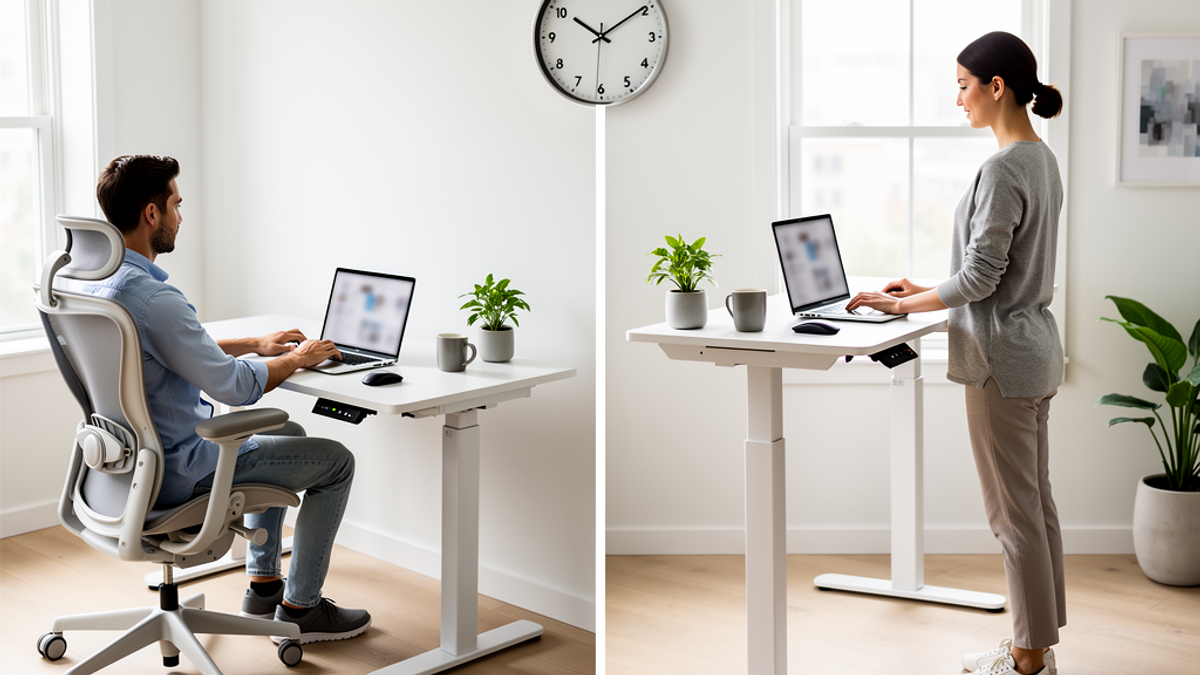
The Great Standing Desk Panic
Remember a few years ago when every health blog and morning news show suddenly declared that 'sitting is the new smoking'? We all collectively panicked. Suddenly, office managers were bombarded with requests for standing desks, and we were convinced that our standard office chairs were silently taking years off our lives. Fast forward to today, and a lot of those expensive standing desks are just collecting dust—or rather, they are permanently stuck in the sitting position while we hunch over our keyboards, waiting for our DoorDash orders to arrive.
Let's be real about the modern American lifestyle. You wake up, sit in your car for a 15-mile commute in stop-and-go traffic, sit at your desk for eight hours, sit in your car on the way home, and then sit on the couch to binge your favorite shows. It is a whole lot of sitting.
But in our rush to fix the problem, we swung the pendulum entirely too far in the opposite direction. People started forcing themselves to stand for eight hours straight in 72-degree Fahrenheit offices, sweating through their button-downs and wondering why their knees suddenly felt like they belonged to an eighty-year-old.
Here at Onyx Sound Lab, we are all about holistic, realistic wellness—whether that is optimizing your brainwaves with frequency therapy or optimizing your physical workspace. So, let's look at what the science actually says about the standing desk versus sitting debate. Spoiler alert: It is not about standing all day. It is about alternating.
What the Science Actually Says: The Truth About Standing All Day
When the first wave of standing desk research came out, it highlighted the very real dangers of a sedentary lifestyle: increased risks of heart disease, obesity, diabetes, and even certain types of cancer. The logical conclusion most people drew was, 'If sitting is bad, standing must be good.'
But that is not exactly how human physiology works.
Ask anyone who works a cash register at Target or stands on the concrete floors of Home Depot all day. Standing for prolonged periods is brutal on the human body. Research published in the American Journal of Epidemiology found that people who stand all day at work are actually at a higher risk for heart disease than those who sit.
Why? Because when you stand completely still for hours, gravity takes over. Blood pools in your legs and feet, forcing your heart to work overtime to pump it back up. This can lead to varicose veins, deep vein thrombosis, and chronic lower back compression. Your joints lock up, your posture degrades, and your feet scream in agony.
The human body wasn't designed to sit in a rigid chair for eight hours, but it also wasn't designed to stand like a palace guard for eight hours. The body is a machine built for movement.
The real magic of a standing desk isn't the standing. It's the transition. The physical act of moving from a seated position to a standing position engages your core, fires up your leg muscles, and gets your blood pumping.
The Magic Formula: The Sit-Stand Schedule
So, if sitting all day is bad and standing all day is bad, what is the sweet spot? Ergonomics experts and researchers have spent years trying to find the perfect ratio.
One of the most widely accepted frameworks comes from Dr. Alan Hedge, a professor of ergonomics at Cornell University. He developed what is often referred to as the 20-8-2 rule.
For every 30 minutes of your workday, you should aim for:
- 20 minutes of sitting: Use a supportive chair, keep your feet flat on the floor, and maintain good posture.
- 8 minutes of standing: Raise your desk, shift your weight occasionally, and engage your core.
- 2 minutes of moving: Walk to the kitchen, do some light stretching, or just pace around your office while listening to a quick Onyx Sound Lab focus frequency.
If changing positions every 30 minutes feels too disruptive to your workflow, you can scale it up to an hourly routine: sit for 40 minutes, stand for 15 minutes, and move for 5 minutes.
The key is to not let your muscles get stuck in one position for too long. By alternating, you are constantly resetting your posture and keeping your metabolism active without exhausting your joints.
Building Your Ergonomic Setup Without Going Broke
Now, let's talk about the gear. If you scroll through Instagram or TikTok, you will see tech influencers showing off massive, custom-built motorized standing desks that cost upwards of $1,000.
You do not need to drop a grand to save your back. In fact, please don't Venmo your coworker $600 for their heavily used, squeaky standing desk. You can build an incredible, scientifically sound ergonomic setup on a very reasonable budget.
Budget Desk Converters
If you already have a sturdy desk or table that you like, do not replace the whole thing. Desk converters are the ultimate life hack. These are adjustable units that sit right on top of your current desk. You squeeze a lever on the side, and pneumatic springs lift your monitor and keyboard up to standing height in two seconds.
You can find highly-rated desk converters at Walmart or Target for anywhere between $45 and $90. If you want something slightly more heavy-duty, Home Depot often carries larger models in the $100 to $130 range.
Let's do the math: Instead of buying a $700 motorized desk, you buy a $60 converter from Walmart. That is a cool $640 in savings. You could literally Zelle a friend to cover your weekend road trip expenses or invest in a premium sound wellness subscription, and still have cash left over.
The Unsung Hero: Anti-Fatigue Mats
If you take only one piece of advice from this article, let it be this: Do not stand on a hard floor without an anti-fatigue mat.
Anti-fatigue mats are thick, cushioned mats designed to encourage subtle movements in your leg muscles. When you stand on one, your body makes micro-adjustments to maintain balance. These tiny movements keep blood flowing and prevent the joint-locking fatigue that makes standing miserable.
You do not need a fancy 'ergonomic brand' mat. The next time you are doing a bulk run at Costco, head down the home goods aisle. You can usually find a fantastic, thick anti-fatigue mat for about $25 to $35. Target also sells great options in their kitchen and bath section for around $30.
Spending $30 on a mat will increase the amount of time you can comfortably stand by at least 50%. It is the best return on investment you will make for your home office.
Enhancing the Experience with Sound Wellness
At Onyx Sound Lab, we know that your physical environment and your mental environment are deeply connected. When you change your physical posture, it is a great time to shift your mental state as well.
Try pairing your sit-stand schedule with frequency therapy. For example, during your 40 minutes of seated, deep-focus work, put on your headphones and listen to Beta or Gamma binaural beats to lock in your concentration.
When it is time to transition to your 15 minutes of standing, switch your audio to an uplifting Alpha frequency or a lo-fi track. The physical movement of standing up combined with the acoustic shift gives your brain a refreshing 'reset' cue. It prevents the 2:00 PM brain fog and keeps your energy levels stable throughout the day without needing a fourth cup of coffee.
Actionable Steps You Can Take Today
We love theory, but we love action more. You don't need to wait for a massive budget approval from your HR department to start feeling better at work. Here is exactly what you can do today:
- Stop Standing All Day: If you currently have a standing desk and you've been toughing it out for 8 hours a day, sit down. Give your joints a break.
- Set a Transition Alarm: Use your phone or a free browser extension to set a timer. Start with the 40-15-5 method (40 mins sitting, 15 mins standing, 5 mins moving). Treat that alarm like a mandatory meeting.
- Secure an Anti-Fatigue Mat: Do not stand on hardwood, tile, or thin office carpet. Grab a $30 mat from Costco or Target this weekend. Your knees will thank you.
- Buy a Budget Converter: If you don't have a standing desk yet, measure your current desk space and order a $50-$80 converter from Walmart.
- Pair Posture with Sound: Use the physical act of standing up as a trigger to change your sound environment. Use Onyx Sound Lab's frequencies to match your desired state of mind for that specific work block.
The Final Takeaway
The science is incredibly clear: sitting all day is bad for your heart, and standing all day is bad for your joints. The secret to workplace wellness isn't a magical piece of expensive furniture; it is simply the act of alternating between the two. Invest a little bit of money in a desk converter and a good mat, set a timer, and let your body do what it was built to do—move.

SunMaster USA
Editorial Team
The SunMaster USA team finds, tests, and shares the smartest lifehacks, money moves, and home improvement tips that make everyday life easier for American families.