The Art of the Power Nap: 20 Minutes That Change Your Day
Beat the 2 PM slump with the NASA-backed 20-minute power nap. Learn how to master the caffeine nap, save money, and stealthily recharge at work without your boss ever knowing.

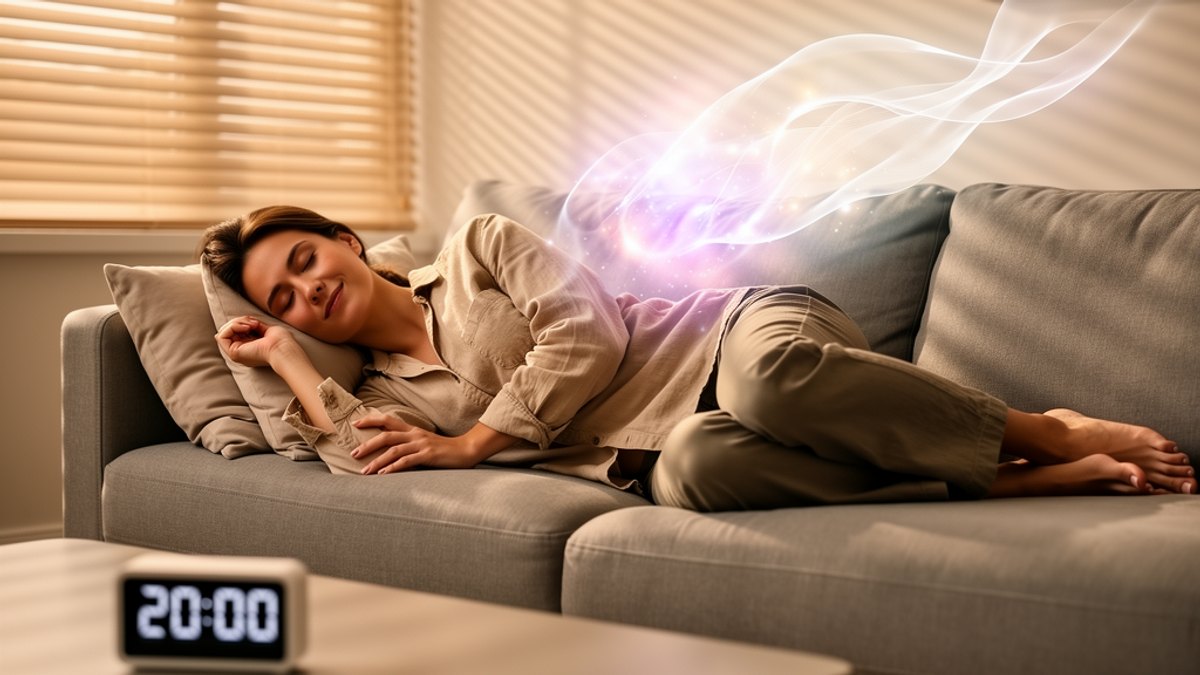
The 2 PM Wall: Why We Crash and How We Cope
Picture this: It's 2:15 PM on a Tuesday. You're staring at a spreadsheet, a blinking cursor, or a Zoom screen, and your eyelids suddenly feel like they're made of lead. Your brain has turned to mush. You're desperately contemplating DoorDashing a $7 iced latte to your office, knowing full well that with delivery fees and a tip, it's going to cost you $15.
We've all been there. The afternoon slump is a universal American experience, deeply woven into our hustle culture. Our instinct is to fight it with sugar, excessive caffeine, or sheer, miserable willpower. But what if the smartest, most productive thing you could do in that moment is simply close your eyes?
Welcome to the art of the power nap.
At Onyx Sound Lab, we believe that true wellness isn't just about pushing harder; it's about recovering smarter. Today, we're going to break down the science of the perfect nap, including a protocol researched by NASA, the genius of the "caffeine nap," and exactly how to pull this off during a busy workday without getting caught.
The NASA Protocol: Why 20 Minutes is the Magic Number
When we think of napping, we often think of waking up feeling worse than before—groggy, disoriented, and wondering what year it is. That terrible feeling is called "sleep inertia," and it happens for one specific reason: you slept too long.
In 1995, NASA conducted a groundbreaking study on fatigued military pilots and astronauts. They found that a strategic nap increased performance by a staggering 34% and overall alertness by 100%. But the key was the duration.
Your sleep cycle happens in stages. When you first drift off, you enter Stage 1 and Stage 2 sleep. These are light, restorative stages that clear out your brain's cache, much like restarting a sluggish smartphone. But if you cross the 30-minute mark, your brain plunges into slow-wave sleep (deep sleep). Waking up from deep sleep in the middle of the afternoon is like trying to start a car in sub-zero weather. You will feel terrible.
Therefore, 20 minutes is the absolute sweet spot. It's long enough to get the cognitive benefits of Stage 2 sleep, but short enough to pull the ripcord before you enter deep sleep.
Timing is Everything: The 1 PM to 3 PM Window
If you take a nap at 5 PM, you are going to ruin your nighttime sleep. You'll be staring at the ceiling at midnight, regretting your life choices.
Human biology operates on a circadian rhythm, an internal clock that naturally dips in the early afternoon. This is a vestige of our evolutionary past, and it perfectly aligns with the post-lunch drop in core body temperature.
The ideal window for a power nap is between 1:00 PM and 3:00 PM. Napping during this window works with your body's natural rhythms rather than against them. If you try to push past 3:30 PM, you risk eating into the "sleep drive" (the buildup of adenosine in your brain) that you need to fall asleep easily that night.
The "Nappuccino": The Ultimate Productivity Hack
If you want to absolutely supercharge your afternoon, you need to try the "caffeine nap"—affectionately known in sleep science circles as the Nappuccino.
Here is how the biology works: As you go about your day, a chemical called adenosine builds up in your brain. Adenosine is what makes you feel tired. Caffeine works by blocking your brain's adenosine receptors, but it can't block receptors that are already full.
Sleep, on the other hand, naturally clears adenosine away.
So, if you combine them, you get magic. Here is the step-by-step protocol:
- Drink caffeine quickly: Chug a cup of black drip coffee, a shot of espresso, or a cold brew. (Don't sip a hot latte for 30 minutes; you need to get it down fast).
- Immediately set an alarm for 20 minutes and close your eyes.
- Sleep (or just rest). As you sleep, your brain clears out the adenosine.
- Wake up. Caffeine takes exactly 20 minutes to process through your GI tract and hit your brain. Just as your alarm goes off, the caffeine arrives at your brain's newly cleared receptors.
The result? A double-whammy of alertness. You wake up feeling like a superhero.
The Financial Bonus of the Nappuccino
Let's talk dollars and cents. If you're hitting the afternoon wall and relying on expensive coffee deliveries, energy drinks from the vending machine, or sugary snacks to keep you going, you're bleeding cash.
A DoorDash coffee order averages $15. Doing that just three times a week costs you $45 a week, or roughly $2,340 a year. Even just grabbing a $4 energy drink every afternoon adds up to over $1,000 annually.
Swapping that expensive afternoon crutch for a free 20-minute power nap (perhaps paired with a cheap cup of office coffee for your Nappuccino) literally puts thousands of dollars back into your pocket.
Stealth Mode: How to Nap at Work Without Getting Caught
Okay, the science is great, but let's be practical. Most American workplaces do not have Google-style nap pods. If your boss catches you snoring at your cubicle, you're going to have a bad time.
Here is how you pull off the stealth power nap during the workday.
Strategy 1: The Sanctuary of the Car
Your car is your best friend when it comes to the workday nap. If you park in a massive corporate lot, simply walk out to your car during your lunch break.
- Location: If your office parking lot is too exposed, drive a quarter of a mile down the road. The back of a Walmart parking lot or a Home Depot parking lot is perfect—nobody pays attention to a parked car there.
- Climate Control: Keep the temperature comfortable. Around 68 to 70 degrees Fahrenheit is optimal for sleep. Crack a window slightly if the weather permits to ensure fresh air circulation.
- Positioning: Push the driver's seat all the way back, recline, and lock the doors.
Strategy 2: The "Target Run" Alibi
If you need an excuse to leave the office for 30 minutes, the mundane errand is your best cover story.
Tell your team, "Hey, I need to make a quick Target run to grab some household stuff on my lunch break." Nobody questions a Target run. Walk out, get to your car, take your 20-minute power nap, and walk back in. If you actually need a prop, keep a generic plastic bag in your car to carry back in with you. If someone needs you urgently, Zelle or Venmo your work bestie $5 to cover for you and say you're stuck in the checkout line.
Strategy 3: The Empty Conference Room
If leaving the building isn't an option, look for an unused room.
- Book a small, windowless conference room for a "solo brainstorming session."
- Sit in a comfortable chair facing away from the door.
- Put your headphones in (crucial for our next step) and lean back. Even if you don't fully fall asleep, 20 minutes of closed-eye resting (often called "non-sleep deep rest") will still significantly lower your cortisol levels.
The Perfect Nap Kit
To make this work seamlessly, you need to build a stealth nap kit to keep in your desk drawer or the trunk of your car. It doesn't need to be expensive.
- An Eye Mask: Light inhibits melatonin production. A cheap $10 eye mask from Target works perfectly to simulate nighttime, signaling to your brain that it's time to shut down.
- A Light Blanket: Your core body temperature drops when you sleep. Keep a cozy fleece throw from Costco in your trunk.
- Sound Isolation: This is the most critical element, which brings us to the Onyx Sound Lab secret weapon.
Optimizing Your Nap with Sound Wellness
When you only have 20 minutes, you can't afford to spend 15 of them trying to block out the sound of your coworker aggressively chewing almonds, or the distant hum of traffic outside your car window.
This is where Onyx Sound Lab's frequency therapy and soundscapes change the game.
Instead of industrial earplugs from Home Depot—which can be uncomfortable and make you hyper-aware of your own heartbeat—use active sound masking.
Put in your earbuds and queue up a specifically engineered soundscape.
- Pink Noise: Unlike white noise, which can be harsh and tinny, pink noise has deeper, richer low frequencies. It sounds like heavy rain or a rushing waterfall. Studies show pink noise actually enhances stable, slow-wave brain activity, helping you drop into Stage 2 sleep much faster.
- Binaural Beats: Listening to binaural beats tuned to the Theta frequency (4 to 8 Hz) can help coax your brainwaves out of the high-stress Beta state and into a relaxed, meditative state almost instantly.
By controlling your acoustic environment, you signal to your nervous system that it is safe to power down, maximizing every single minute of that 20-minute window.
Your Actionable Takeaway for Today
The afternoon slump is not a character flaw; it's a biological reality. But you no longer have to suffer through it or spend your hard-earned dollars on excessive caffeine deliveries just to survive until 5 PM.
Here is your challenge for today:
- At 1:30 PM, step away from your desk.
- Drink a quick cup of coffee.
- Find your quiet space (your car, your couch if you work from home, or that empty conference room).
- Put in your earbuds, turn on a pink noise track from Onyx Sound Lab, and set your alarm for exactly 20 minutes.
- Close your eyes.
When that alarm goes off, stand up, stretch, and drink a glass of water. You will return to your afternoon tasks with sharper focus, better mood, and a renewed sense of energy. Master the 20-minute power nap, and you will completely change how you conquer your day.

SunMaster USA
Editorial Team
The SunMaster USA team finds, tests, and shares the smartest lifehacks, money moves, and home improvement tips that make everyday life easier for American families.