The Clockwork Diet: Why When You Eat Matters Just as Much as What You Eat
Stop obsessing over every calorie and start looking at the clock. From beating the 2 PM crash to fixing your sleep, here is your practical guide to meal timing, intermittent fasting, and fueling your body right.

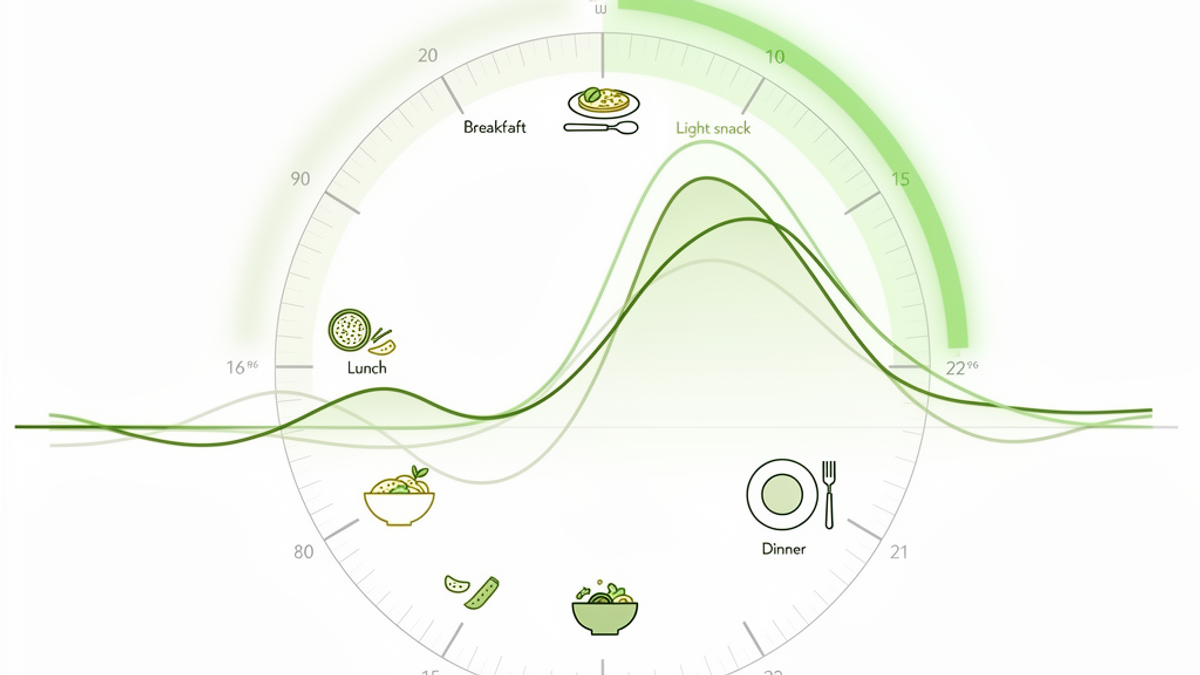
We have all been there. You are standing in front of the open fridge at 11:30 PM, bathed in that harsh fluorescent light, intensely debating whether a handful of shredded cheddar cheese and a spoonful of peanut butter counts as a midnight snack. You have probably spent the entire day obsessing over what you are eating—tracking your macros, dodging gluten, trying to remember if quinoa is a carb or a protein. But here is the million-dollar question: did you ever stop to think about when you are eating?
For decades, the American diet industry has hammered one concept into our brains: calories in, calories out. We have been told that a calorie is a calorie, whether you eat it at 8:00 AM or midnight. But modern nutritional science, along with a better understanding of human biology, is proving that this is only half the story.
Just like sound therapy uses specific frequencies to bring your mind and body into harmony—something we are incredibly passionate about here at Onyx Sound Lab—meal timing uses your body's natural circadian rhythm to bring your metabolism into harmony. Think of it like putting premium gas in your car, but trying to drive it with the parking brake on. If you eat the right foods at the wrong times, your body simply cannot process them efficiently.
Let's sit down, grab a cup of black coffee, and dive into the practical, down-to-earth strategies of meal timing. We are going to cover intermittent fasting, how to fuel up before a workout, how to avoid that miserable afternoon desk-slump, and why your late-night snacking habit is secretly destroying your sleep.
The Biology of Timing: Your Organs Have Clocks
Before we get into the tactical advice, you need to understand why this works. Your body operates on a 24-hour internal clock known as the circadian rhythm. This clock is primarily dictated by light and dark, which is why you feel awake when the sun comes up and sleepy when it goes down.
But here is the kicker: your brain isn't the only thing with a clock. Your stomach, your liver, your pancreas, and your muscles all have their own localized biological clocks. When you eat, you are sending a massive signal to these organs that it is time to work.
If you eat a heavy meal when your pancreas is naturally "winding down" for the evening, it struggles to produce enough insulin to handle the blood sugar spike. The result? That food is much more likely to be stored as fat, and the digestive process will wreak havoc on your body's ability to rest.
Intermittent Fasting Basics: It Is Not Starving, It Is Scheduling
Whenever someone brings up Intermittent Fasting (IF), people immediately picture a miserable monk living on water and air for days on end. Let's clear the air: intermittent fasting is not about starving yourself. It is simply about restricting your eating to a specific window of time.
The most popular and practical method is the 16:8 protocol. You fast for 16 hours and eat all your meals within an 8-hour window. For most people, this just means skipping breakfast, eating your first meal at noon, and finishing dinner by 8:00 PM.
Why do this? When you go 12 to 16 hours without food, your body burns through its glycogen (sugar) stores and starts tapping into stored body fat for energy. It also triggers a cellular cleanup process called autophagy, where your body clears out damaged cells.
Beyond the health benefits, intermittent fasting is a massive win for your wallet. Let's do the math. If you usually fire up DoorDash every morning for a $12 breakfast sandwich and a $6 latte (plus fees and tip, so let's call it $22), skipping that meal saves you around $110 a work week. That is nearly $440 a month! You could easily take those savings, make a massive weekend run to Costco, and buy high-quality, organic proteins and veggies for your actual eating windows, with plenty of cash left over.
Actionable IF Steps:
- Start slow: Do not jump straight into a 16-hour fast. Start with 12 hours (e.g., stop eating at 8 PM, eat breakfast at 8 AM).
- Hydrate: Drink plenty of water in the morning. Black coffee and plain tea are also fine and won't break your fast.
- Listen to your body: If you feel dizzy or lightheaded, eat. This is about optimization, not torture.
Pre-Workout Nutrition: Fueling the Engine
Timing your meals around your workouts can be the difference between setting a personal record and feeling like you are moving through wet cement. If you are gearing up for a 3-mile run or a heavy lifting session, your muscles need readily available energy (glycogen).
However, if you eat a massive burrito right before hitting the gym, your body is going to divert blood flow away from your muscles and toward your stomach to digest that food. You will feel sluggish, bloated, and might even get nauseous.
The sweet spot for pre-workout nutrition is 30 to 60 minutes before your session. You want simple carbohydrates that digest quickly and a tiny bit of protein.
Skip the expensive, over-hyped pre-workout powders that make your face tingle. Instead, next time you are at Walmart or Target, grab a bunch of bananas. A simple 25-cent banana and a spoonful of peanut butter 45 minutes before a workout is nature's perfect pre-workout supplement. It gives you the immediate sugar your muscles need, the potassium to prevent cramps, and just enough fat to sustain your energy without sitting heavily in your gut.
Fixing the Post-Lunch Energy Crash
It is 2:30 PM. You are sitting at your desk, staring at a spreadsheet, and your eyelids feel like they weigh 50 pounds each. You are seriously considering crawling under your desk for a quick nap, or at the very least, reaching for your third cup of coffee.
We call this the post-lunch crash, and it is entirely preventable. It usually happens because of what—and when—you ate for lunch.
Let's say you go out to lunch with your coworkers. You split an appetizer of loaded fries (you quickly Venmo or Zelle your buddy $15 for your share), and then you crush a massive club sandwich on thick sourdough bread.
Here is what happens in your body: that massive influx of simple carbohydrates causes your blood sugar to skyrocket. Your pancreas panics and pumps out a massive dose of insulin to shuttle that sugar out of your blood and into your cells. The insulin works too well, causing your blood sugar to plummet. That crash in blood sugar is exactly what causes that lethargic, brain-foggy feeling at 2:00 PM.
How to Fix the 2 PM Slump:
- Flip the macros: Make your lunch heavy on protein, healthy fats, and fiber, and light on starchy carbs. A big grilled chicken salad with olive oil dressing will keep your blood sugar stable.
- Take a 10-minute walk: If you can, take a brisk 10-minute walk outside after eating. Muscle contraction acts like a sponge for blood sugar, pulling it out of your bloodstream without needing massive amounts of insulin.
- Delay your coffee: Instead of drinking coffee immediately at 8:00 AM, wait until 10:00 AM. The caffeine will still be active in your system to help carry you through the early afternoon.
Late-Night Eating: The Ultimate Sleep Disruptor
Let's circle back to that midnight fridge raid. Eating late at night is arguably the most destructive meal timing habit you can have, and it directly impacts your sleep quality.
To initiate deep, restorative sleep, your body needs to drop its core temperature by about 1 to 2 degrees Fahrenheit. Digestion, however, is a highly active, heat-generating process. If you eat a heavy meal at 9:30 PM and try to go to sleep at 10:30 PM, your internal furnace is still burning brightly. Your core temperature stays elevated, preventing you from slipping into the deep REM sleep your brain needs to recover.
Furthermore, lying down with a full stomach is a one-way ticket to acid reflux and heartburn. Eating late at night is like trying to build a wooden deck in your backyard with supplies from Home Depot at 3:00 AM in the pitch dark. It is the wrong time for heavy labor, and the results are going to be a disaster.
Your body wants to repair cells, consolidate memories, and balance hormones while you sleep. If it is forced to spend the first four hours of your sleep cycle digesting a pepperoni pizza, you are going to wake up feeling groggy, puffy, and exhausted—no matter how many hours you stayed in bed.
The Actionable Takeaway: Your Meal Timing Plan for Tomorrow
Information is useless without action. You do not need to completely overhaul your life today, but you can start making small, calculated adjustments to your meal timing that will yield massive dividends in your energy, sleep, and overall wellness.
Here is your step-by-step game plan for tomorrow:
- Establish a 12-hour eating window: If you eat your first bite of food at 8:00 AM, commit to finishing your last bite of food by 8:00 PM. No exceptions. Close the kitchen.
- Swap the carb-heavy lunch: Tomorrow, pack a lunch that focuses on protein and fiber. Think chicken, greens, and avocado. Notice how you feel at 2:30 PM.
- Fuel your workout right: If you are exercising, eat a small, carb-focused snack (like a banana) 45 minutes prior. Stop working out on a full stomach of heavy food.
- Protect your sleep: Set an alarm on your phone for two hours before your bedtime. When that alarm goes off, your food intake for the day is officially over. Switch to herbal tea or water.
By paying attention to the clock, you are working with your body's natural rhythms instead of fighting against them. Try these timing tweaks for just one week. You will likely find that you have more energy, sleep deeper, and feel better—all without having to count a single calorie.

SunMaster USA
Editorial Team
The SunMaster USA team finds, tests, and shares the smartest lifehacks, money moves, and home improvement tips that make everyday life easier for American families.