The No-Spend Challenge: How to Save $1,000 in 30 Days
Tired of wondering where your paycheck went? Discover how a 30-day no-spend challenge can reset your financial habits, calm your nervous system, and help you keep $1,000 in your pocket.

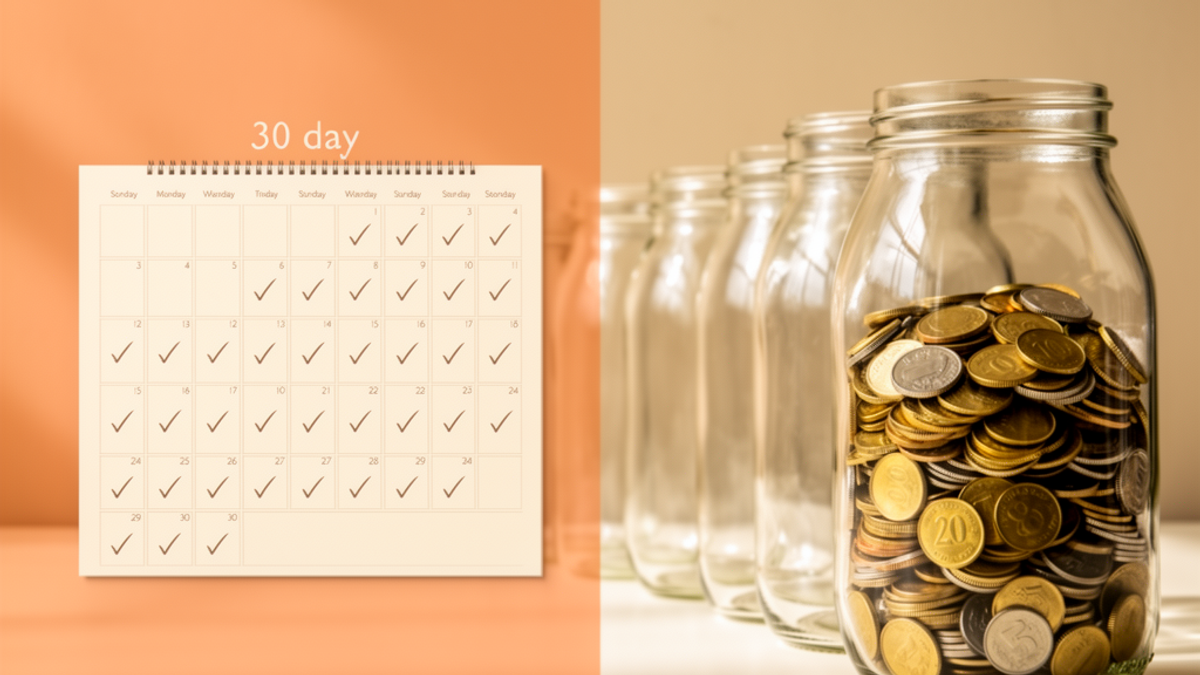
Let's be real for a second. We've all been there. You check your bank app on a random Tuesday, and your balance is looking a little tragic. You haven't made any massive purchases, yet somehow, your money has evaporated into a cloud of $6 iced coffees, late-night DoorDash deliveries, and those "quick" Target runs where you walk in for paper towels and walk out minus $150.
Here at Onyx Sound Lab, we talk a lot about nervous system regulation and finding your inner calm through frequency therapy and sound wellness. But guess what one of the absolute biggest triggers for a dysregulated nervous system is? Financial stress. It's hard to relax into a restorative sound bath when your brain is doing mental gymnastics trying to figure out how to pay off your credit card.
If you want to drastically reduce your anxiety and give your bank account a massive reset, it's time for the 30-Day No-Spend Challenge. The goal? To keep $1,000 in your pocket over the next month. It sounds intense, but think of it as a detox for your wallet. By stepping away from the constant consumerism of daily American life, you'll break bad habits, get creative, and find out just how much money you're leaking every month.
Grab your coffee (brewed at home, obviously) and let's break down exactly how you are going to save $1,000 in the next 30 days.
What Exactly is a No-Spend Challenge?
A no-spend challenge doesn't mean you spend zero dollars. Unless you live entirely off the grid and barter for your electricity, that's impossible. A no-spend challenge means you freeze all discretionary spending. You pay your bills, you buy basic groceries to keep yourself alive, and you put gas in your car to get to work. Everything else? Frozen.
No eating out. No new clothes. No grabbing a quick snack at the gas station. No random Amazon impulse buys at 11 PM. For 30 days, you are stepping off the spending treadmill.
The Rules of the Game (and the Exceptions)
To make this work, you need crystal clear boundaries. If you leave things up to interpretation, your brain will convince you that a $40 brunch with friends is an "essential networking event." It's not. Here is the definitive list of what gets the green light and what is strictly forbidden.
The Green Light (Allowed Spending)
- Fixed Bills: Rent, mortgage, car payments, insurance, utilities, cell phone bills.
- Basic Groceries: We're talking ingredients, not pre-made luxury meals. Think chicken, rice, beans, fresh veggies, and eggs.
- Transportation: Gas for your car, public transit passes, or basic maintenance (if your car breaks down, you have to fix it).
- Medical Essentials: Prescriptions, doctor copays, and essential personal hygiene items (yes, you can buy toothpaste; no, you cannot buy a new $45 eye cream).
The Red Light (Banned Spending)
- Dining Out & Delivery: Delete DoorDash and UberEats from your phone right now. No restaurants, no drive-thrus, no hitting the vending machine at work.
- Entertainment: No movie tickets, concert tickets, or paid cover charges at bars.
- Retail Therapy: Target, Walmart (beyond groceries), and Amazon are off-limits for anything non-essential. No new clothes, shoes, or home decor.
- Convenience Services: You're mowing your own lawn and washing your own car this month.
How to Hit the $1,000 Mark: The Math
You might be thinking, "I don't even have $1,000 of extra money to save!" You'd be surprised. When you track the "invisible spending" of an average American month, the numbers add up shockingly fast. Let's look at a realistic breakdown of where your $1,000 savings will come from over 30 days:
- The Daily Coffee & Breakfast: $8 a day x 30 days = $240
- Lunches at Work: $15 a day x 20 workdays = $300
- Weekend Dining/Drinks: Drop $75 every weekend on dinners or drinks = $300
- The Random Target/Amazon Hauls: One or two impulse buys a week = $150
- Subscriptions & App Fees: Canceling unused streaming or delivery apps = $30
Total Savings: $1,020.
And that doesn't even count the money you save by optimizing your grocery shopping or skipping a weekend road trip. The money is there; it's just currently leaking out of your accounts via Venmo and Apple Pay.
Meal Planning: Surviving Without DoorDash
Food is the number one reason people fail the no-spend challenge. You get home at 6 PM, you're exhausted, the fridge looks uninspiring, and suddenly you're ordering a $35 pizza. To survive this month, you need a bulletproof food strategy.
Step 1: The Pantry Challenge
Before you step foot in a grocery store, take inventory of what you already own. Most of us have a freezer full of mysterious meats and a pantry stocked with pasta, canned beans, and rice that we've ignored for months. Your goal for the first week is to eat the weird stuff in the back of the pantry. Get creative. Make a stir-fry out of those frozen veggies and that half-empty bag of rice.
Step 2: Strategic Grocery Shopping
When you do shop, you need to change your habits. If you usually shop at high-end grocery stores, it's time to pivot. Hit up Walmart, Aldi, or your local discount grocer for your staples. If you have a Costco or Sam's Club membership, buy your proteins and produce in bulk.
Stick to a strict grocery budget—say, $75 to $100 per person, per week. Buy whole foods instead of processed snacks. A 5-pound bag of potatoes costs $4 and can be used for breakfast hashes, baked potatoes, and soups. A box of cereal costs $6 and leaves you hungry two hours later.
Step 3: Batch Cooking is Your Best Friend
Pick one day a week (usually Sunday) to prep your meals. Cook a massive batch of chili, roast a whole chicken, or make a giant pan of baked ziti. Portion these out into Tupperware for your work lunches. When you know you have a delicious, already-cooked meal waiting for you, it is infinitely easier to drive right past the fast-food signs.
Free Entertainment: Having Fun for $0
A common misconception about the no-spend challenge is that you have to sit in a dark room and stare at the wall for 30 days. Not true! You just have to rethink how you entertain yourself.
If the weather is a gorgeous 75 degrees Fahrenheit, get outside. Go for a hike, walk a few miles around your local park, or pack a homemade picnic. If you live near the beach or the mountains, take advantage of nature's free playground.
If the weather is terrible, lean into cozy, at-home activities. Host a board game night and invite your friends over (tell them it's BYOB—Bring Your Own Beverage). Hit up your local public library; not only do they have free books, but most libraries offer free access to movies, audiobooks, and even state park passes.
And since you're cutting out the noise of consumerism, this is the perfect time to focus on your wellness. Create a free DIY spa night. Draw a warm bath, light a candle you already own, and put on a 432 Hz frequency track or a guided sound bath from Onyx Sound Lab. Use this quiet, un-rushed time to actually regulate your nervous system. You'll be amazed at how much more relaxed you feel when you aren't spending your weekends fighting crowds at the mall.
Handling Weak Moments & Emergencies
You are going to have moments of weakness. Your coworkers will invite you to happy hour. Your favorite band will announce a tour. Your friend will Venmo request you for a group gift you forgot about.
When social pressures arise, honesty is your best policy. Just tell your friends, "Hey, I'm doing a 30-day financial cleanse to hit a savings goal, so I'm on a strict zero-spend budget right now. But I'd love to have you over for coffee this weekend!" You'll be surprised by how many people will actually be inspired by your discipline—and some might even want to join you.
Now, what about actual emergencies? If the pipe under your sink bursts, you're going to have to drive to Home Depot and buy parts to fix it. If your car gets a flat tire, you have to replace it. Emergencies are the only exception to the rule. Use your emergency fund, fix the problem, and then get right back on the no-spend wagon. An unexpected expense doesn't mean you failed; it's just life.
Life After Day 30: Making the Savings Permanent
You made it. It's Day 31. You check your bank account, and there is an extra $1,000 sitting there. The absolute worst thing you can do right now is reward yourself by going on a massive shopping spree. That defeats the entire purpose of the challenge.
Instead, immediately move that money out of your checking account so you aren't tempted to spend it. Zelle it to a different account, or transfer it to a High-Yield Savings Account (HYSA) where it can earn interest. Use it to pay off a chunk of high-interest credit card debt, or fully fund your emergency savings.
More importantly, take a moment to reflect on what you learned over the last month. Did you actually miss the daily drive-thru coffee, or was it just a habit? Did you realize that spending time at the park with your kids was actually more fun than taking them to an expensive arcade?
The magic of the no-spend challenge isn't just the $1,000 you saved. It's the realization that you don't need to spend money to be happy, entertained, or fulfilled. You've broken the cycle of mindless consumerism, and you've proven to yourself that you have total control over your finances.
Your Actionable Takeaway
Don't wait for the first of the month to start. Your challenge begins tomorrow. Tonight, delete your saved credit cards from your web browser, remove food delivery apps from your phone, and do a 15-minute pantry inventory to plan your meals for the next three days. Commit to the next 30 days, and watch your bank account—and your peace of mind—transform.

SunMaster USA
Editorial Team
The SunMaster USA team finds, tests, and shares the smartest lifehacks, money moves, and home improvement tips that make everyday life easier for American families.