The Real Cost of Energy Drinks: What They Do to Your Body
Hitting the 2 PM slump? Before you grab that energy drink, let's look at the real cost. From sugar crashes to draining your wallet, here is what they do to your body—and how to get natural, sustained energy without the jitters.

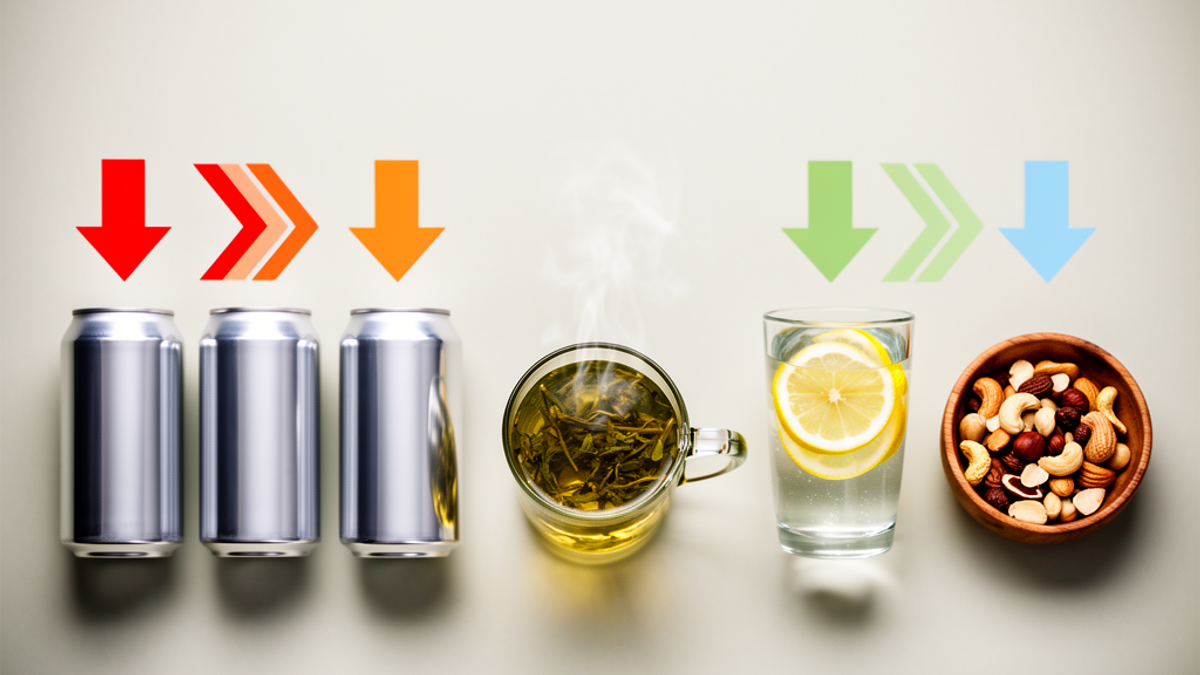
It is 2:30 PM on a Tuesday. You are staring at your laptop screen, and the spreadsheet in front of you has started to blur. Your eyelids feel like they are made of lead, and your brain has officially checked out for the day. You need a quick fix.
So, you take a walk to the breakroom vending machine, hit the local gas station, or worse—you are so exhausted you open DoorDash and order a 16-ounce can of liquid lightning straight to your office. By the time you factor in the inflated app price, the delivery fee, and the tip, that quick pick-me-up just cost you $15.
We have all been there. Energy drinks are marketed as the ultimate productivity hack, promising laser focus, boundless stamina, and the ability to crush your to-do list. But as a society, we are running on fumes and borrowing energy from tomorrow to get through today.
At Onyx Sound Lab, we are all about finding natural, sustainable ways to optimize your body and mind. So, like a smart friend giving you some tough love over coffee, let's sit down and look at the real cost of your energy drink habit. We are going to break down the financial drain, what these drinks actually do to your nervous system, and how you can find healthier alternatives that provide sustained energy without the inevitable crash.
The Literal Cost: Bleeding Dollars One Can at a Time
Let's start with your wallet, because the financial cost of an energy drink habit is usually the most shocking wake-up call.
The average cost of an energy drink at a convenience store is around $3.50. If you are grabbing just one can every single workday, that is $17.50 a week, or about $910 a year.
But let's be honest—many people do not stop at one. If you are a two-a-day drinker (one in the morning, one to survive the afternoon slump), you are spending $7.00 a day. Over the course of a year, that habit is costing you roughly $1,820.
Let that number sink in. Think about what $1,820 actually buys you in the real world. That is a massive, cart-overflowing Costco haul that could feed your family for a month and a half. It is the raw materials for that backyard patio project you have been eyeing at Home Depot. It is a couple of completely guilt-free, buy-whatever-you-want Target runs.
Instead, you are literally flushing that money away, and paying for the privilege of a temporary buzz and a massive headache.
Under the Hood: What Are You Actually Drinking?
When you crack open a brightly colored can of your favorite energy drink, you are not just drinking caffeine. You are drinking a highly engineered chemical cocktail designed to trick your brain into thinking it is not tired. Here is what is really happening under the hood.
The Caffeine Arms Race
Not all caffeine is created equal, and the energy drink industry has been in a massive arms race over the last decade to see who can pack the most stimulants into an aluminum can.
To put things in perspective, a standard 8-ounce cup of home-brewed drip coffee contains about 95mg of caffeine. A classic 8.4-ounce Red Bull has about 80mg.
But the newer generation of fitness and performance energy drinks? They blow those numbers out of the water. A 12-ounce Celsius packs 200mg of caffeine. A 16-ounce Bang or Reign contains a staggering 300mg of caffeine in a single serving.
The FDA recommends a maximum of 400mg of caffeine per day for healthy adults. If you drink just one of these high-octane beverages, you are already knocking on the door of your daily limit. Drink two, and you are flooding your system with 600mg of caffeine. This massive influx blocks adenosine (the neurotransmitter that tells your brain it is tired) all at once. You feel like a superhero for about an hour, but the adenosine does not go away—it just builds up in the background, waiting to flood your receptors the second the caffeine wears off.
The Sugar Crash Cycle
If you are drinking standard, non-diet energy drinks, you are also consuming an astronomical amount of sugar. A typical 16-ounce energy drink contains around 50 grams of sugar. That is the equivalent of eating more than 12 teaspoons of pure sugar in one sitting.
When you down that much high-fructose corn syrup, your blood sugar skyrockets. Your pancreas goes into overdrive, pumping out insulin to pull that sugar out of your bloodstream. This sudden drop in blood sugar is what causes the infamous 'crash.'
By 4:00 PM, you are irritable, your brain is foggy, and you feel even more exhausted than you did at 2:00 PM. Your body's natural response to a blood sugar crash? It craves more sugar and more caffeine. It is a vicious, endless cycle designed to keep you buying more product.
Your Body on Overdrive: The Nervous System Impact
Beyond the sugar and the caffeine, the real danger of energy drinks lies in what they do to your nervous system.
When you consume a massive dose of caffeine and stimulants (like guarana and taurine), you force your body into a state of acute stress. You are triggering your sympathetic nervous system—the 'fight or flight' response. Your adrenal glands start pumping out adrenaline and cortisol.
Your heart rate spikes. You might start feeling palpitations or a fluttering in your chest. You are sitting in a calm, climate-controlled, 70-degree Fahrenheit office, but your body is sweating and reacting as if you are running a marathon to escape a predator.
Over time, this constant state of artificial stress leads to adrenal fatigue and chronic anxiety. You might notice your hands shaking, or find that you snap at your coworkers or family members more easily. Worse, this overstimulation wrecks your sleep architecture. Even if you manage to fall asleep at night, the residual caffeine in your system prevents you from reaching the deep, restorative stages of sleep. You wake up exhausted, and the cycle begins all over again.
Healthier Alternatives for Sustained Energy
You do not have to live in a constant state of exhaustion, and you do not need a neon-colored can to get through your day. Here are practical, healthier alternatives that provide smooth, sustained energy without wrecking your nervous system.
1. Sound Wellness and Frequency Therapy
At Onyx Sound Lab, we know that energy isn't just chemical; it is neurological. When you are hitting a wall, your brain waves are likely slowing down into the Theta range (associated with daydreaming and drowsiness). Instead of using a chemical stimulant, you can use sound to shift your brain state.
Listening to binaural beats—specifically in the Beta (13-30 Hz) or Gamma (30-50 Hz) frequencies—can naturally stimulate your brain, increasing focus, alertness, and cognitive processing. Just put on your headphones, play a focus frequency from our library for 15 minutes, and let your brain naturally sync to a higher state of alertness. It is a zero-calorie, zero-crash way to wake up your mind.
2. The Hydration Station
It sounds almost too simple, but the vast majority of afternoon fatigue is actually just mild dehydration. When you are dehydrated, your blood volume drops, meaning your heart has to work harder to pump oxygen to your brain.
Instead of reaching for an energy drink, drink a large glass of water with a pinch of sea salt or a high-quality, sugar-free electrolyte packet. Rehydrating your cells will often give you a sharper, cleaner energy boost than any caffeinated beverage ever could.
3. The Magic of L-Theanine (Matcha and Green Tea)
If you genuinely need a caffeine boost, swap the synthetic energy drink for Matcha or green tea. These natural teas contain caffeine, but they also contain L-theanine, an amino acid that promotes relaxation without drowsiness.
L-theanine slows the absorption of caffeine into your bloodstream. Instead of a massive spike and a brutal crash, you get a smooth, sustained, calm focus that lasts for hours. It is the difference between flooring the gas pedal in a sports car versus setting the cruise control on the highway.
4. Strategic Movement
When you sit at a desk all day, your circulation stagnates. Get up and move. Walk half a mile around your neighborhood or office park. Getting outside exposes your eyes to natural sunlight, which suppresses melatonin production and naturally wakes up your circadian rhythm. A brisk 10-minute walk will pump oxygen-rich blood to your brain, instantly clearing away the brain fog.
Your Action Plan: How to Break the Habit Today
Quitting energy drinks cold turkey can lead to nasty withdrawal headaches. If you want to take back your health and your wallet, here is a practical, step-by-step plan to transition off them.
Step 1: The Venmo Savings Trick
Make the financial savings tangible. Every single time you successfully skip buying an energy drink, immediately open your phone and Venmo yourself that $3.50 (or $7.00) into a separate savings account. Alternatively, Zelle it to your spouse or partner to hold hostage for a vacation fund. Watching that account grow by $20 to $30 a week is a massive psychological motivator.
Step 2: The Half-and-Half Method
If you are currently drinking a 300mg energy drink every day, do not just stop. Tomorrow, buy a drink with half the caffeine (like a standard coffee or a lower-caffeine sparkling tea). Do this for a week to let your nervous system adjust, then step down to green tea or matcha the following week.
Step 3: Implement a 12 PM Cutoff
Caffeine has a half-life of about 5 hours. If you drink an energy drink at 2 PM, half of that caffeine is still in your bloodstream at 7 PM, ruining your sleep. Set a strict rule: no caffeine after 12 PM. If you get tired in the afternoon, you have to use a natural method—drink water, go for a walk, or listen to a 40Hz Gamma frequency track.
The Bottom Line
Energy drinks are a high-interest loan on your body's natural energy reserves, and the repo man always comes eventually. By relying on synthetic stimulants, you are draining your bank account, stressing your heart, and trapping yourself in a cycle of crashes and cravings.
Your actionable takeaway for today: Tomorrow afternoon, when that 2 PM slump hits, do not walk to the vending machine and do not open DoorDash. Drink 16 ounces of water, put on your headphones with a focus-enhancing sound frequency, and take a 10-minute walk outside. Your heart, your brain, and your wallet will thank you.

SunMaster USA
Editorial Team
The SunMaster USA team finds, tests, and shares the smartest lifehacks, money moves, and home improvement tips that make everyday life easier for American families.