The Renter's Guide to Smart Home Upgrades That Move With You
Transform your rental into a high-tech wellness sanctuary without losing your security deposit. Discover portable, drill-free smart home upgrades that save you money and move with you when your lease is up.

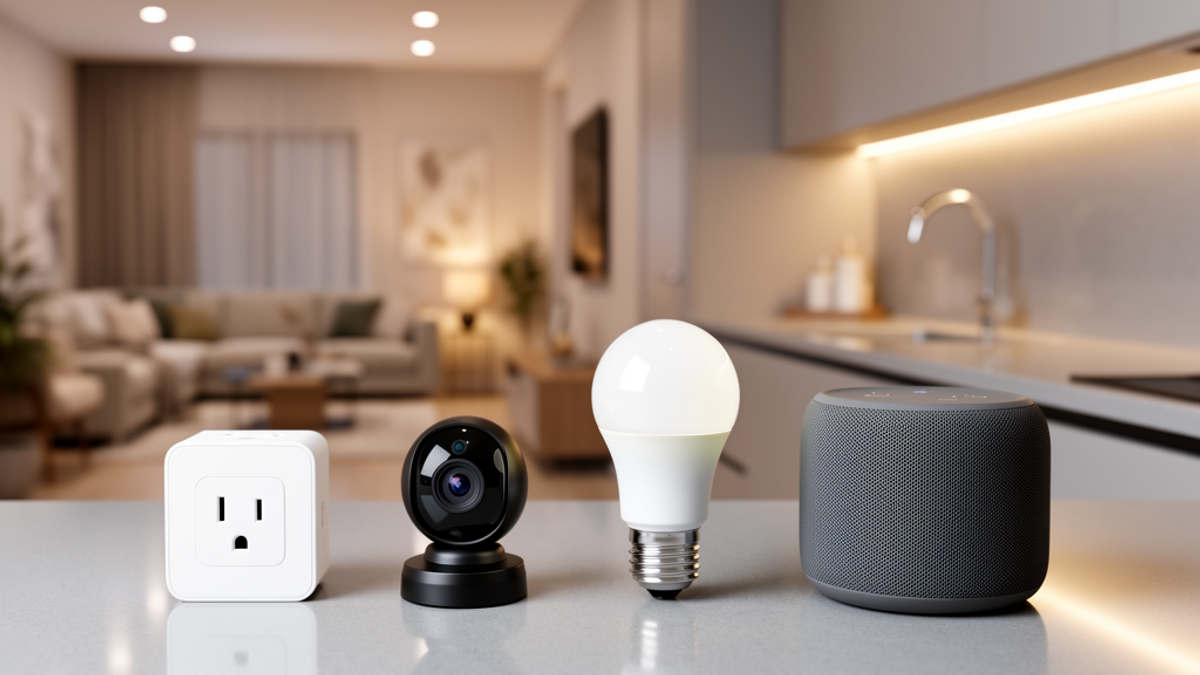
Let's face it: renting in the US can sometimes feel like living in a museum where you aren't allowed to touch the exhibits. You pay a hefty chunk of your paycheck every month, but the second you want to upgrade your living space, your landlord starts hovering like a hawk eyeing your $1,500 security deposit. Want to install a smart thermostat? "Not in my building." Want to hardwire a security camera? "Say goodbye to your deposit."
But here's the good news. You don't need to own a house in the suburbs or have a degree in electrical engineering to live in the future. The smart home industry has finally realized that renters want in on the action, too. Today, you can build a fully automated, stress-free wellness sanctuary using portable, drill-free devices that pack up into a cardboard box the second your lease is up.
Here at Onyx Sound Lab, we know that your environment dictates your mental state. Coming home to a dark, quiet, stuffy apartment is a recipe for instant stress. But walking into an apartment where the lights gently fade on, the temperature is a perfect 68 degrees Fahrenheit, and a calming frequency track is already playing? That's how you turn a basic rental into a restorative sanctuary.
Grab your coffee, and let's talk about the ultimate renter's guide to smart home upgrades that move with you.
The "No-Drill" Philosophy
Before we dive into the gadgets, let's establish the ground rules of the renter's smart home. Our goal is zero drywall anchors, zero hardwiring, and zero reasons for your property manager to withhold a dime of your deposit when you move out.
We are relying heavily on three things:
- Wi-Fi (which you already have).
- Batteries (rechargeable ones are your best friend).
- Heavy-duty 3M Command Strips (the patron saint of renters everywhere).
By sticking to devices that are inherently portable, you're not just protecting your deposit; you're making an investment. When you inevitably move a few miles down the road or across the country, your smart home comes with you.
Plug and Play: The Magic of Smart Plugs
If you want the absolute highest return on investment for your space, start with smart plugs. These are the gateway drug to home automation. You can snag a 4-pack of reliable smart plugs (like Kasa or Wyze) during a weekend run to Home Depot or Target for about $25.
Smart plugs act as the middleman between your wall outlet and your "dumb" devices. You plug the smart plug into the wall, and then plug your lamp, fan, or coffee maker into the smart plug. Boom—your $15 thrift store lamp is now voice-controlled and app-enabled.
Practical Everyday Uses:
- The Morning Routine: Set the smart plug connected to your coffee maker to turn on at 6:45 AM. You'll wake up to the smell of fresh coffee instead of a blaring alarm.
- The Energy Saver: Have a window AC unit or a space heater? Plug it into a heavy-duty smart plug. You can turn it off from your phone when you're halfway to work, or turn it on when you're 10 miles from home so the apartment is comfortable when you arrive. This alone can save you $30 to $50 a year on your electric bill.
- The Wellness Wind-Down: Connect your ambient string lights, your essential oil diffuser, and your sound machine to smart plugs. Group them in your Google Home or Apple Home app as "Wind Down." At 9:30 PM, everything turns on automatically, signaling to your brain that it's time to relax.
Let There Be (Smart) Light
Lighting completely changes the acoustics and vibe of a room. Harsh, overhead fluorescent lighting is the enemy of a calm nervous system. But as a renter, you can't exactly rip out the ceiling fixtures to install dimmers.
Instead, swap out the standard bulbs for smart LED bulbs. Brands like Philips Hue are the gold standard, but you can find incredibly affordable, high-quality alternatives at Walmart or on Amazon for under $10 a bulb.
Smart bulbs screw into your existing sockets but connect to your Wi-Fi. The real magic here is color temperature control.
During the day, you can set the bulbs to a cool, crisp 5000K (mimicking daylight) to keep you focused while you work from home. As the sun goes down, you can automate the lights to shift to a warm, cozy 2700K, dimming gradually over the evening. This supports your natural circadian rhythm, making it easier to fall asleep. When you move out, just pop the landlord's cheap bulbs back in and take your smart bulbs with you.
Fort Knox in an Apartment: Drill-Free Security
Security is a massive priority, especially if you live in a busy complex or a ground-floor unit. But you can't go drilling holes into the brick exterior to mount a camera.
Enter the battery-powered, wire-free security camera. If you have a Costco membership, keep an eye out for bundles on Ring or Blink cameras—you can often get a multi-pack for around $130.
The DoorDash Defense System
We've all been there: you order DoorDash, but the driver leaves your food at the wrong building, or worse, a neighbor's sticky fingers get to it first. A battery-powered peephole camera or a wireless doorbell camera attached to your door with heavy-duty mounting tape solves this instantly. You get an alert the second someone approaches your door, and you can tell the delivery driver, "Hey, just leave it on the mat, thanks!" right through your phone.
Wireless Contact Sensors
For inside the apartment, pick up a pack of wireless contact sensors. These are two little magnetic pieces you stick to a door and a frame. When the door opens, the magnet connection breaks, and you get an alert on your phone.
- Stick one on your front door to know when your roommate gets home.
- Put one on your medicine cabinet or the liquor cabinet if you're hosting a party.
- Place one on your ground-floor window for instant peace of mind while you sleep.
They cost about $20 a pair, stick on with adhesive, and peel right off without leaving a mark.
Unlocking Convenience: The Renter-Friendly Smart Lock
Changing the locks is the ultimate renter taboo. If you lock yourself out, you're usually at the mercy of a grumpy super or a $150 emergency locksmith bill.
But what if you could have a smart lock without actually changing the lock? Devices like the August Smart Lock are designed specifically for renters. Instead of replacing the entire deadbolt, the August lock only replaces the inside thumb latch of your door.
Installation takes about ten minutes and requires exactly one tool: a standard Phillips-head screwdriver. From the outside, the lock looks completely normal, and your landlord's physical key will still work perfectly (keeping you in compliance with your lease).
But from the inside—and on your phone—it's a fully automated smart lock.
Imagine this: You're at the office, and your dog walker arrives. Instead of hiding a spare key under a suspiciously fake-looking rock, you just open your app and unlock the door for them. You can even set up temporary access codes. Once they're done, you Venmo or Zelle them their $25 fee, lock the door remotely, and go back to your day with total peace of mind.
Climate and Environment Hacks
Since you can't swap out the wall thermostat, you have to get creative with your climate control.
If you have a window AC unit or a portable heater that requires you to physically push a button to turn it on (meaning a smart plug won't work), look into a device called a SwitchBot. It's a tiny, battery-powered robotic finger that sticks next to the button on your appliance. When you tap a button on your phone, the little robotic arm reaches out and physically pushes the power button for you. It's wildly clever, costs about $30, and feels like a highly practical magic trick.
Pair this with a standalone smart temperature and humidity sensor (usually around $15). You can place it on your nightstand to monitor your sleeping environment. If the humidity drops below 40% in the dead of winter, you can set an automation that tells your smart plug to turn on your bedside humidifier.
Optimizing your air quality and temperature is a massive part of maintaining a wellness-focused space. When your environment takes care of itself, your nervous system can finally relax.
Automating the Soundscape
Because we are Onyx Sound Lab, we can't talk about home upgrades without talking about the acoustic environment. Apartment living is noisy. Upstairs neighbors wearing lead boots, sirens blaring three streets over, and the constant hum of city traffic can spike your cortisol levels without you even realizing it.
Use a smart speaker (like an Amazon Echo or a Google Nest Mini—easily found for $30-$40) to create a sound masking routine. You can set up a "Focus" routine that automatically plays brown noise or 528Hz frequency tracks at 9:00 AM every weekday to drown out the neighborhood noise and promote deep work.
Actionable Takeaway: Your Weekend Project Checklist
You don't need to drop $500 all at once to make your apartment smart. Start small this weekend with these specific, actionable steps:
- Audit Your Outlets: Walk through your apartment and identify two "dumb" devices that you use every single day (like a bedside lamp and a coffee maker).
- Make the Target Run: Go buy a 2-pack or 4-pack of smart plugs (budget $20-$25).
- Set Up One Automation: Plug your lamp into the smart plug, download the app, and set a schedule for the lamp to turn on at sunset and turn off at 11:00 PM.
- Assess Your Security: If you get a lot of packages delivered, measure the space next to your door to see if a battery-powered doorbell camera will fit on the frame.
By taking these small steps, you are actively reclaiming your space. You're transforming a temporary rental into a personalized, high-tech sanctuary that supports your wellness, saves you money, and best of all—packs up easily into a box the day you decide to buy a place of your own.

SunMaster USA
Editorial Team
The SunMaster USA team finds, tests, and shares the smartest lifehacks, money moves, and home improvement tips that make everyday life easier for American families.