The Ultimate Garage Organization System for Under $200
Transform your chaotic suburban garage into a clean, functional workspace for under $200. Discover practical steps using pegboards, ceiling racks, and labeled bins from Home Depot and Lowe's to reclaim your space and your sanity today.

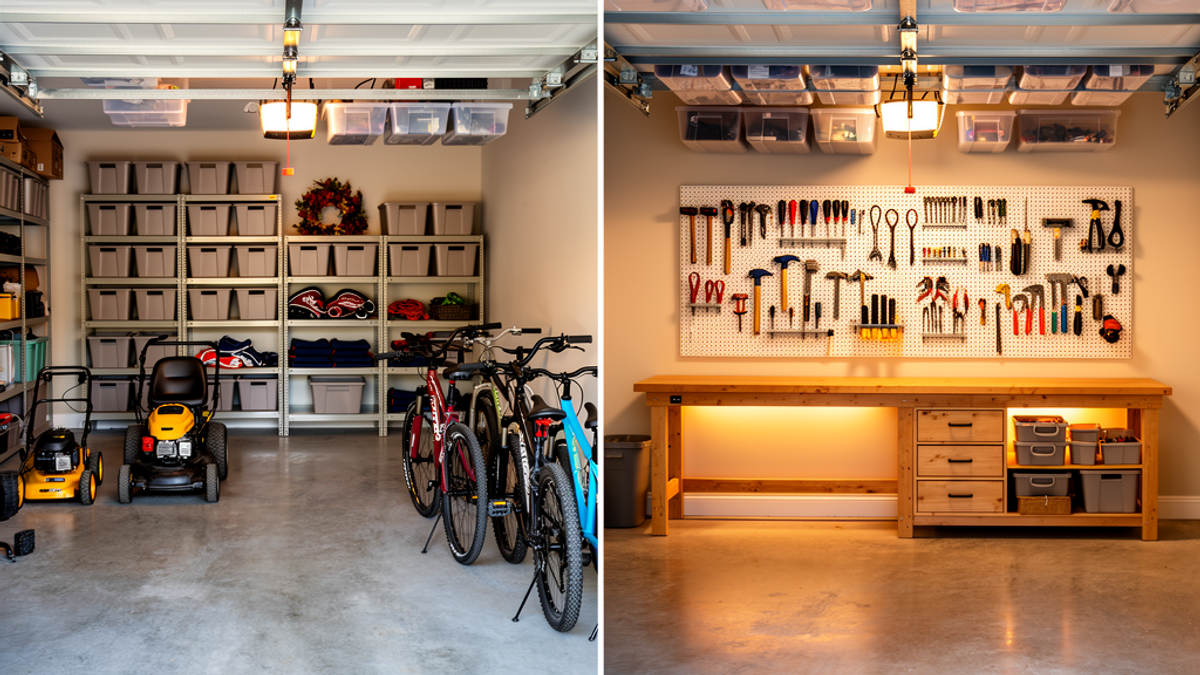
Picture this: It's a sweltering 90-degree Fahrenheit Saturday afternoon in mid-July. You've just driven ten miles back from running errands, you hit the clicker on your sun visor, and as the garage door slowly creaks upward, you are greeted by the ultimate American suburban nightmare. The "Wall of Shame."
There's a mountain of deflated basketballs, half-empty paint cans from a 2014 bathroom remodel, a tangle of extension cords that look like a nest of angry snakes, and holiday decorations spilling out of cardboard boxes. Your two-car garage currently fits exactly zero cars.
At Onyx Sound Lab, our entire philosophy is built around sound wellness, frequency therapy, and creating harmony in your life. But here is a hard truth: you cannot achieve internal mental harmony when your external environment is broadcasting a frequency of pure chaos. Visual clutter translates directly to mental static. Every time you walk past that mess, your brain registers an unfinished task, spiking your cortisol levels and draining your energy.
But don't stress. Grab a cup of coffee, because we are going to fix this. You don't need to hire an expensive professional organizer or drop thousands of dollars on custom cabinetry. We are going to transform your cluttered garage into a highly functional, organized workshop and storage haven—and we are going to do it for under $200.
The $200 Organization Blueprint
Before we swing a hammer, let's talk budget. We are going to strategically source our materials from your local big-box hardware stores and wholesale clubs to stretch every single dollar. Here is your shopping list:
- 2x standard 4x8 Pegboards (Home Depot): $45.98
- Furring strips for pegboard mounting (Home Depot): $10.50
- Pegboard hook assortment kit (Target or Amazon): $14.99
- DIY Ceiling Rack lumber & heavy-duty lag screws (Lowe's): $48.00
- 5 Heavy-Duty 27-Gallon Totes (Costco or Home Depot): $54.95
- Heavy-duty masking tape and Sharpies (Walmart): $8.00
Total: $182.42.
That leaves you with almost twenty bucks leftover—just enough to tip your DoorDash driver when you inevitably order a massive pepperoni pizza to celebrate your hard work later tonight.
Step 1: The Great American Driveway Purge (Cost: $0)
You cannot organize clutter. You can only move it around. Before a single pegboard goes up on the wall, you have to execute a ruthless purge.
Start early in the morning before the heat sets in. Haul absolutely everything out of the garage and onto the driveway. Yes, everything. Seeing your garage completely empty is a massive psychological boost. It resets the space in your mind.
Now, create three distinct piles on your driveway:
1. The Keep Pile
These are items you have actively used in the last twelve months. Your lawnmower, your power drill, your camping gear, your kids' current sports equipment.
2. The Trash/Recycle Pile
Dried out paint cans, broken plastic toys, rusted tools, and cardboard boxes that have been sitting on the concrete floor absorbing moisture for three years. Check your local county guidelines for hazardous waste disposal for the paint and old motor oil.
3. The Cash Pile
This is where the magic happens. That expensive tile saw you bought for one project and never used again? The pristine set of golf clubs gathering dust? Snap a few well-lit photos and list them on Facebook Marketplace or Craigslist. When buyers show up, tell them you happily accept Venmo or Zelle. Not only are you clearing out your space, but you might just recoup your entire $200 organization budget by lunchtime.
Step 2: The Pegboard Power Play (Cost: ~$71)
Now that you've purged, it's time to tackle the walls. The biggest mistake people make in garage organization is leaving tools in toolboxes or piled on workbenches. If you can't see it, you'll forget you own it, and you'll end up buying a third tape measure at Home Depot next month.
Pegboards are the undisputed champions of budget organization. They are cheap, infinitely customizable, and give your garage that classic, functional workshop aesthetic.
How to Install It:
- Find the Studs: Use a stud finder to locate the wooden studs behind your garage drywall. Mark them clearly.
- Mount the Furring Strips: You cannot screw a pegboard directly flat against the wall, or the hooks won't have room to slide in. Take the cheap wooden furring strips you bought at Home Depot and screw them horizontally across the studs using 2.5-inch wood screws.
- Attach the Pegboard: Fasten your 4x8 pegboard panels directly onto the furring strips.
- Hang and Trace: Open your hook assortment kit from Target and start hanging your tools. Group them logically: hammers with mallets, screwdrivers in a row, pliers together.
Pro-Tip: Once you have a layout you love, take a Sharpie and trace the outline of each tool onto the pegboard. It creates a visual accountability system. When a wrench is missing, the empty outline will stare at you until you put it back.
Step 3: Look Up - The Ceiling Rack Revolution (Cost: ~$48)
Look at your garage ceiling. That is hundreds of square feet of prime, unused real estate. We are going to use it to store the bulky, lightweight, seasonal items that are currently eating up your floor space—things like artificial Christmas trees, camping sleeping bags, and plastic sleds.
While pre-fabricated metal ceiling racks can cost upwards of $150, you can build a custom wooden one using supplies from Lowe's for a fraction of the price.
The DIY Hack:
Using 2x4 lumber, you can create a simple "ladder" frame that hangs down from your ceiling joists.
- Locate your ceiling joists (this is critical—do not anchor into just drywall or the whole thing will come crashing down on your car).
- Secure two parallel 2x4s to the ceiling joists using heavy-duty 3-inch lag bolts.
- Drop vertical 2x4 supports down to your desired height (usually 24 to 30 inches), and attach a bottom frame.
- Slide in a piece of cheap plywood for the base.
Now, take those bulky holiday bins that you only need once a year and slide them up into the ceiling rack. You've just reclaimed a massive footprint on your garage floor.
Step 4: The Standardized Bin System (Cost: ~$63)
If you take away nothing else from this article, remember this rule: Stop buying random, mismatched storage bins.
When you buy a clear plastic bin from Walmart, a blue one from Target, and a green one from a yard sale, they won't stack properly. They will lean, they will crack, and they will look messy. Furthermore, clear bins let in sunlight, which fades your gear and makes the garage look visually chaotic because you can see the mess inside.
Head to Costco (or Home Depot) and buy a set of the iconic black-and-yellow 27-gallon heavy-duty storage totes. They are virtually indestructible, they stack perfectly flush like Lego bricks, and they instantly give your garage a uniform, professional look.
The Labeling Strategy
Do not trust your memory. You might think you'll remember that the bin in the corner holds your winter coats, but come November, you'll be tearing open every single box.
Take your heavy-duty masking tape and a thick black Sharpie. Write the contents on the tape in large, block letters and stick it on the front and side of every single bin. (Using tape instead of writing directly on the bin allows you to easily change the contents later without scribbling things out).
Label them specifically:
- "WINTER HATS & GLOVES"
- "HALLOWEEN DECOR"
- "CAR WASH SUPPLIES"
- "PLUMBING FIXTURES"
Step 5: Establishing Your Zones
Now that your tools are on the wall, your seasonal gear is on the ceiling, and your loose items are in standardized bins, it's time to put the room back together.
Think of your garage like a grocery store. Grocery stores are organized into distinct zones (produce, dairy, meats) so you always know where to go. Your garage should function the exact same way.
- Zone 1: The Workshop. This is where your pegboard lives. Keep your workbench, power tools, and hardware bins here.
- Zone 2: Lawn & Garden. Dedicate a corner near the garage door for your lawnmower, rakes, shovels, and bags of potting soil. This keeps the dirt near the exit, not tracked through the middle of the space.
- Zone 3: Sports & Recreation. Keep the kids' bikes, basketballs, and camping gear in an easily accessible spot so they don't have to navigate an obstacle course to get their stuff.
- Zone 4: Deep Storage. Your stacked, labeled bins and ceiling racks go toward the back or high up, out of the daily traffic flow.
The Payoff
When you finally sweep that concrete floor and step back to look at your work, the feeling is incredible. You've taken a space that used to drain your energy and transformed it into a space that serves you. The next time you need to fix a leaky faucet, you won't spend 45 minutes looking for a wrench. The next time it snows, you'll know exactly where the shovels are.
By investing just under $200 and a little bit of sweat equity, you've optimized your environment. And as we always say at Onyx Sound Lab, an optimized environment leads to an optimized mind.
Your Actionable Takeaway
Don't let this be another article you read and forget. Your actionable step for today is simple: Go to your garage right now, grab one garbage bag, and throw away 10 things that are undeniably trash. Tomorrow, take your $200 budget and make that Home Depot run. Reclaim your space, reclaim your sanity, and get your garage back.

SunMaster USA
Editorial Team
The SunMaster USA team finds, tests, and shares the smartest lifehacks, money moves, and home improvement tips that make everyday life easier for American families.